






Blog
Space Standard: Standard adult layers require 10 cm to 12 cm of linear feeder space per bird for single-sided access.
Calculation Basis: Total feeder length must be determined by actual bird count rather than raw cage row dimensions.
Access Factors: Troughs accessible from two sides double the usable feeding edge per physical unit length.
Reserve Allowance: Always include a 3% to 5% reserve length to account for installation margins, drive units, and blocked corners.
System Integration: Match feeder sizing with house dimensions, cage tiering, and automated feed delivery speed.
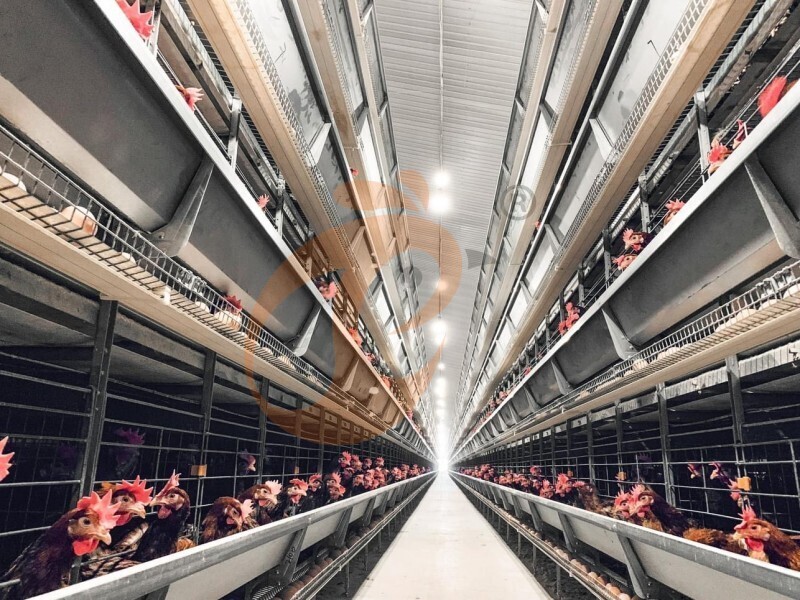
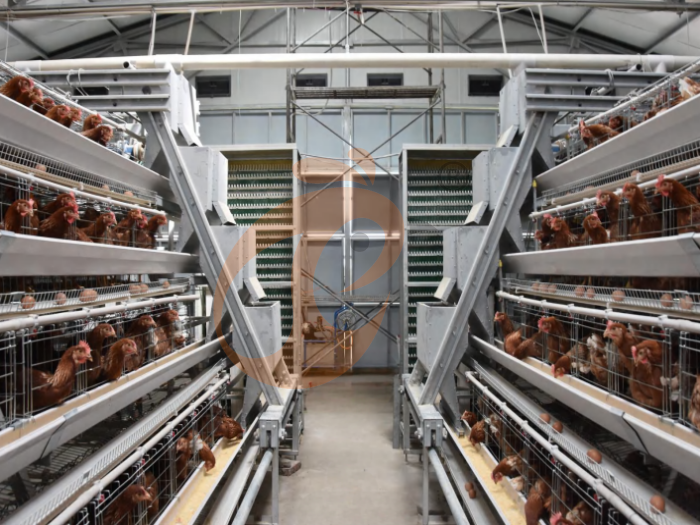
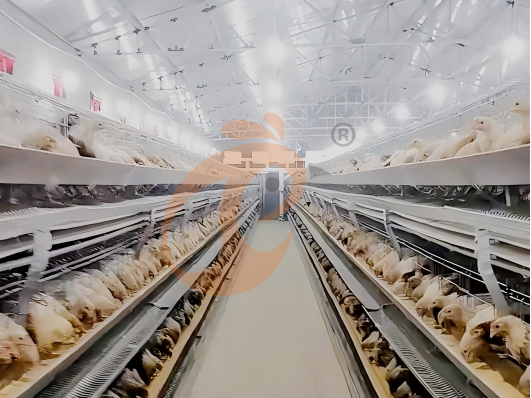
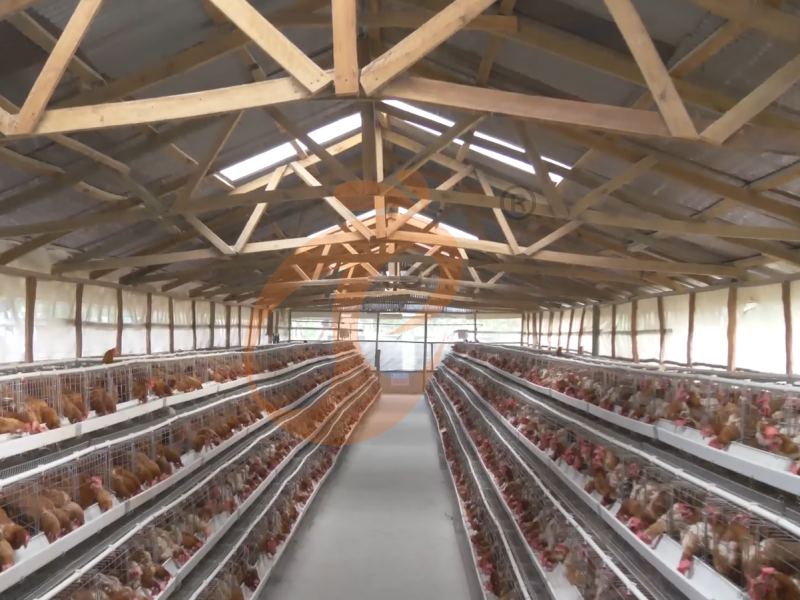
Calculating the correct feeder length for a battery cage for layers is essential for uniform feed access, stable flock performance, and efficient farm operations. Providing adequate trough space prevents feed competition, supports flock uniformity, and stabilizes egg production across all tiers.
Get professional poultry farm construction guidance, equipment selection solutions, and the latest price lists, whatsApp to +8618830120193, +2348111199996, or click to learn more:
Recommended Feeder Space Standards For Layer Birds
Feeder allowance should reflect bird age, production stage, and flock density. The following guidelines provide practical planning values for standard layer management.
Feeder Space Specifications
Feeder Length Calculation Formula And Example
The primary calculation is straight forward: total feeder length equals the total number of layers multiplied by the required feeder space per layer.
Use this formula for a one-sided feeder trough: Total Feeder Length = Total Number Of Layers x Feeder Space Per Layer. Always add a 5% design reserve for installation fittings and drive corners.
Sample Calculation Breakdown
Cage Layout Feeder Sizing
Different cage layouts alter the required physical trough length based on whether access is single-sided or double-sided. A 100 m central trough with access on both sides provides 200 m of total accessible feeding edge.
Feeder Length By Layout Configuration
Daily Feed Capacity And Storage Planning
Equipment pricing for automated systems is quoted in USD (all currency estimates and EU standards references are for reference only). Daily feed supply and equipment hopper capacity must match consumption targets to prevent stockouts.
Flock Consumption And Storage Planning
Frequently Asked Questions
How Much Feeder Length Does One Layer Need?
Most adult hens need 10 cm to 12 cm of linear space on a single-sided trough. For 1,000 layers at 10 cm per bird, 100 m of usable trough length is required, plus a 5% operational reserve (105 m total).
How Do I Calculate Feeder Length For A 5,000 Bird Layer Farm?
Multiply 5,000 birds by the chosen space standard (e.g., 5,000 x 10 cm = 500 m total accessible edge). Divide this length among your rows. For instance, five single-sided rows of 1,000 birds each require 100 m per row.
Can Automatic Feeding Reduce Required Feeder Length?
No. Automation improves feed distribution speed and reduces labor, but every layer still requires adequate physical trough space to eat simultaneously without stress or production loss.
Choose HB BEST For Layer Farm Equipment
Direct factory manufacturing with high-grade hot-dip galvanized steel for durable poultry equipment.
Free preliminary layout design and custom poultry house planning tailored to your site dimensions.
Advanced production technology ensuring high precision, robust structural stability, and long service life.
Complete integrated solutions including automated feeding, drinking, manure removal, and climate systems.
Professional technical consultation, fast global delivery, and full-scope installation guidance.
Contact Us To Received Your Customized Poultry Farm Plan
Headquarters And Branchs

Hong Kong Headquarter Management Team
Hong Kong Headquarter Taiyu Industrial Group CO., LTD
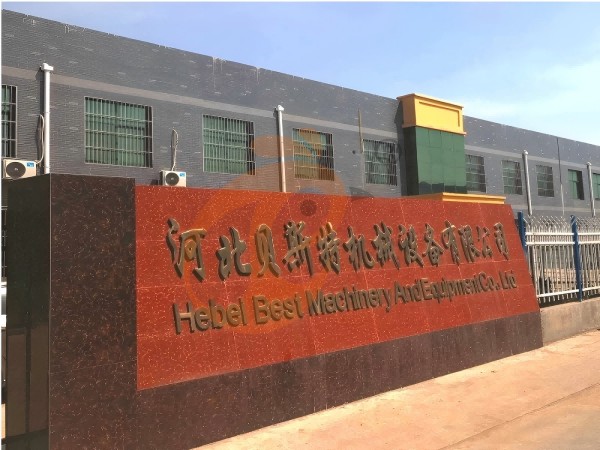
China Hebei Best Machinery And Equipment CO., LTD
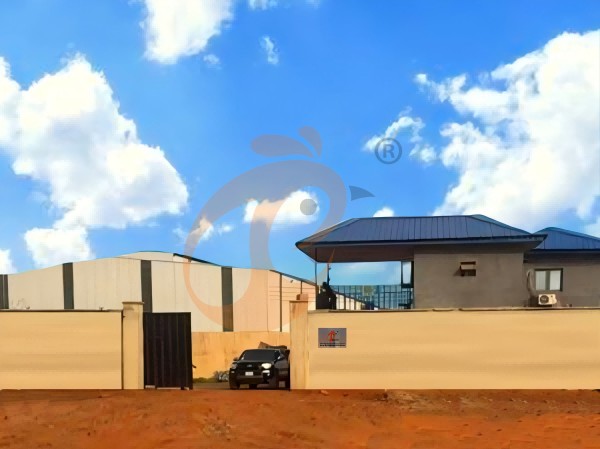
Nigeria Vanke Machinery And Equipment CO., LTD
Tanzania Best Machinery And Equipment CO., LTD
Ethiopia Best Hebei Machinery Manufacturing PLC
Reception /24 WhatsApp NO. : +8618830120193
FAQ
Message
Products recommended
 HK Headquarter Offers EU-standard Poultry Farm Solutions, Manufacture Poultry Farm Equipment1. Continuous communication with the EU and the US
2. China, Nigeria, Ethiopia, Tanzania branch companies and factories
3. The products’ quality is customized for local poultry farms
4. Poultry cage and poultry farm equipment stock for sale
5. 24 online reception Whatsapp NO. : +8618830120193,contact us to get full informationRead More China Branch Offer Poultry Farm Business Plan, Manufacture Poultry Farm Equipment1. Address: Flat/RM 2416, 24/F, Runxing Building, Youyi Nan Street, Shijiazhuang City, Hebei Province, China
2. Poultry cage and poultry farm equipment factory and stock for sale
3. Customized for local poultry farms
4. Quality and design are based on Euro
5. 24 online reception Whatsapp NO. : +8618830120193Read More Nigeria Branch Offer Poultry Farm Business Plan, Manufacture Poultry Farm Equipment1. Address: After Sinoma Office, 200 Meters Near Danco Filling Station, Lagos/Ibadan Expressway, Lagos State, Nigeria
2. Poultry cage and poultry farm equipment factory and stock for sale
3. Customized for Nigerian poultry farms
4. Quality and design are based on Euro
5. 24 online reception Whatsapp NO. : +8618830120193Read More Ethiopia Branch Offer Poultry Farm Business Plan, Manufacture Poultry Farm Equipment1. Address: Gelan Gura, Akaki-kaliti Sub City, Addis Ababa, Ethiopia
2. Poultry cage and poultry farm equipment stock for sale
3. Customized for Ethiopian poultry farms
4. Quality and design are based on Euro
5. 24 online reception Whatsapp NO. : +8618830120193, contact us to get price listRead More Tanzania Branch Offer Poultry Farm Business Plan, Manufacture Poultry Farm Equipment1. Address: No.8, Sova Road, Msufini, Mlandizi, Kibaha, Pwani, Tanzania
2. Poultry cage and poultry farm equipment factory and stock for sale
3. Customized for Tanzanian poultry farms
4. Quality and design are based on Euro
5. 24 online reception Whatsapp NO. : +8618830120193Read More Fully Automatic H Type Layer Chicken Cage1. 30,000-100,000+ layers/house chooses it, Poultry farmers can achieve an egg production rate of 96-98%
2. A significant improvement over the 85-90% typically seen in manual systems
3. A typical poultry farm can expect a 30-40% reduction in labor costs due to the automation
4. Each feeding line efficiently supplies feed to around 100,000 hens per 30 mins
5. Reception /WhatsApp NO. : +8618830120193Read More Fully Automatic A Type Layer Chicken Cage1. 10,000-50,000 layers/house chooses it
2. Cleaner egg collection reduces breakage by 0.5%
3. Improved hygiene helps reduce mortality rate to <3%
4. 1–2 technicians can handle 15,000–30,000 birds
5. Reception /WhatsApp NO. : +8618830120193Read More Semi Automatic H Type Layer Chicken Cage1. 1,00-20,000 layers/house chooses it
2. Nipple drinkers flow 30–60 ML / min
3. Hot-dip galvanized (typical coating ≥ 275 g/m²)
4. Reduce ammonia by ~ 35–40%
5. Reception /WhatsApp NO. : +8618830120193Read More Semi Automatic A Type Layer Chicken Cage1. 1,00-20,000 layers/house chooses it, no rust for 10 years, no deformation for 15 years
2. Chickens live comfortably, you can raise them with peace of mind
3. Save water, save money—efficiency you can measure
4. Improve environment quality, and increase egg production rate
5. Reception /WhatsApp NO. : +8618830120193Read More

By clicking 'Allow All', you agree to the storage of cookies on your device to enhance site navigation, analyze site usage and assist with our marketing efforts.