


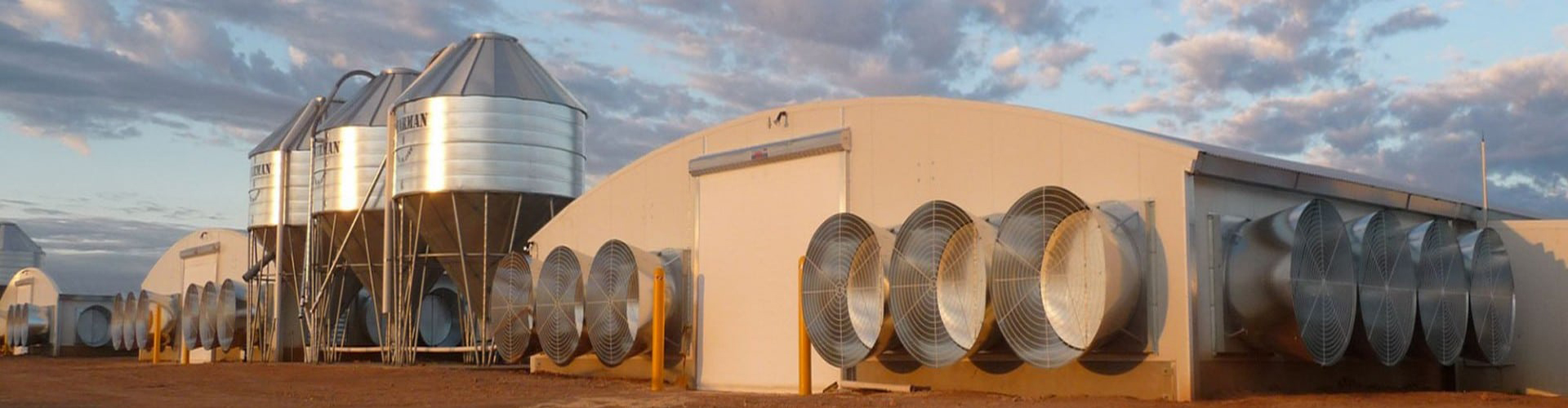
IoT Smart Poultry Farm
‹
›
‹
›
IoT Poultry Farming System
2. CO₂ sensor range 0–5000 ppm
3. Ammonia (NH₃) sensor 0–100 ppm range
4. Actuator controllers relay or 0–10V analog output
5. Reception /WhatsApp NO. : +8618830120193
"Quick Viewing Of IoT Smart Poultry Farming System"
1. Smart Poultry Farm Case Showing From Taiyu (HK) Group
At 0:34s showing Vcloud smart poultry system working to help you learning how smart poultry farming system working.
The video is suitable for viewing on vertical screen devices. Please open and watch it using a mobile phone or iPad.
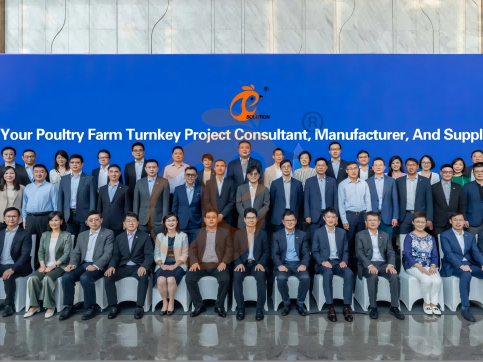
2. Why Choose Taiyu (HK) Group
Here is a 15 mins video showing Taiyu (HK) Groups 's poultry farm equipment, production department, QC, logistics department, customer cases...
Integrated Farm Construction
Taiyu (HK) Group provides a one-stop integrated farm solution, from planning and design to construction and operation, covering poultry and livestock farming, vegetable greenhouses, smart greenhouses, and ecological recycling systems, with successful demonstration projects implemented in Europe, Africa, and Southeast Asia.
Intelligent Management System
By integrating artificial intelligence and IoT technologies, Taiyu (HK) Group enables real-time monitoring, automated control, and data analysis of farm environments, equipment, feed distribution, and production processes, improving efficiency and productivity while complying with European modern agricultural standards.
Sustainable Innovation
Through precision farming, energy saving, emissions reduction, and data-driven decision-making, Taiyu (HK) Group promotes agricultural modernization, enhances product quality and international competitiveness, and fully meets European green agriculture and sustainability requirements.
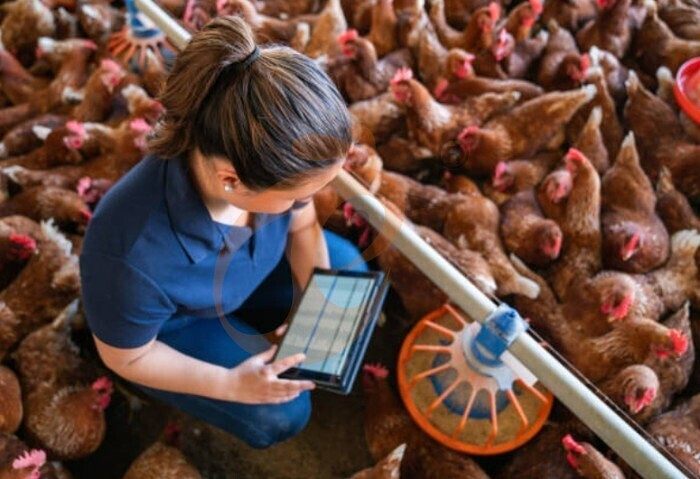
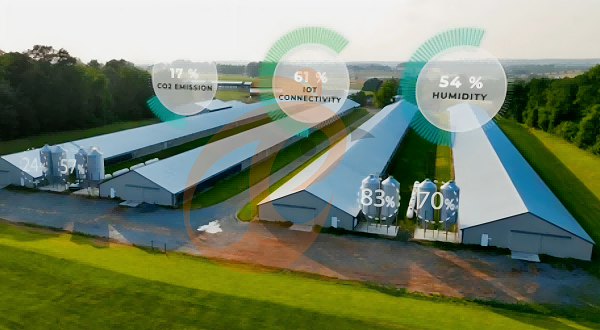
Modern poultry farming is gradually becoming a data-driven industry.
"IoT" — the Internet of Things — simply means putting small, purpose-built sensors and controllers into the chicken house so the environment, feeders, drinkers and manure systems can be monitored and (when sensible) adjusted automatically.
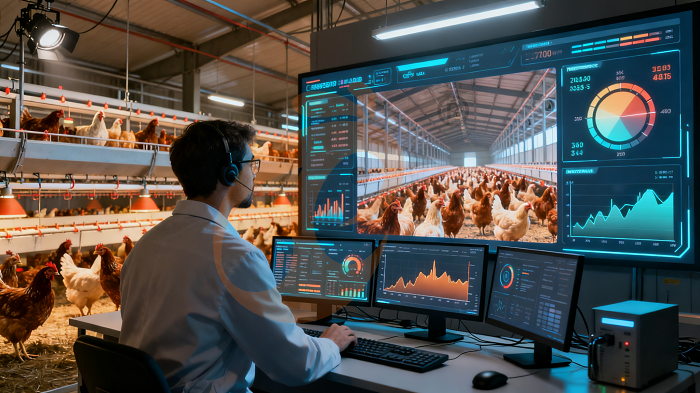
Full Data Collection
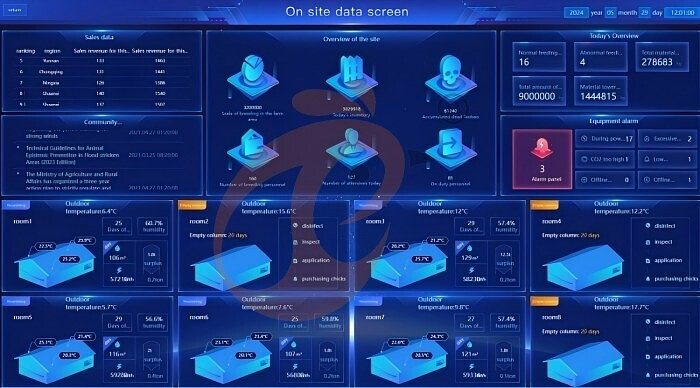
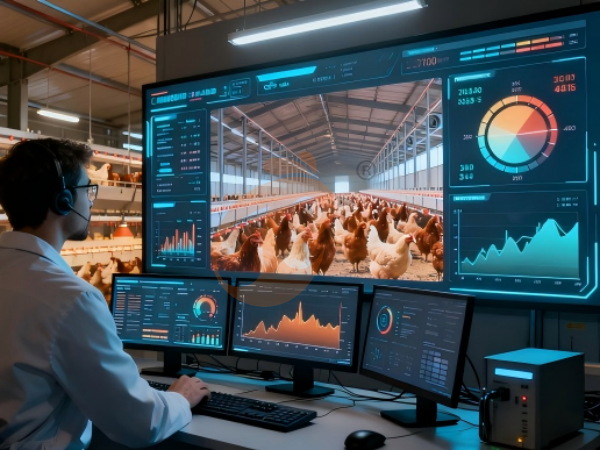
On Site Data Screen
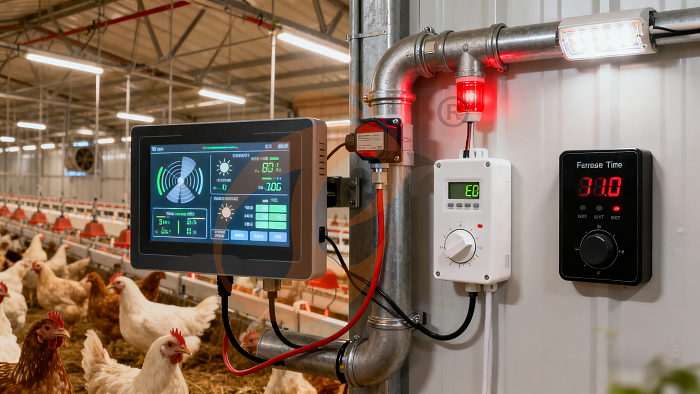
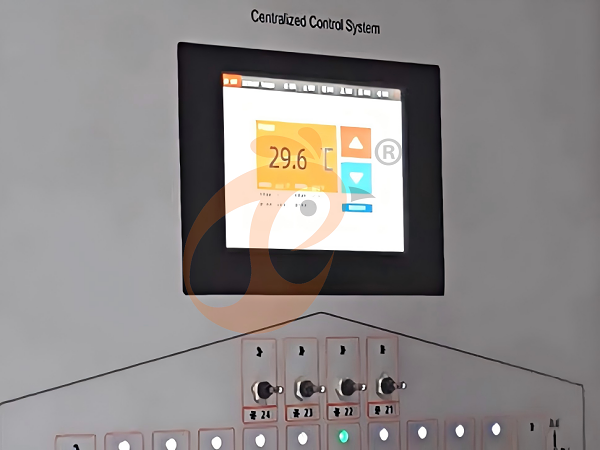
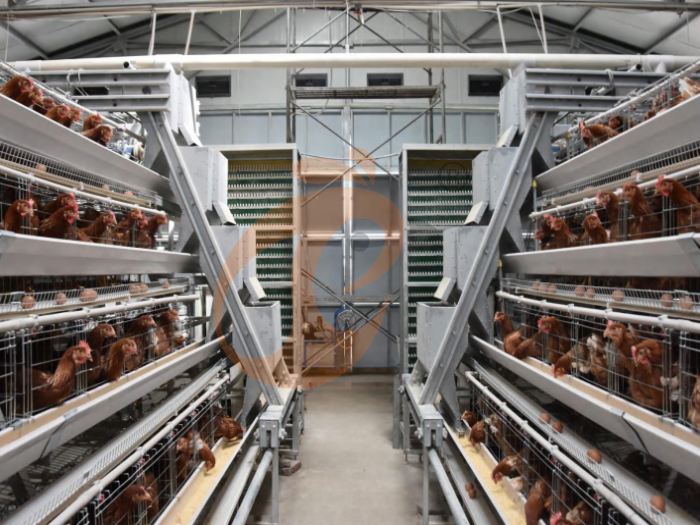
Hardware Device In Poultry Farm
For producers this is not about gadgets for their own sake: it's about keeping birds comfortable, reducing disease risk, saving labour, and making decisions based on facts instead of guesswork.
Scientific and industry work shows tight environmental control (temperature, humidity, gases) is a core driver of bird health and productivity.
"European Standard IoT Poultry Farming System"
3. Common IoT Devices In A Poultry House
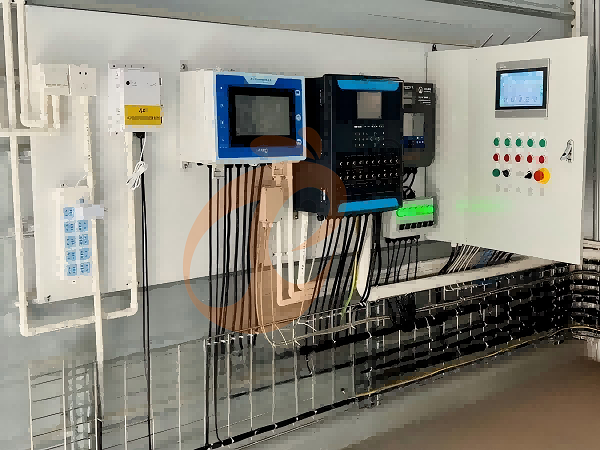
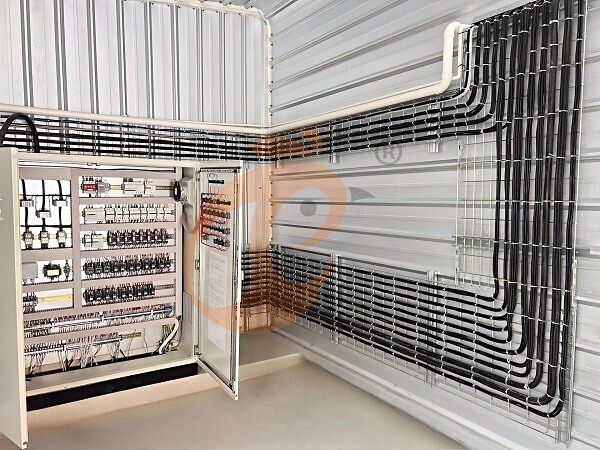
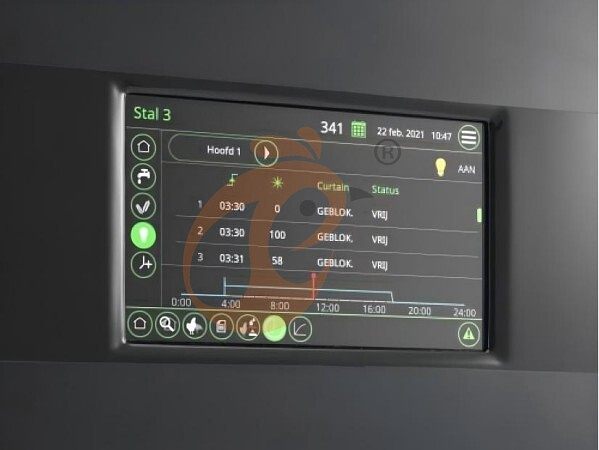
(1) Quick Reference
For reference only, the exact specifications are based on our exact quotation.
These are typical values used in industry systems and research; device choice depends on house size and budget.
(2) Why These Measurements Matter
Temperature and humidity affect chick survival, appetite, growth rate and feed conversion.
Young chicks need much higher temperatures than older birds; set-points change with age.
CO₂ and ammonia are the clearest signs that ventilation or litter management is insufficient.
Many industry guides say ammonia should be kept below ~25 ppm (and many breeding companies aim for <10 ppm for best welfare).
When ammonia rises you see poorer growth and more respiratory problems.
Water and feed sensors help detect line breaks, low supply or distribution faults quickly — preventing wasted feed, wet litter, and production loss.
Practical measurement (for example, nipple drinker flow) is a routine management task recommended by poultry companies.
"Why Choose IoT Poultry Farming System"
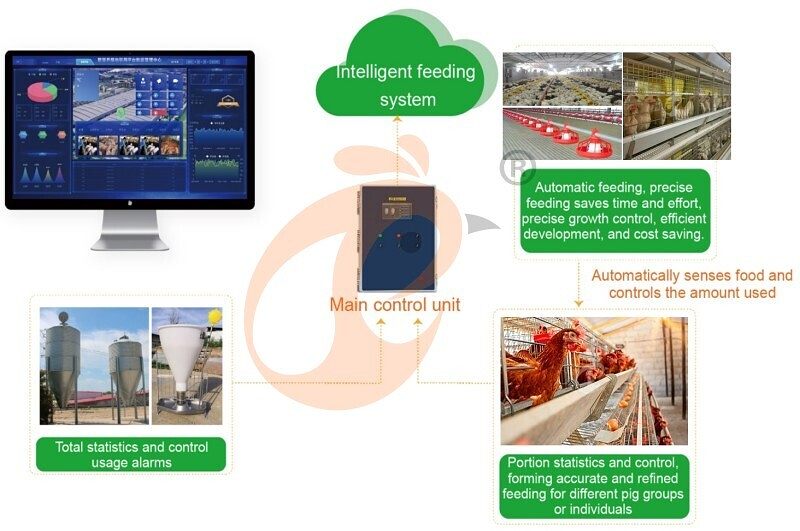
4. How A Typical IoT System Is Organized
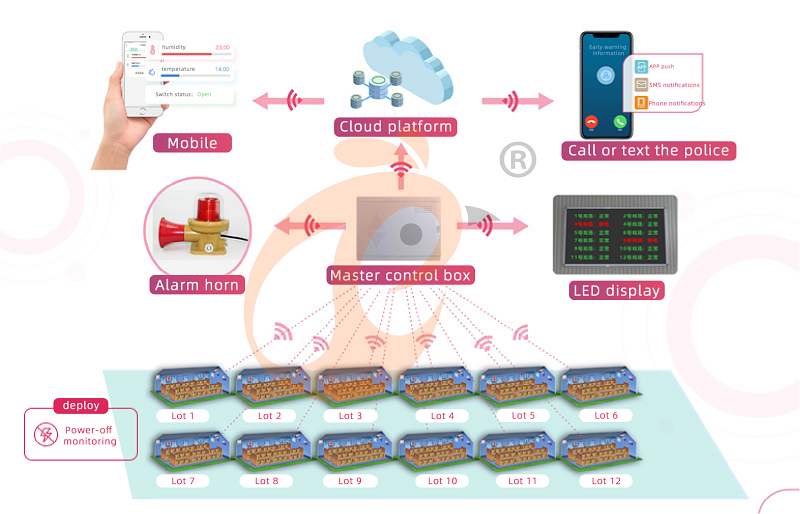
(1) Four-Tier Architecture Of A Typical IoT Poultry Farming System
Sensors at bird level collect raw signals (temp, RH, CO₂, NH₃, light, water flow).
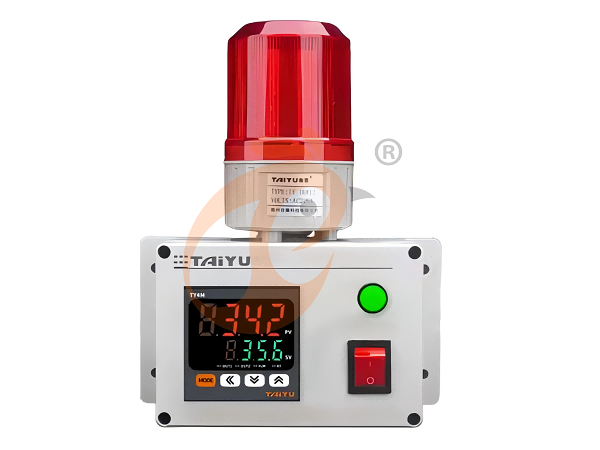
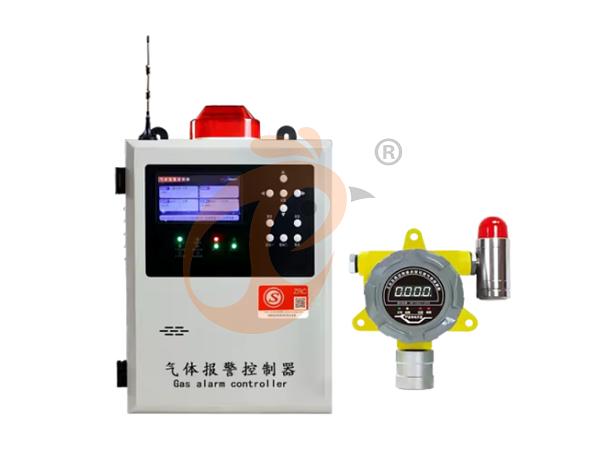
Edge controller / gateway aggregates these signals, applies simple rules (e.g., if temp > set-point + 0.8°C, increase fan speed), and sends summaries to the cloud. Local control is essential because the system must act fast even if the internet is slow.
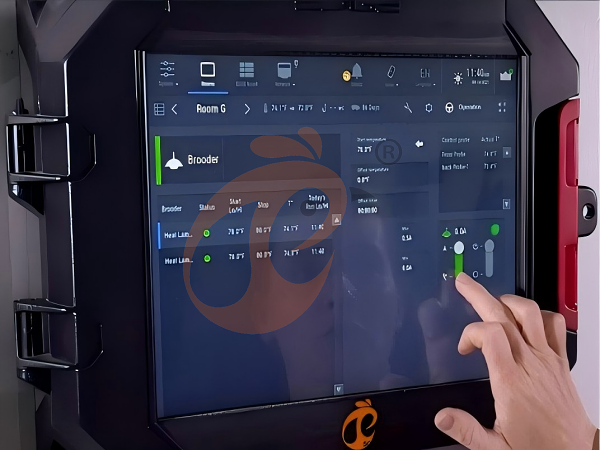
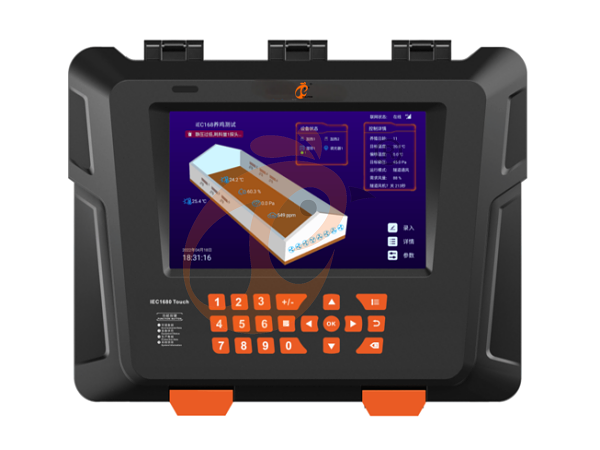
Actuators execute commands: fan inverters, dampers/inlets, heaters, cooling pad system, feed motors, and lights. Modern commercial controllers feed directly to variable-speed drives (VSDS) for fans or to actuator relays.
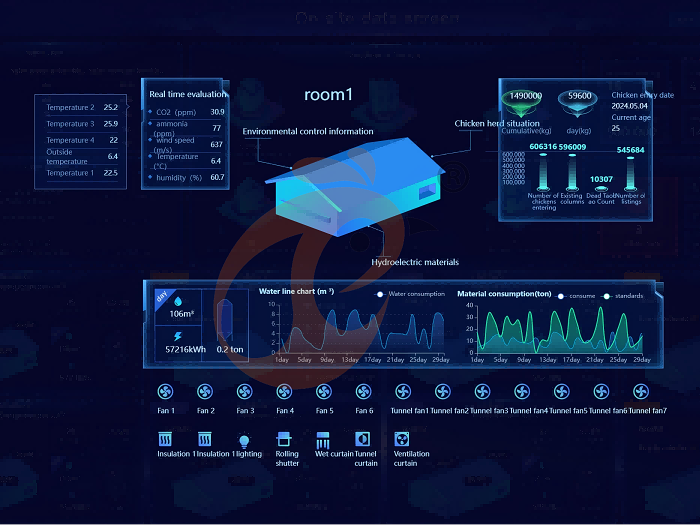
Data Screen
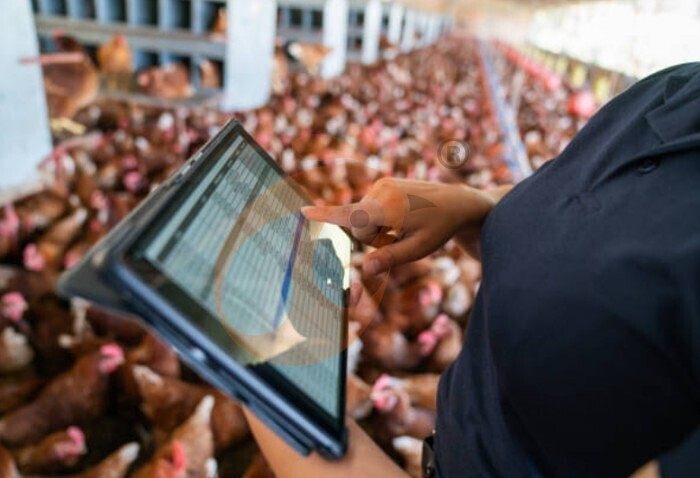
Cloud dashboard & analysis store data trends, produce alerts to phones, and (optionally) run predictive models to predict ammonia rise or ventilation failures. Historical records support traceability and regulatory requirements.
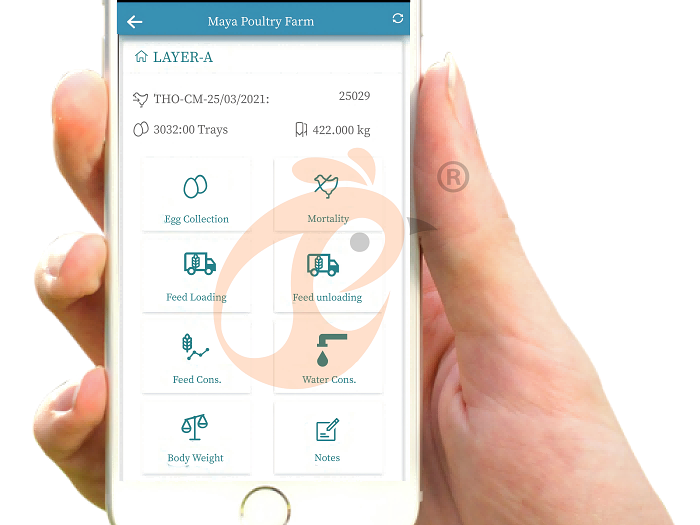
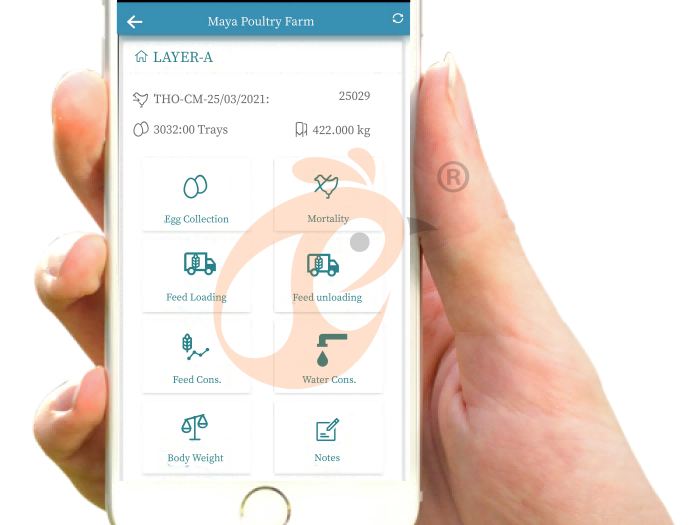
Mobile Managing app
(2) Example Climate Set-Points For Broilers (Age-Based, Simple Guide)
The data is for reference only.
Exact set-points vary by breed — use integrator or breeder guide as final authority.
"Tips Of Managing Poultry Farm And Poultry Farm"
5. Practical Products & Real Specs
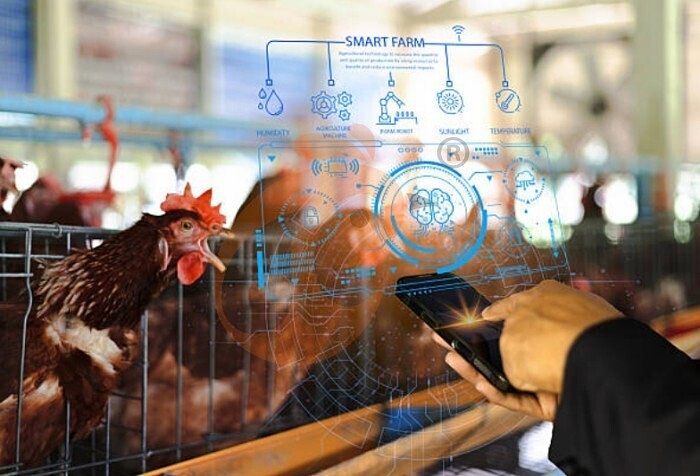
Smart Poultry Management
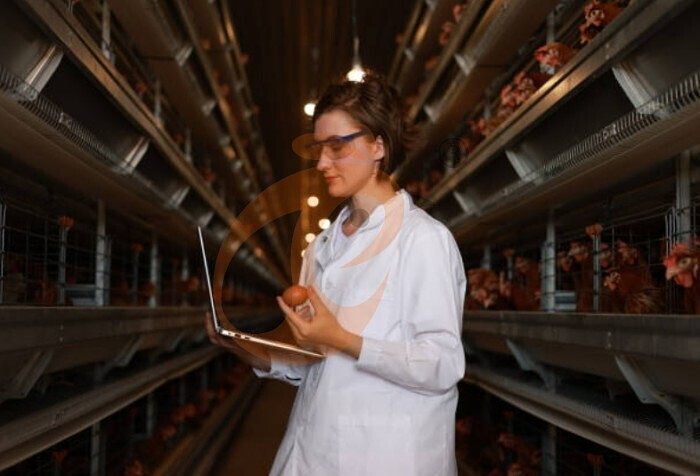
Smart Poultry Management
(1) Key Sensors And Their Practical Considerations
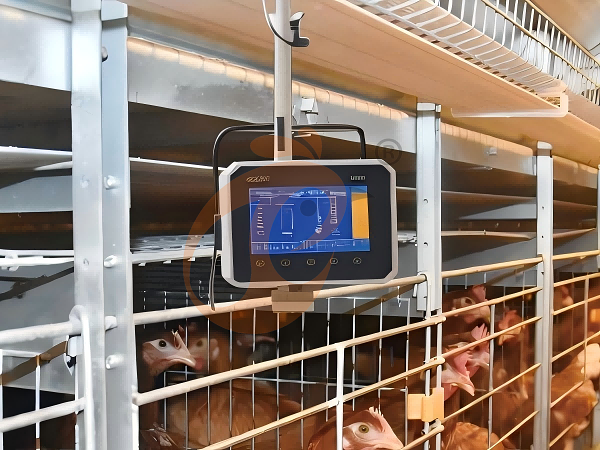
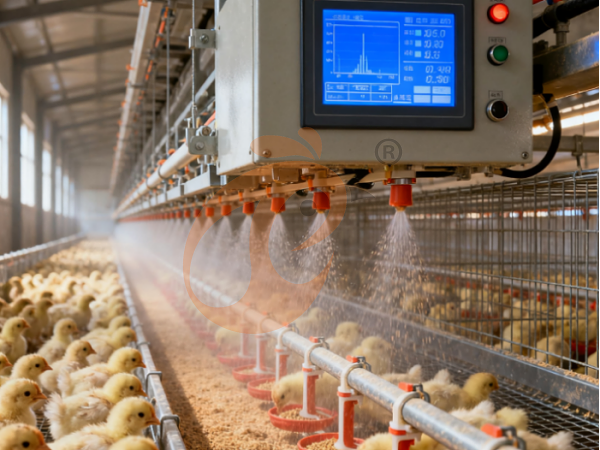
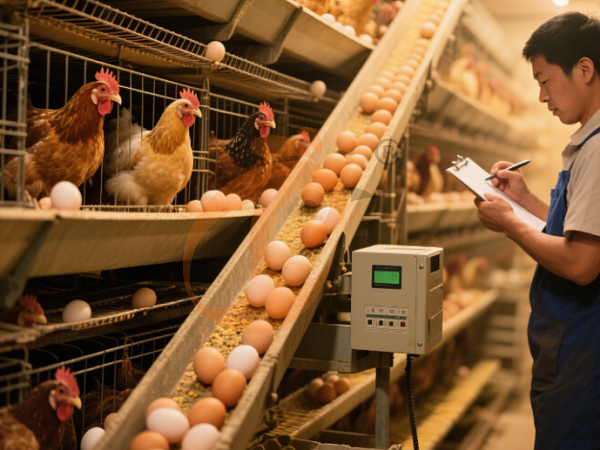
Temperature & humidity sensors: Choose poultry-grade units with a fast response and regular calibration schedule.
Sampling every 1–5 minutes is common; data loggers store trends.
Ammonia sensors: Cheaper chemical reaction sensors exist but drift — choose instruments with documented calibration intervals and place them at bird-nose height.
Target alarm thresholds at 10–25 ppm depending on your welfare standard.
CO₂ sensors: Useful in tight houses or when using circulation systems; keep CO₂ under ~3500–5000 ppm (lower is better).
(2) Actuators / Mechanical Equipment (How IoT Controls Them)
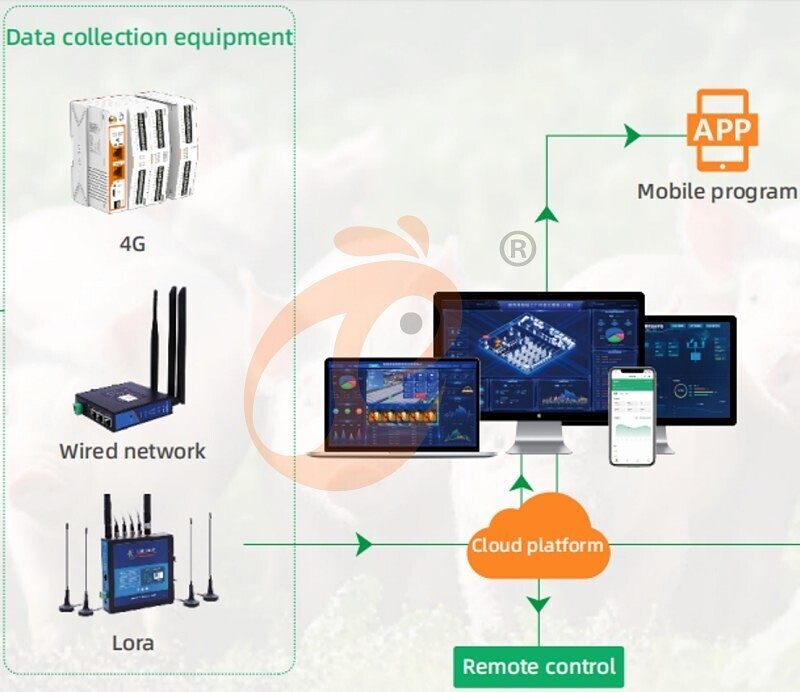
Layout Of Software And Hardware
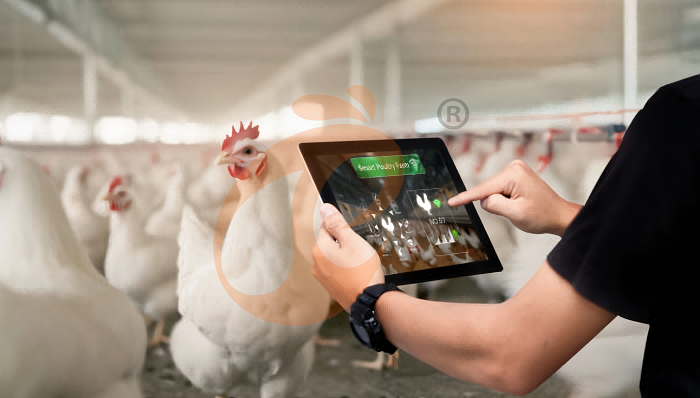
Poultry Farm-Cloud Controlling
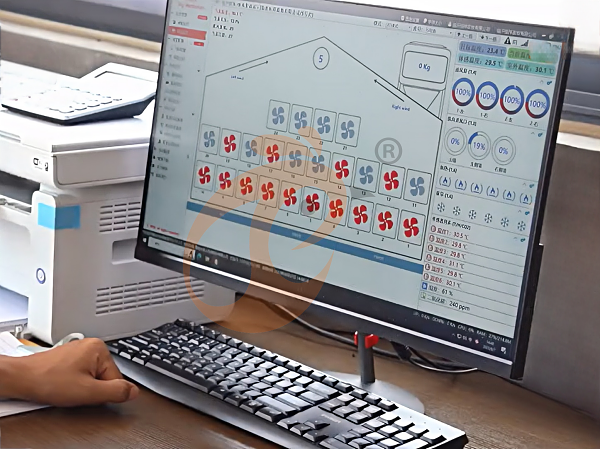

Fans & inverter drives: Modern houses use large axial fans. Example commercial axial fans are specified up to ~43,000 m³/h for large models (such fan sizes are used as summer/exhaust fans in commercial houses).
When buying, check the fan’s rated airflow at static pressure, and expect some performance loss in real life — choose one with margin.
Cooling pads system& wet-wall systems: Controlled by humidity and temperature set-points — IoT can modulate pump cycles to avoid over-humidifying.
Feed & water lines: IoT monitors feed motor run times, auger speeds or chain feeders and water pressure/flow to detect blockages or empty silos early.
For water, routine nipple flow measurement is recommended.so automated alarms can detect abnormal drops.
(3) Core System Components And Primary Responsibilities
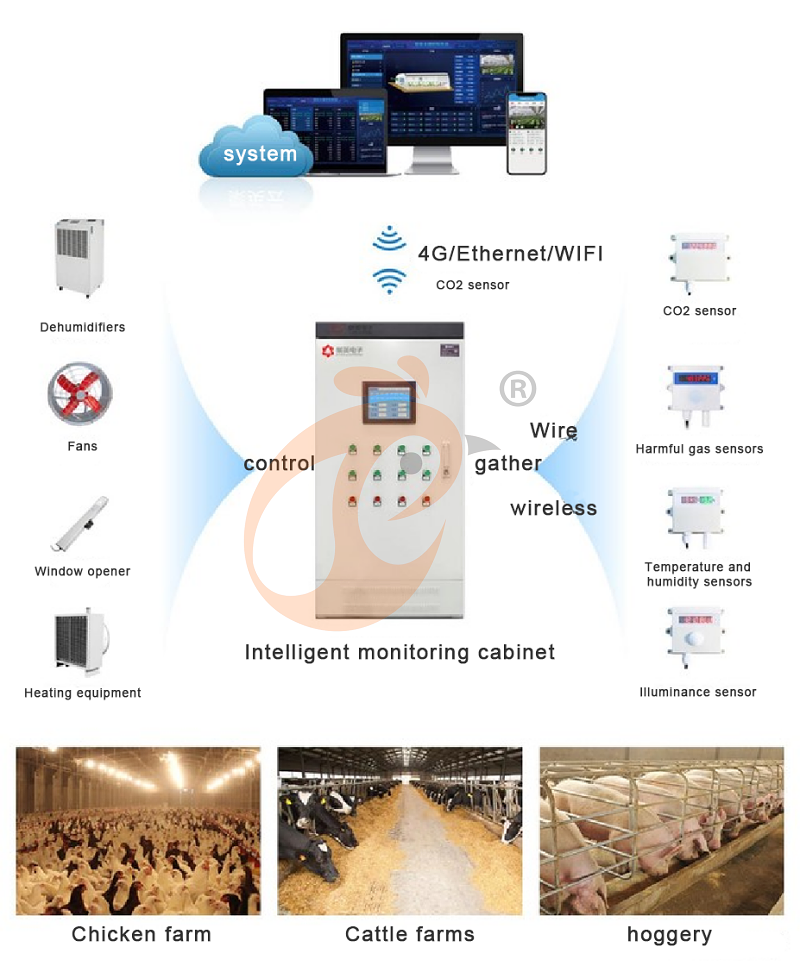
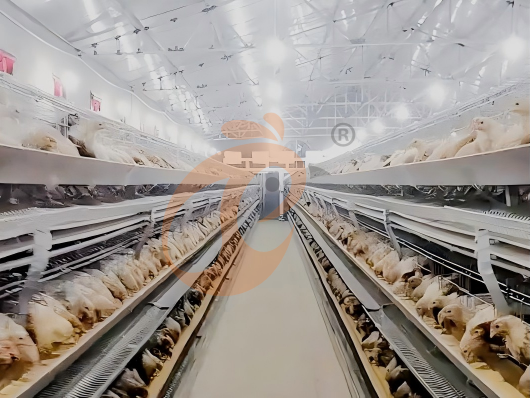
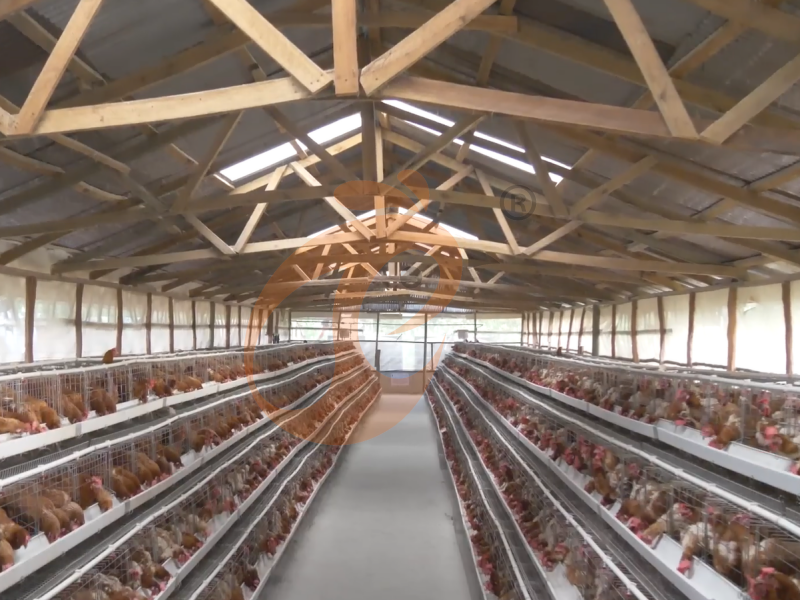
Overall Poultry Farm Arrangement
Specific configurations are subject to customer requirements or final quotation.
With this intelligent core system in place, farmers gain a powerful, automated assistant that keeps the entire house running smoothly 24/7.
6. Final Checklist Before You Buy Or Upgrade
(1) Do the set-points match your bird breed/integrator guide? (use breeder manuals)
(2) Are ammonia and carbon dioxide sensors regulated and calibrated regularly?
(3) Do your chosen fans have spare airflow capacity and proper static-pressure curves (don’t buy a fan rated only at ideal conditions)? Look for real performance specs (some commercial fans are rated up to ~43,000 m³/h for large models).
(4) Is there an obvious fallback plan (manual controls, UPS, staff training)?
Certified





Tag
Message
Products recommended
 HK Headquarter Offers EU-standard Poultry Farm Solutions, Manufacture Poultry Farm Equipment1. Continuous communication with the EU and the US
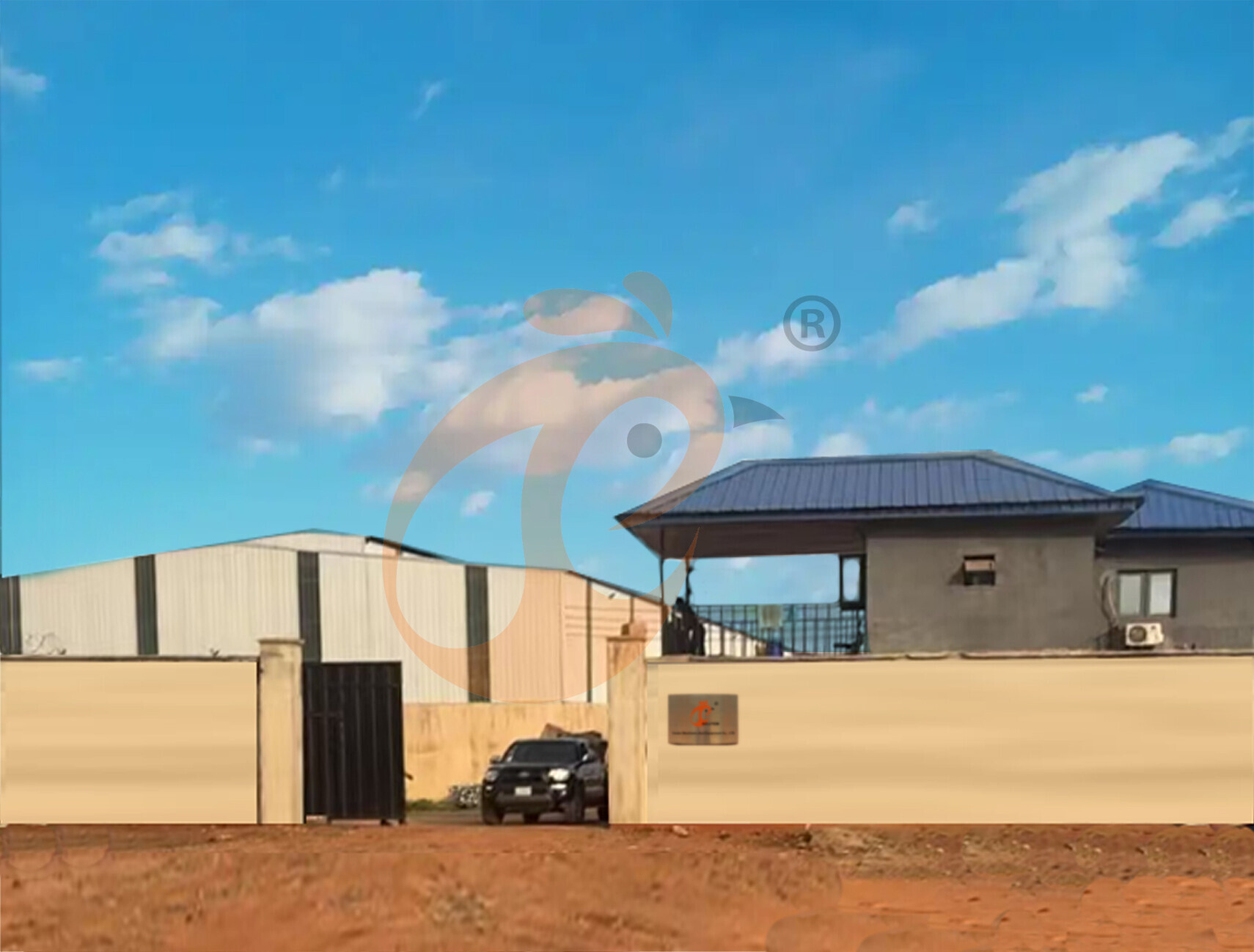
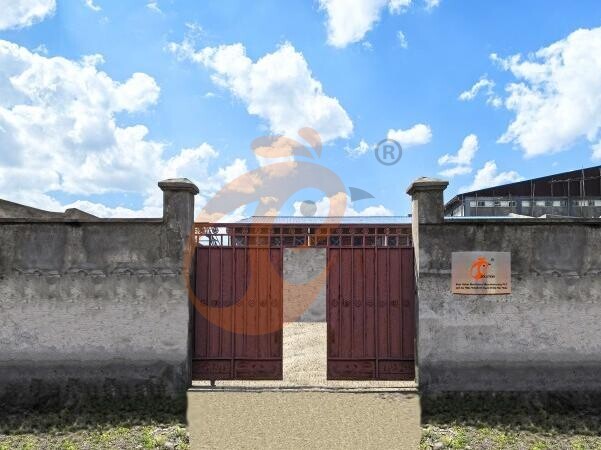
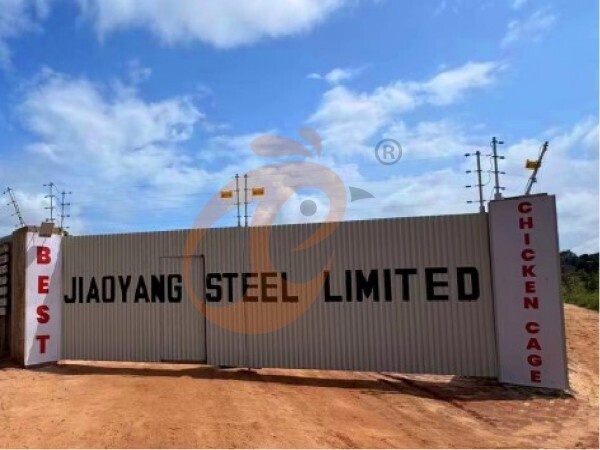
2. China, Nigeria, Ethiopia, Tanzania branch companies and factories
3. The products’ quality is customized for local poultry farms
4. Poultry cage and poultry farm equipment stock for sale
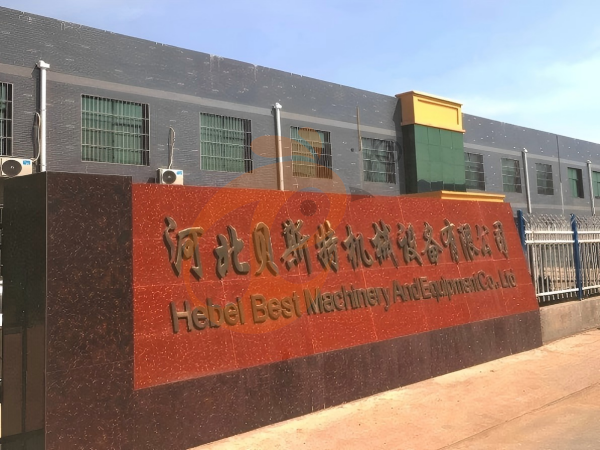
5. 24 online reception Whatsapp NO. : +8618830120193,contact us to get full informationRead More China Branch Offer Poultry Farm Business Plan, Manufacture Poultry Farm Equipment1. Address: Flat/RM 2416, 24/F, Runxing Building, Youyi Nan Street, Shijiazhuang City, Hebei Province, China
2. Poultry cage and poultry farm equipment factory and stock for sale
3. Customized for local poultry farms
4. Quality and design are based on Euro
5. 24 online reception Whatsapp NO. : +8618830120193Read More Nigeria Branch Offer Poultry Farm Business Plan, Manufacture Poultry Farm Equipment1. Address: After Sinoma Office, 200 Meters Near Danco Filling Station, Lagos/Ibadan Expressway, Lagos State, Nigeria
2. Poultry cage and poultry farm equipment factory and stock for sale
3. Customized for Nigerian poultry farms
4. Quality and design are based on Euro
5. 24 online reception Whatsapp NO. : +8618830120193Read More Ethiopia Branch Offer Poultry Farm Business Plan, Manufacture Poultry Farm Equipment1. Address: Gelan Gura, Akaki-kaliti Sub City, Addis Ababa, Ethiopia
2. Poultry cage and poultry farm equipment stock for sale
3. Customized for Ethiopian poultry farms
4. Quality and design are based on Euro
5. 24 online reception Whatsapp NO. : +8618830120193, contact us to get price listRead More Tanzania Branch Offer Poultry Farm Business Plan, Manufacture Poultry Farm Equipment1. Address: No.8, Sova Road, Msufini, Mlandizi, Kibaha, Pwani, Tanzania
2. Poultry cage and poultry farm equipment factory and stock for sale
3. Customized for Tanzanian poultry farms
4. Quality and design are based on Euro
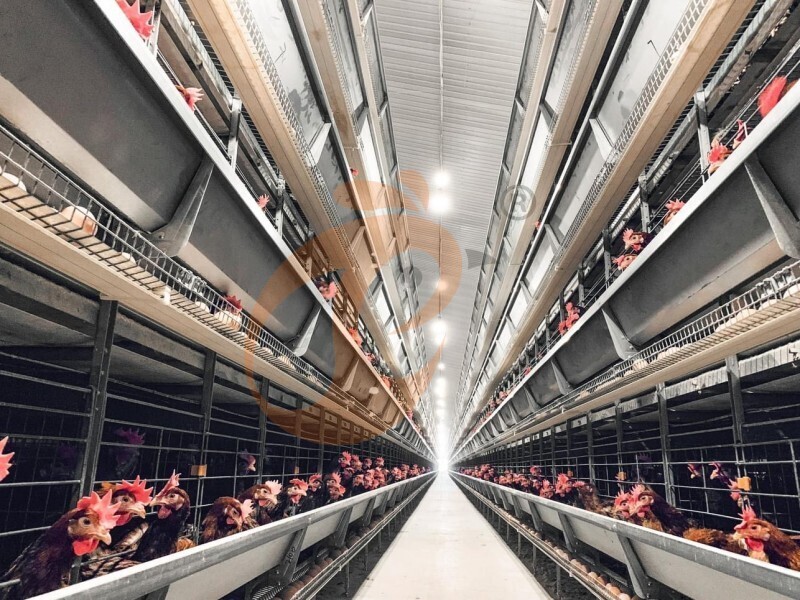
5. 24 online reception Whatsapp NO. : +8618830120193Read More Fully Automatic H Type Layer Chicken Cage1. 30,000-100,000+ layers/house chooses it, Poultry farmers can achieve an egg production rate of 96-98%
2. A significant improvement over the 85-90% typically seen in manual systems
3. A typical poultry farm can expect a 30-40% reduction in labor costs due to the automation
4. Each feeding line efficiently supplies feed to around 100,000 hens per 30 mins
5. Reception /WhatsApp NO. : +8618830120193Read More Fully Automatic A Type Layer Chicken Cage1. 10,000-50,000 layers/house chooses it
2. Cleaner egg collection reduces breakage by 0.5%
3. Improved hygiene helps reduce mortality rate to <3%
4. 1–2 technicians can handle 15,000–30,000 birds
5. Reception /WhatsApp NO. : +8618830120193Read More Semi Automatic H Type Layer Chicken Cage1. 1,00-20,000 layers/house chooses it
2. Nipple drinkers flow 30–60 ML / min
3. Hot-dip galvanized (typical coating ≥ 275 g/m²)
4. Reduce ammonia by ~ 35–40%
5. Reception /WhatsApp NO. : +8618830120193Read More Semi Automatic A Type Layer Chicken Cage1. 1,00-20,000 layers/house chooses it, no rust for 10 years, no deformation for 15 years
2. Chickens live comfortably, you can raise them with peace of mind
3. Save water, save money—efficiency you can measure
4. Improve environment quality, and increase egg production rate
5. Reception /WhatsApp NO. : +8618830120193Read More IoT Poultry Farming System1. Humidity sensor 0–100% RH ±3%
2. CO₂ sensor range 0–5000 ppm
3. Ammonia (NH₃) sensor 0–100 ppm range
4. Actuator controllers relay or 0–10V analog output
5. Reception /WhatsApp NO. : +8618830120193Read More Overall Structure IoT System In The Farm1. Breeding planning framework
2. CCTV
3. Poultry digital platform - comprehensive large screen
4. Alarm management
5. Reception /WhatsApp NO. : +8618830120193Read More Poultry House Environmental Control Smart IoT System1. Precision ventilation
2. Full site equipment control
3. Self diagnosis alarm system
4. European standard hardware
5. Reception /WhatsApp NO. : +8618830120193Read More

By clicking 'Allow All', you agree to the storage of cookies on your device to enhance site navigation, analyze site usage and assist with our marketing efforts.