






Blog
Poultry Farming Biosecurity: Six Steps To Building A Pathogen-Free Environment
A robust biosecurity plan is the single most important component of a profitable poultry farm. It is your first and strongest line of defense against costly disease outbreaks that can devastate flock health and erase your margins. At Taiyu Hongkong Group, we believe that world-class Layer cage and broiler cage systems must be paired with rigorous biosecurity protocols. We specialize in providing the engineering and operational guidance necessary to establish a pathogen-free environment. This article outlines the critical six steps essential for building and maintaining a fortress-like biosecurity program.
Taiyu Hongkong Group provides not just the equipment, but the comprehensive financial blueprint you need to succeed..For details, please read - The 2025 Ultimate Poultry Farming Guide: How To Start, Cost Analysis, And Profit Potential.
Strict Access Control: The Perimeter Defense
The primary risk vector for any poultry farm is the movement of people, vehicles, and external equipment onto the site. A strong biosecurity plan mandates rigorous control over these inputs. Establishing clear zones—from the outer perimeter to the innermost Chicken cage area—is non-negotiable. All staff, visitors, and delivery personnel must adhere to a strict protocol of showering, changing into dedicated farm clothing and footwear, and disinfecting hands before entering the production house. Similarly, all vehicles and external equipment must undergo thorough sanitization before crossing the boundary, eliminating the risk of mechanical transmission of pathogens like Avian Influenza or Newcastle disease.
Biosecurity Zones And Access Requirements
Comprehensive Vaccination And Health Monitoring
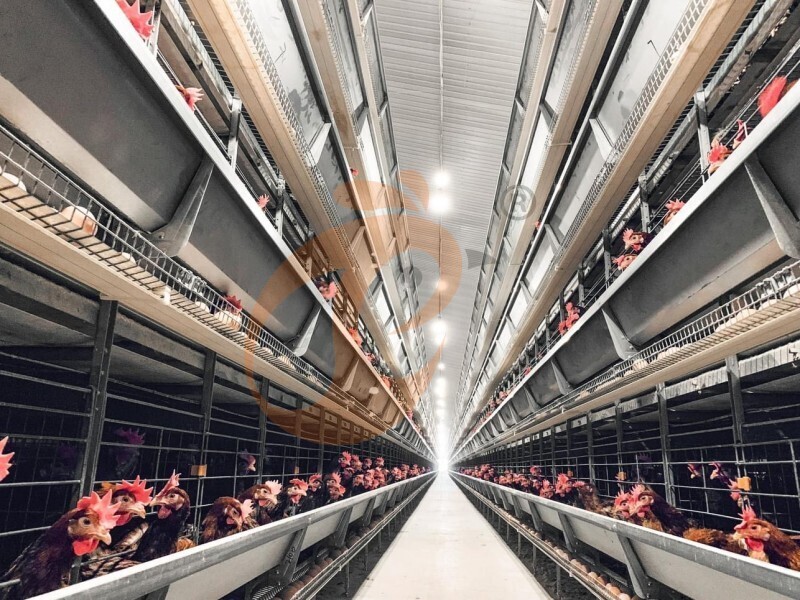
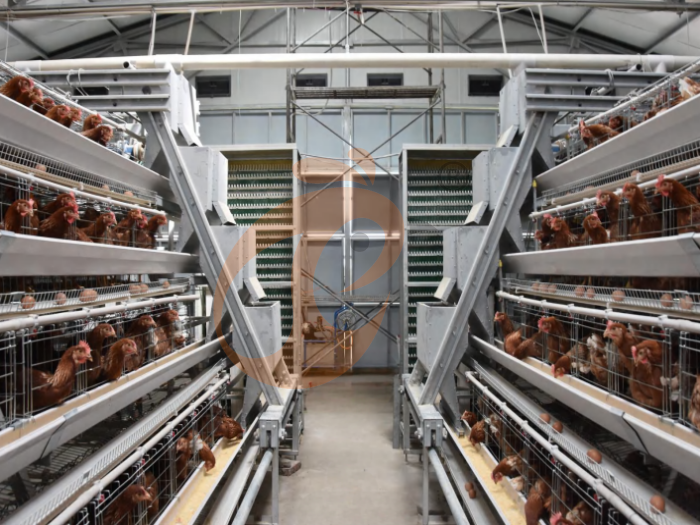
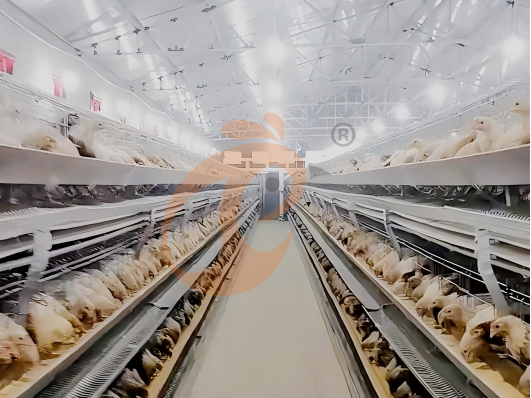
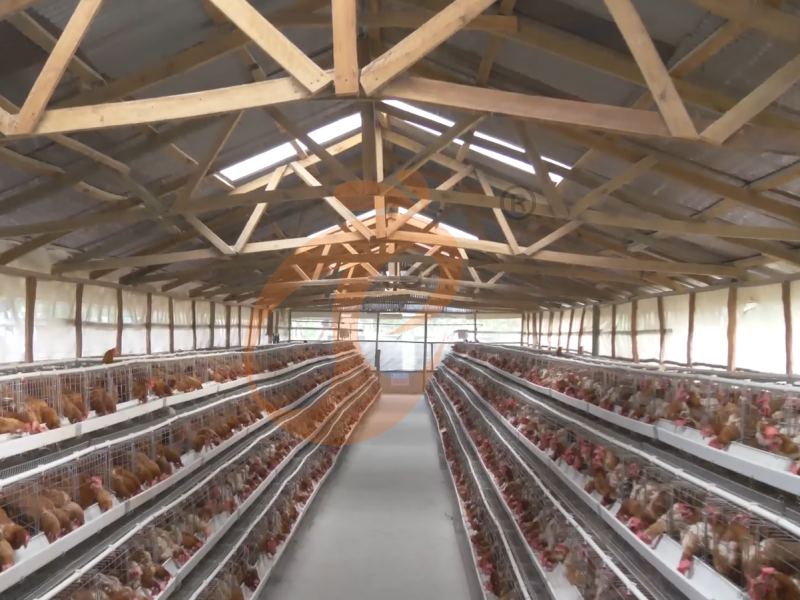
A proactive vaccination schedule is a cornerstone of flock health management, significantly reducing the impact of common diseases. However, vaccination is only effective when coupled with immediate detection and isolation protocols. Our highly automated Cage Systems, like the A-Type Broiler Cage (for grow-out) or Layer H-Type, allow for rapid identification of sick or off-feed birds. Immediate isolation of affected poultry is crucial to prevent the rapid spread of airborne or fecal pathogens throughout the high-density Chicken cage environment. Early detection can mean the difference between isolating a single cage unit and losing an entire flock. Our automated systems help keep flock mortality below the industry standard.
Health Performance In Automated Cage Systems
Water And Feed Line Hygiene: Internal Sanitation
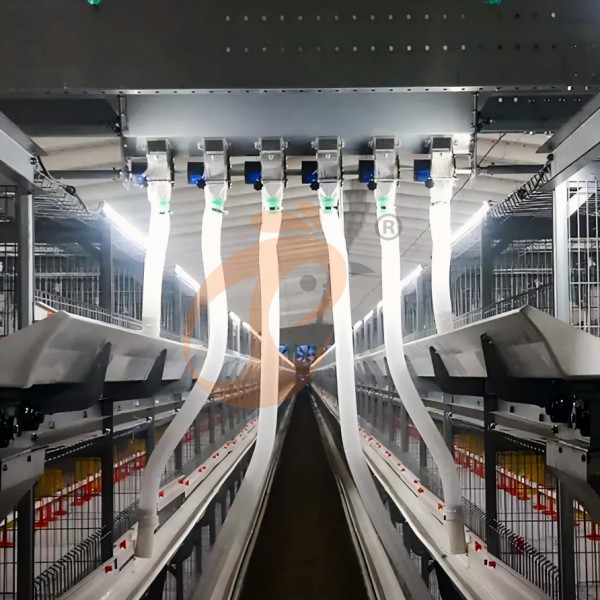
Maintaining pristine facilities, especially the water supply and feed troughs, is critical to internal biosecurity. Dirty water lines are prime breeding grounds for biofilm, bacteria, and pathogens like E. coli. Biofilm shields bacteria from disinfectants and clogs nipple drinkers, leading to reduced water intake and subsequent dehydration and illness. Similarly, clean feed troughs are essential to prevent the growth of mold or the contamination of feed. Our systems utilize PVC feed troughs and high-quality nipple drinkers that are designed for easy cleaning and maintenance.
Water Line Cleaning Protocol And Impact
Facility Sanitization: Cleaning Between Flocks
The "all-in, all-out" policy is the golden rule of poultry farm management. Once a flock is harvested, the house must be emptied, thoroughly cleaned, and disinfected. This downtime is your only chance to completely break the cycle of infection. Cleaning involves removing all organic matter (manure, dust, spilled feed) followed by washing and a final disinfection step. Our cages, constructed from hot-dip galvanized Q235 steel, are highly resistant to the corrosive chemicals used in sanitization, ensuring a lifespan of 20–30+ years even with repeated, rigorous cleaning cycles.
Disinfection Chemical Types And Applications
Waste Management: Automated Manure Removal
Proper disposal of manure and deceased birds is essential to prevent pathogen recirculation. Manure is a concentrated source of harmful bacteria and ammonia. The faster and more efficiently it is removed from the house, the cleaner and healthier the flock environment becomes. Both our A-Type and H-Type Layer cage and broiler cage designs integrate automatic belt manure removal systems. These systems transport feces out of the house frequently—often daily—to a covered storage area, dramatically reducing ammonia build-up, decreasing respiratory illness, and lowering the risk of coccidiosis.
Manure Removal System Comparison
Pest Control And Structural Integrity
Pests such as rodents, wild birds, and insects are mechanical vectors for disease, carrying pathogens between farms and flocks. An effective biosecurity plan includes structural integrity checks to prevent pest entry (sealing cracks, fitting mesh) and ongoing integrated pest management (IPM) using baits and traps. Furthermore, the selection of durable, long-lasting equipment, like our hot-dip galvanized poultry cage products, ensures there are no weak points in the barrier, preventing pests from harboring within compromised structures.
Frequently Asked Questions
What Is The Most Common Biosecurity Breach On A Poultry Farm?The most frequent breach is personnel failure to follow protocol, specifically the failure to shower and change clothing before entering the Chicken cage house. Pathogens are easily carried on street clothes and shoes.
How Often Should I Clean My Automated Water Lines?Water lines should be flushed and treated with a sanitizing agent (like a hydrogen peroxide solution or chlorine) at least once per week. Between flocks, a complete, intensive cleaning cycle is mandatory to remove all accumulated biofilm.
Does Investing In Automated Cages Improve Biosecurity?Absolutely. Automated systems (like the Taiyu A-Type Broiler Cage and Layer H-Type) inherently improve biosecurity by minimizing human presence inside the house, providing rapid waste removal, and enabling superior control over feed and water consumption.
Taiyu - Top China Poultry Cage & Equipment Supplier
Capacity handles over 10 million bird capacity annually in our manufacturing base.
Efficiency saves clients 15-20% on equipment costs through our Factory Direct Sales model.
Turnkey complete Turnkey Projects delivered with full design, installation, and after-sales support.
Global 50+ countries served with our high-quality poultry cage and equipment solutions.
Support 24/7 technical assistance available globally for fast maintenance and parts delivery.
Contact Us To Received Your Customized Poultry Farm Plan
Headquarters And Distribution Centers
Hong Kong Headquarter Taiyu Industrial Group CO., LTD
China Hebei Best Machinery And Equipment CO., LTD
Nigeria Vanke Machinery And Equipment CO., LTD
Tanzania Best Machinery And Equipment CO., LTD
Ethiopia Best Hebei Machinery Manufacturing PLC
Tag
 Fully Automatic H Type Layer Chicken Cage1. 30,000-100,000+ layers/house chooses it, Poultry farmers can achieve an egg production rate of 96-98%
2. A significant improvement over the 85-90% typically seen in manual systems
3. A typical poultry farm can expect a 30-40% reduction in labor costs due to the automation
4. Each feeding line efficiently supplies feed to around 100,000 hens per 30 mins
5. Reception /WhatsApp NO. : +8618830120193More Fully Automatic A Type Layer Chicken Cage1. 10,000-50,000 layers/house chooses it
2. Cleaner egg collection reduces breakage by 0.5%
3. Improved hygiene helps reduce mortality rate to <3%
4. 1–2 technicians can handle 15,000–30,000 birds
5. Reception /WhatsApp NO. : +8618830120193More Semi Automatic H Type Layer Chicken Cage1. 1,00-20,000 layers/house chooses it
2. Nipple drinkers flow 30–60 ML / min
3. Hot-dip galvanized (typical coating ≥ 275 g/m²)
4. Reduce ammonia by ~ 35–40%
5. Reception /WhatsApp NO. : +8618830120193More
Message
Products recommended
 HK Headquarter Offers EU-standard Poultry Farm Solutions, Manufacture Poultry Farm Equipment1. Continuous communication with the EU and the US
2. China, Nigeria, Ethiopia, Tanzania branch companies and factories
3. The products’ quality is customized for local poultry farms
4. Poultry cage and poultry farm equipment stock for sale
5. 24 online reception Whatsapp NO. : +8618830120193,contact us to get full informationRead More China Branch Offer Poultry Farm Business Plan, Manufacture Poultry Farm Equipment1. Address: Flat/RM 2416, 24/F, Runxing Building, Youyi Nan Street, Shijiazhuang City, Hebei Province, China
2. Poultry cage and poultry farm equipment factory and stock for sale
3. Customized for local poultry farms
4. Quality and design are based on Euro
5. 24 online reception Whatsapp NO. : +8618830120193Read More Nigeria Branch Offer Poultry Farm Business Plan, Manufacture Poultry Farm Equipment1. Address: After Sinoma Office, 200 Meters Near Danco Filling Station, Lagos/Ibadan Expressway, Lagos State, Nigeria
2. Poultry cage and poultry farm equipment factory and stock for sale
3. Customized for Nigerian poultry farms
4. Quality and design are based on Euro
5. 24 online reception Whatsapp NO. : +8618830120193Read More Ethiopia Branch Offer Poultry Farm Business Plan, Manufacture Poultry Farm Equipment1. Address: Gelan Gura, Akaki-kaliti Sub City, Addis Ababa, Ethiopia
2. Poultry cage and poultry farm equipment stock for sale
3. Customized for Ethiopian poultry farms
4. Quality and design are based on Euro
5. 24 online reception Whatsapp NO. : +8618830120193, contact us to get price listRead More Tanzania Branch Offer Poultry Farm Business Plan, Manufacture Poultry Farm Equipment1. Address: No.8, Sova Road, Msufini, Mlandizi, Kibaha, Pwani, Tanzania
2. Poultry cage and poultry farm equipment factory and stock for sale
3. Customized for Tanzanian poultry farms
4. Quality and design are based on Euro
5. 24 online reception Whatsapp NO. : +8618830120193Read More Fully Automatic H Type Layer Chicken Cage1. 30,000-100,000+ layers/house chooses it, Poultry farmers can achieve an egg production rate of 96-98%
2. A significant improvement over the 85-90% typically seen in manual systems
3. A typical poultry farm can expect a 30-40% reduction in labor costs due to the automation
4. Each feeding line efficiently supplies feed to around 100,000 hens per 30 mins
5. Reception /WhatsApp NO. : +8618830120193Read More Fully Automatic A Type Layer Chicken Cage1. 10,000-50,000 layers/house chooses it
2. Cleaner egg collection reduces breakage by 0.5%
3. Improved hygiene helps reduce mortality rate to <3%
4. 1–2 technicians can handle 15,000–30,000 birds
5. Reception /WhatsApp NO. : +8618830120193Read More Semi Automatic H Type Layer Chicken Cage1. 1,00-20,000 layers/house chooses it
2. Nipple drinkers flow 30–60 ML / min
3. Hot-dip galvanized (typical coating ≥ 275 g/m²)
4. Reduce ammonia by ~ 35–40%
5. Reception /WhatsApp NO. : +8618830120193Read More Semi Automatic A Type Layer Chicken Cage1. 1,00-20,000 layers/house chooses it, no rust for 10 years, no deformation for 15 years
2. Chickens live comfortably, you can raise them with peace of mind
3. Save water, save money—efficiency you can measure
4. Improve environment quality, and increase egg production rate
5. Reception /WhatsApp NO. : +8618830120193Read More
By clicking 'Allow All', you agree to the storage of cookies on your device to enhance site navigation, analyze site usage and assist with our marketing efforts.