






Blog
Feed mixer systems in chicken farms regulate ingredient homogenization accuracy across batch production lines.
Industrial poultry feed mixer performance directly affects feed conversion ratio stability and flock growth uniformity.
Mechanical mixing structure determines particle dispersion behavior and nutrient distribution consistency in formulated rations.
Energy consumption per ton feed is controlled through motor load, chamber geometry, and cycle optimization.
Automation systems reduce batching deviation and improve production traceability in large scale poultry operations.
Get professional poultry farm construction guidance, equipment selection solutions, and the latest price lists, whatsApp to +8618830120193, +2348111199996, or click to learn more.
Feed Mixer For Chicken Farms Overview
A feed mixer for chicken farms is an engineered blending system designed to process grains, protein meals, amino acids, and micronutrient premixes into a uniform feed matrix.
The system objective is to minimize nutrient concentration variance per kilogram feed while maintaining stable discharge throughput across repeated batch cycles.
In industrial poultry production, feed mixer systems are directly linked to performance indicators such as feed conversion ratio (FCR), growth curve uniformity, and mortality deviation control across broiler and layer populations.
Industrial demand for poultry feed mixer systems continues increasing due to expansion of automated chicken farming infrastructure.
Functional Structure Of Feed Mixer Systems
Feed mixer architecture is composed of mechanical, electrical, and material flow subsystems.
Each subsystem contributes to mixing efficiency, energy transfer, and discharge stability.
Structural configuration determines shear intensity and particle circulation pattern inside the mixing chamber.
Data is for reference only.Swipe horizontally to view full table.
Engineering Impact On Poultry Output Stability
Feed mixer system performance directly determines nutrient distribution variance across production batches.
Even minor deviation in amino acid or vitamin concentration leads to measurable changes in flock weight dispersion index.
Industrial poultry feed mixer systems are therefore evaluated based on statistical homogeneity rather than visual mixing appearance.
Key engineering output variables include CV%, nutrient dispersion per kg feed, and batch-to-batch deviation rate.
Feed Mixer Types And Industrial Selection Logic
Mixer selection depends on throughput demand, formulation complexity, and automation integration level.
Data is for reference only.Swipe horizontally to view full table.
Capacity Design Based On Farm Throughput Model
Feed mixer capacity must match daily feed demand flow rate rather than static flock size.
Engineering design is based on throughput equilibrium between feed production rate and consumption rate.
Key variables include daily feed demand (kg/day), batch cycle frequency, and mixer discharge efficiency.
Data is for reference only.Swipe horizontally to view full table.
Feed Composition And Particle Distribution Control
Modern poultry feed formulations contain heterogeneous particles with density variation from 0.3 to 1.2 g/cm³.
Without controlled mixing kinetics, gravitational segregation occurs during discharge, leading to micronutrient clustering.
Feed mixer systems counteract this through shear flow induction and axial circulation dynamics.
SEO term integration industrial chicken feed mixer equipment is optimized to maintain micronutrient stability under multi-density material conditions.
Energy Consumption And System Efficiency Model
Energy performance of feed mixer systems is measured in kilowatt hours per ton of processed feed.
Optimization focuses on reducing torque loss and improving mixing efficiency per unit energy input.
Data is for reference only.Swipe horizontally to view full table.
Quality Control And Production Benchmarks
Feed mixer performance validation is conducted using tracer element distribution and post-mix sampling protocols.
Data is for reference only.Swipe horizontally to view full table.
Structural Durability And Wear Engineering
Feed mixer systems operate under continuous abrasive loading due to grain friction cycles.
Wear resistance is determined by metallurgy selection and surface hardness treatment.
Data is for reference only.Swipe horizontally to view full table.
Automation And Control Architecture
Modern poultry feed mixer systems integrate PLC-based control logic, load cell feedback loops, and automated batching sequences.
System accuracy is maintained through closed loop control of ingredient dosing with deviation tolerance below 0.5%.
Data logging enables traceable batch records for industrial compliance environments.
Maintenance Engineering And Lifecycle Control
Maintenance scheduling is defined by operational cycle thresholds rather than calendar intervals.
Wear components are monitored using vibration and load signature analysis to predict failure intervals.
Data is for reference only.Swipe horizontally to view full table.
Frequently Asked Questions
Q1: What determines feed mixer capacity selection for poultry farms?
A1: Capacity is determined by daily feed demand, batch cycle time, and discharge efficiency.
A 10,000-bird farm typically requires 400–1,600 kg/day processing capacity with 500–1,000 kg batch systems.
Q2: What is the optimal mixing time for poultry feed systems?
A2: Industrial systems operate between 4 and 18 minutes per batch depending on mixer geometry.
Paddle mixers achieve faster cycles due to higher shear intensity, typically 4–10 minutes.
Q3: What CV value is required for commercial poultry feed production?
A3: Commercial standards require CV between 3% and 10%.
Advanced broiler operations target below 5% to ensure nutrient distribution stability across feed batches.
Taiyu (HK) Group - One Of China Biggest Feed Mill Manufacturer
Industrial feed mixer system engineered for poultry feed homogenization accuracy control.
Factory direct production of poultry feed mixer equipment with automated batching integration.
Global poultry farming equipment supply chain covering mixer, cage system, and feeding line.
Turn key poultry engineering projects supporting large scale automated chicken farm construction systems.
Industrial poultry feed mixer manufacturing with stainless steel chamber and high efficiency motor systems.
Contact Us To Received Your Customized Poultry Farm Plan
Headquarters And Branchs

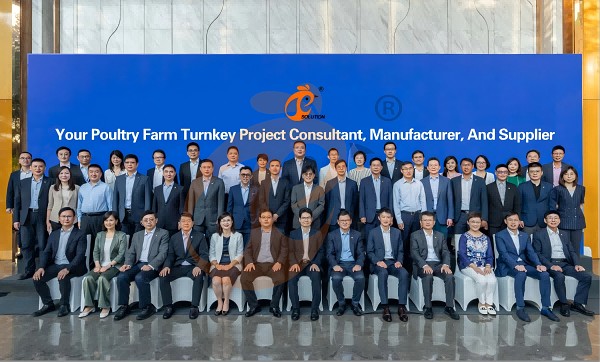
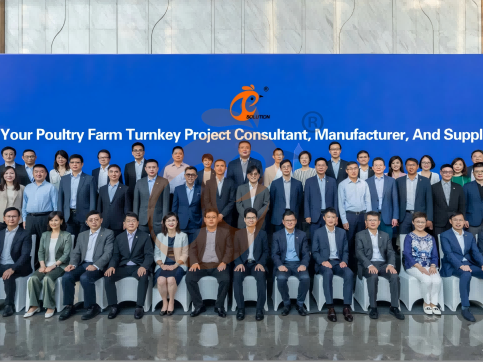
Hong Kong Headquarter Management Team
Hong Kong Headquarter Taiyu Industrial Group CO., LTD
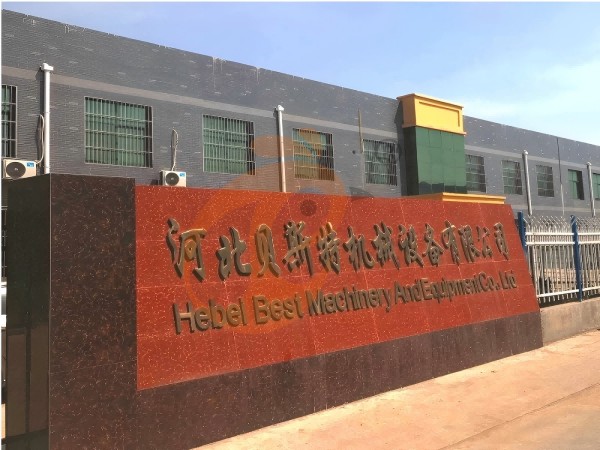
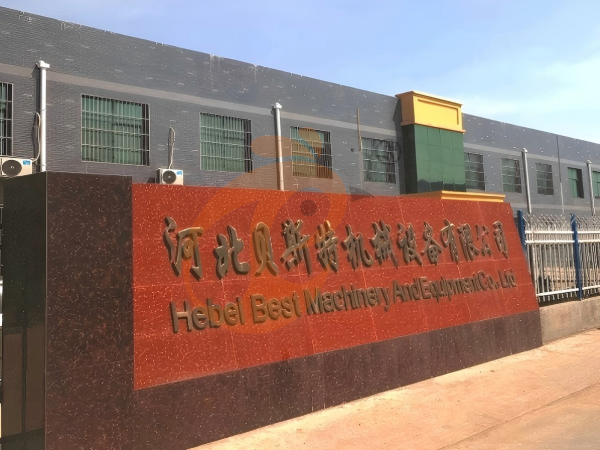
China Hebei Best Machinery And Equipment CO., LTD
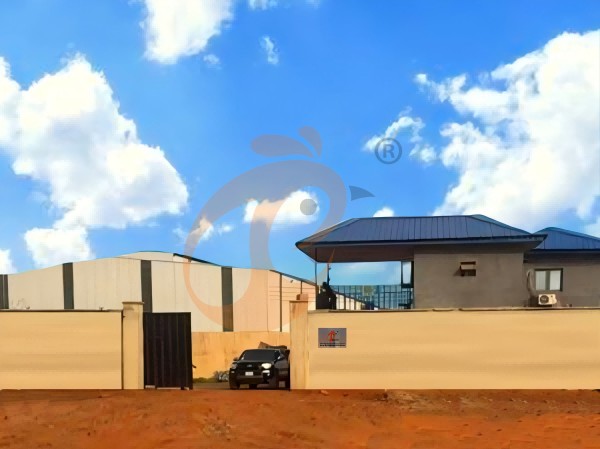
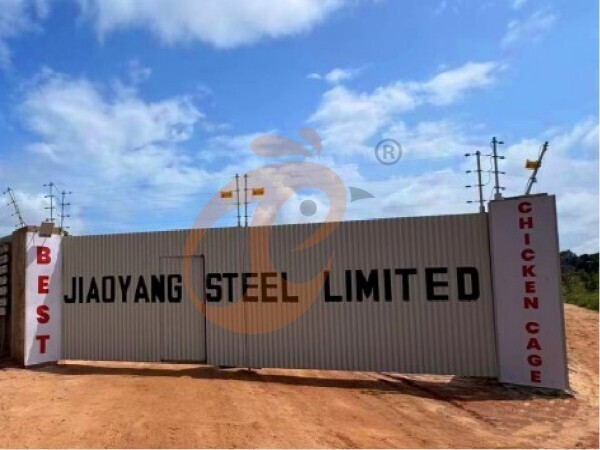
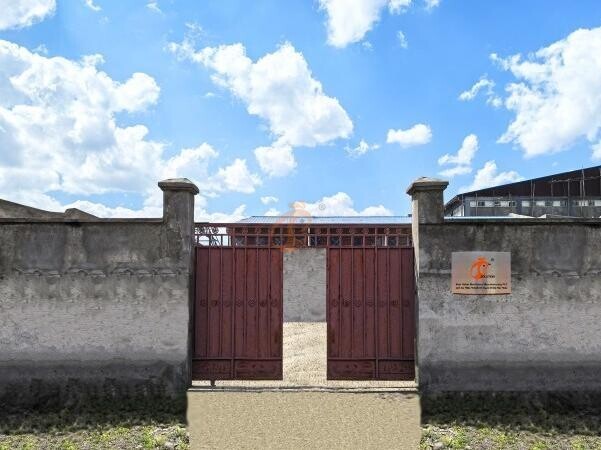
Nigeria Vanke Machinery And Equipment CO., LTD
Tanzania Best Machinery And Equipment CO., LTD
Ethiopia Best Hebei Machinery Manufacturing PLC
Reception /24 WhatsApp NO. : +8618830120193
FAQ
What Moisture Control Standards Are Required In Feed Milling For Poultry Chicken Feed?
Conditioning moisture increases to 16–18% before pelleting for optimal starch gelatinization.
Final feed moisture is controlled at 11–13% to ensure long-term storage stability.
What Energy Consumption Levels Are Standard In Feed Mixer And Feed Mill Operations For Poultry Chicken Farms?
Mixing systems require 3–8 kWh per batch depending on mixer volume and load ratio.
Pelletizing units operate at 60–90 kWh per ton for high-density poultry feed production.
What Raw Material Ratios Are Commonly Processed In Poultry Chicken Feed Mills?
Soybean meal accounts for 18–25% as main protein contributor for growth performance.
Premix addition remains at 2–5% ensuring vitamins and mineral balance stability.
Message
Products recommended
 HK Headquarter Offers EU-standard Poultry Farm Solutions, Manufacture Poultry Farm Equipment1. Continuous communication with the EU and the US
2. China, Nigeria, Ethiopia, Tanzania branch companies and factories
3. The products’ quality is customized for local poultry farms
4. Poultry cage and poultry farm equipment stock for sale
5. 24 online reception Whatsapp NO. : +8618830120193,contact us to get full informationRead More China Branch Offer Poultry Farm Business Plan, Manufacture Poultry Farm Equipment1. Address: Flat/RM 2416, 24/F, Runxing Building, Youyi Nan Street, Shijiazhuang City, Hebei Province, China
2. Poultry cage and poultry farm equipment factory and stock for sale
3. Customized for local poultry farms
4. Quality and design are based on Euro
5. 24 online reception Whatsapp NO. : +8618830120193Read More Nigeria Branch Offer Poultry Farm Business Plan, Manufacture Poultry Farm Equipment1. Address: After Sinoma Office, 200 Meters Near Danco Filling Station, Lagos/Ibadan Expressway, Lagos State, Nigeria
2. Poultry cage and poultry farm equipment factory and stock for sale
3. Customized for Nigerian poultry farms
4. Quality and design are based on Euro
5. 24 online reception Whatsapp NO. : +8618830120193Read More Ethiopia Branch Offer Poultry Farm Business Plan, Manufacture Poultry Farm Equipment1. Address: Gelan Gura, Akaki-kaliti Sub City, Addis Ababa, Ethiopia
2. Poultry cage and poultry farm equipment stock for sale
3. Customized for Ethiopian poultry farms
4. Quality and design are based on Euro
5. 24 online reception Whatsapp NO. : +8618830120193, contact us to get price listRead More Tanzania Branch Offer Poultry Farm Business Plan, Manufacture Poultry Farm Equipment1. Address: No.8, Sova Road, Msufini, Mlandizi, Kibaha, Pwani, Tanzania
2. Poultry cage and poultry farm equipment factory and stock for sale
3. Customized for Tanzanian poultry farms
4. Quality and design are based on Euro
5. 24 online reception Whatsapp NO. : +8618830120193Read More Fully Automatic H Type Layer Chicken Cage1. 30,000-100,000+ layers/house chooses it, Poultry farmers can achieve an egg production rate of 96-98%
2. A significant improvement over the 85-90% typically seen in manual systems
3. A typical poultry farm can expect a 30-40% reduction in labor costs due to the automation
4. Each feeding line efficiently supplies feed to around 100,000 hens per 30 mins
5. Reception /WhatsApp NO. : +8618830120193Read More Fully Automatic A Type Layer Chicken Cage1. 10,000-50,000 layers/house chooses it
2. Cleaner egg collection reduces breakage by 0.5%
3. Improved hygiene helps reduce mortality rate to <3%
4. 1–2 technicians can handle 15,000–30,000 birds
5. Reception /WhatsApp NO. : +8618830120193Read More Semi Automatic H Type Layer Chicken Cage1. 1,00-20,000 layers/house chooses it
2. Nipple drinkers flow 30–60 ML / min
3. Hot-dip galvanized (typical coating ≥ 275 g/m²)
4. Reduce ammonia by ~ 35–40%
5. Reception /WhatsApp NO. : +8618830120193Read More Semi Automatic A Type Layer Chicken Cage1. 1,00-20,000 layers/house chooses it, no rust for 10 years, no deformation for 15 years
2. Chickens live comfortably, you can raise them with peace of mind
3. Save water, save money—efficiency you can measure
4. Improve environment quality, and increase egg production rate
5. Reception /WhatsApp NO. : +8618830120193Read More
By clicking 'Allow All', you agree to the storage of cookies on your device to enhance site navigation, analyze site usage and assist with our marketing efforts.