






Blog
Modern poultry feed mill systems support stable broiler growth, layer productivity, and feed conversion optimization across commercial chicken farms.
Precision feed manufacturing technology improves pellet durability, nutrient uniformity, and raw material utilization during intensive poultry production cycles.
Hammer mill grinding systems, poultry feed mixer equipment, and pellet machine operation directly influence poultry nutrition absorption efficiency.
Automated batching systems reduce formulation deviation while improving poultry feed production consistency and factory output capacity.
Integrated poultry feed processing lines minimize feed waste, stabilize operational cost control, and improve commercial poultry farming profitability.
Get professional poultry farm construction guidance, equipment selection solutions, and the latest price lists, whatsApp to +8618830120193, +2348111199996, or click to learn more.
Why Poultry Farms Depend On Efficient Feed Mill Operation
Feed quality determines how efficiently chickens convert nutrients into body weight and egg production.
Broilers require stable protein, amino acid, calcium, phosphorus, and energy intake every day.
Even small inconsistencies in poultry feed formulation can reduce growth performance.
When pellet durability declines, chickens consume more fines and dust instead of complete pellets.
This increases feed sorting behavior and lowers nutrient intake uniformity across the flock.
Data is for reference only.Swipe horizontally to view full table.
Commercial poultry farms therefore prioritize feed mill optimization as a long-term production strategy.
Raw Material Storage And Feed Ingredient Management
The first step in poultry feed mill operation begins with ingredient handling.
Corn, soybean meal, wheat bran, fish meal, limestone powder, and vitamin premixes must be stored under controlled conditions before entering the production line.
Corn with moisture above 14% may develop fungal contamination within several weeks under warm environmental conditions.
Soybean meal stored under excessive humidity may experience protein degradation and bacterial growth.
Fish meal exposed to high temperature may oxidize rapidly and reduce fat quality.
Because of this, poultry feed mills use ventilation systems, temperature monitoring devices, and controlled inventory rotation systems.
Data is for reference only.Swipe horizontally to view full table.
Large poultry feed mills often maintain warehouse humidity between 55% and 65% to reduce mold development risk.
Scientific Insight: Why Moisture Control Is Critical
Moisture content directly affects microbial activity inside poultry feed ingredients.
At moisture levels above 15%, fungal growth may accelerate rapidly.
Mycotoxins produced by molds can reduce broiler weight gain by 7%–13% and negatively affect liver health.
Feed contamination may also weaken vaccine response and reduce flock immunity.
Data is for reference only.Swipe horizontally to view full table.
Modern poultry farms therefore monitor moisture continuously during both storage and transportation stages.
Hammer Mill Grinding And Particle Size Optimization
Grinding is one of the most important processes in poultry feed manufacturing.
Hammer mills reduce feed ingredients into particles suitable for digestion and pelleting.
Broiler starter feed generally requires finer particles because young chicks have limited digestive capacity.
Layer feed often uses larger particles to improve gizzard development and calcium retention.
Particle size inconsistency creates uneven digestion and nutrient absorption.
Very fine particles also increase electricity consumption and dust generation.
Data is for reference only.Swipe horizontally to view full table.
Efficient poultry feed processing systems balance digestibility with pellet durability and energy efficiency.
Poultry Digestion Depends On Feed Particle Structure
Chickens consume feed without chewing.
Digestive performance therefore depends heavily on feed particle size distribution.
Particles below 0.4 mm may pass too rapidly through the digestive tract.
Particles above 3 mm can reduce intake consistency in young broilers.
Commercial poultry nutrition programs commonly target particle sizes between 900 and 1300 microns during broiler grower stages.
Data is for reference only.Swipe horizontally to view full table.
Grinding efficiency therefore influences both feed quality and operating cost.
Feed Mixing Accuracy And Nutrient Distribution
After grinding, ingredients enter the feed mixing system.
The mixer distributes protein sources, amino acids, vitamins, minerals, enzymes, and additives evenly across the batch.
Inconsistent mixing creates nutrient segregation.
Some birds may consume excessive nutrients while others receive deficient feed.
This reduces flock uniformity and processing efficiency.
Commercial poultry companies therefore monitor feed mixing coefficient of variation values carefully.
Data is for reference only.Swipe horizontally to view full table.
Feed mills producing over 25 tons per hour increasingly adopt paddle mixing systems because of faster production cycles and more stable feed uniformity.
Educational Section: Why Feed Uniformity Matters In Broiler Farms
Modern broilers may achieve slaughter weights between 2.4 and 2.8 kg within 35–42 days.
This rapid growth requires extremely stable nutrient intake.
If feed batches vary in amino acid concentration, body weight variation across the flock increases significantly.
Uneven broiler size reduces processing plant efficiency and lowers product consistency.
Data is for reference only.Swipe horizontally to view full table.
Accurate feed mixing therefore directly affects poultry processing profitability.
Steam Conditioning And Pellet Mill Operation
Steam conditioning prepares poultry feed mash before pelleting.
Steam softens feed particles and improves starch gelatinization.
This increases pellet strength and feed digestibility.
However, excessive temperature may destroy heat-sensitive vitamins and enzymes.
Feed mills therefore carefully monitor steam pressure, retention time, and mash moisture levels.
Data is for reference only.Swipe horizontally to view full table.
Stable steam conditioning improves pellet quality and reduces fines during transportation.
Pellet Quality Determines Feed Intake Efficiency
Pellet quality strongly influences broiler feeding behavior.
Birds consuming complete pellets spend less time eating and waste less feed.
Research from commercial poultry operations shows pellet feed may improve feed conversion ratio by approximately 0.05–0.08 compared with mash feed.
Pellet durability also affects transportation efficiency.
Data is for reference only.Swipe horizontally to view full table.
Large poultry farms therefore perform pellet durability testing every production shift.
Cooling, Screening, And Feed Quality Verification
Fresh pellets leaving the pellet machine may reach temperatures between 80°C and 88°C.
If pellets are transferred directly into storage bins without cooling, condensation may form and increase mold growth risk.
Counterflow coolers gradually reduce pellet temperature and moisture.
Vibrating screens then separate broken particles before feed packaging.
Data is for reference only.Swipe horizontally to view full table.
Efficient cooling improves feed storage stability and transportation safety.
Laboratory Testing Protects Poultry Feed Consistency
Modern poultry feed mills operate internal quality control laboratories.
Laboratory testing verifies feed formulation accuracy and microbiological safety.
Routine testing commonly includes crude protein analysis, calcium concentration, phosphorus ratio, moisture measurement, and Salmonella screening.
Data is for reference only.Swipe horizontally to view full table.
Large commercial feed mills may collect production samples every 2–3 hours during operation.
Automated Feed Mill Systems Improve Poultry Production Stability
Automation technology has become increasingly important in commercial poultry feed manufacturing.
Modern feed mills integrate sensors, PLC systems, automated weighing systems, and digital monitoring platforms.
These technologies improve batching precision and reduce operational downtime.
Automation also improves ingredient traceability and maintenance planning.
Data is for reference only.Swipe horizontally to view full table.
Large poultry integrations increasingly adopt automation to stabilize long-term production efficiency.
Economic Benefits Of Efficient Poultry Feed Mill Operation
Feed mill efficiency directly influences poultry farm profitability.
Reducing feed waste, stabilizing pellet quality, lowering electricity usage, and improving flock performance all generate measurable economic returns.
A feed mill producing 200 tons daily may reduce annual feed losses by more than 500 metric tons when transport waste declines from 5% to 2%.
Annual operating savings may exceed $344000 in medium-scale poultry feed factories.
European union standard reference only.
Data is for reference only.Swipe horizontally to view full table.
Efficient poultry feed mills therefore become major profit control centers inside modern chicken farming systems.
Frequently Asked Questions
Q1: What particle size is suitable for broiler feed production?
A1:Broiler starter feed commonly uses particle sizes between 0.8 mm and 1.2 mm to improve nutrient absorption efficiency during early growth stages.
Broiler finisher feed generally uses particle sizes between 1.6 mm and 2.0 mm to support feed intake and pellet durability.
Q2: Why does pellet durability affect poultry farming profitability?
A3: Pellet durability directly influences feed waste, transportation loss, and nutrient consistency.
Pellet durability above 90% may improve broiler feed conversion ratio by approximately 0.05 while reducing feed fines during transportation.
Q3: How often should poultry feed mills perform laboratory testing?
A3: Commercial poultry feed mills commonly perform moisture testing every production batch and complete nutritional laboratory analysis every 2–4 operating hours.
Routine testing improves feed consistency and reduces production risk inside intensive poultry farming systems.
Taiyu (HK) Group - One Of China Largest Feed Mill Operation Manufacturer
Commercial poultry feed mill systems support stable broiler and layer feed production efficiency.
Global factory direct poultry equipment supply reduces investment and transportation operating costs.
Automated poultry feed mixer and pellet machine systems improve nutrient distribution consistency.
Turn key poultry engineering projects support integrated chicken farm production development worldwide.
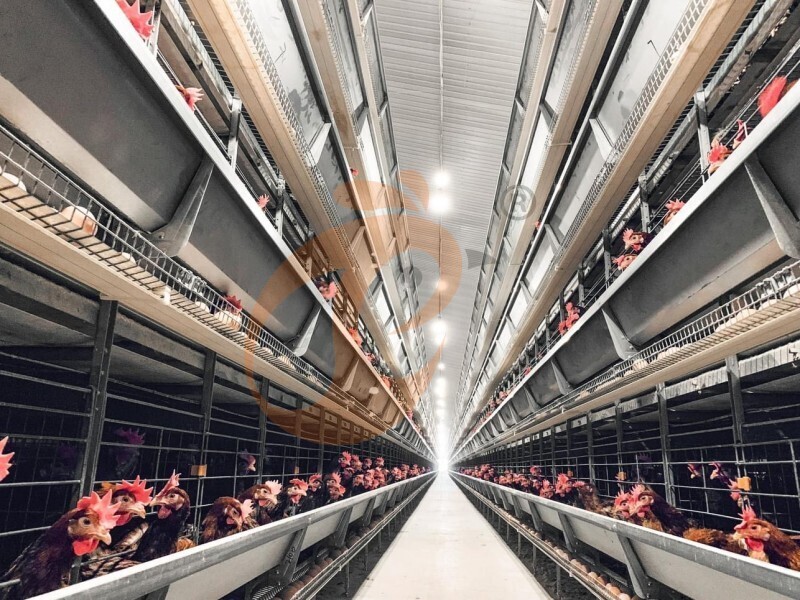
Poultry cage equipment and feed processing machinery support modern intensive farming systems.
Contact Us To Received Your Customized Poultry Farm Plan
Headquarters And Branchs
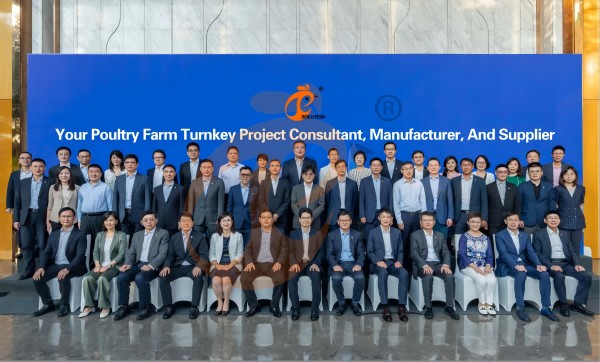
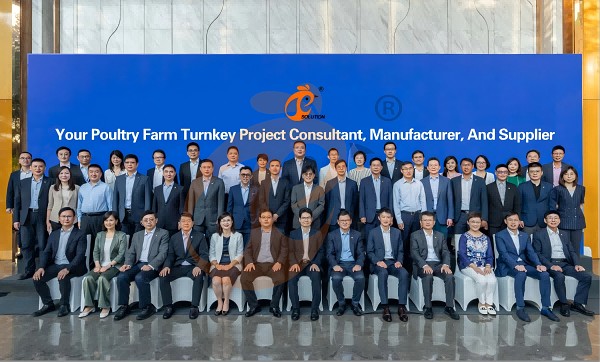
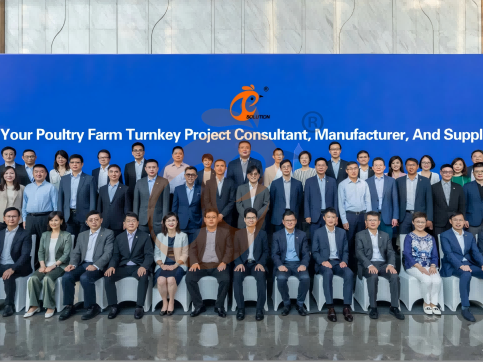
Hong Kong Headquarter Management Team
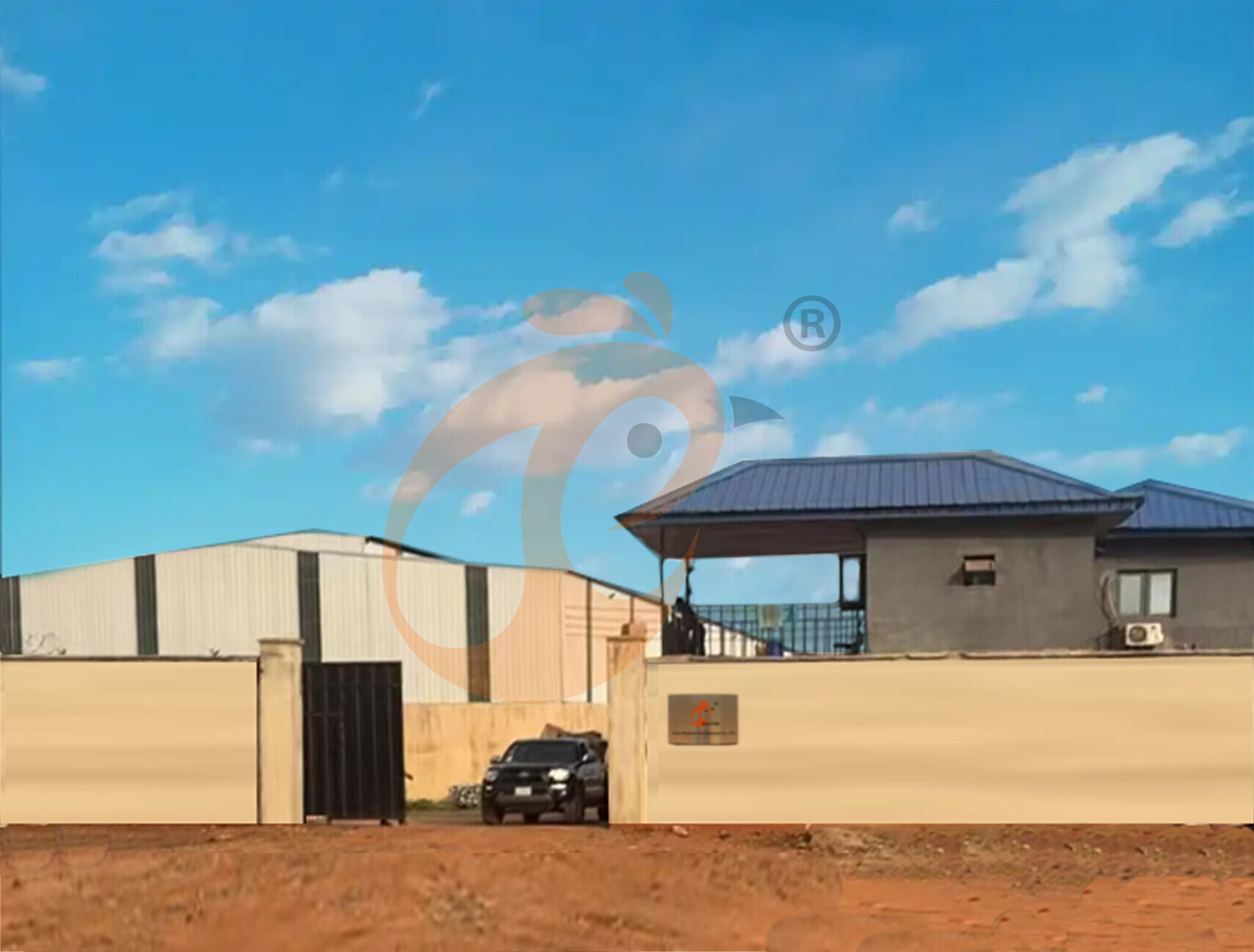
Hong Kong Headquarter Taiyu Industrial Group CO., LTD
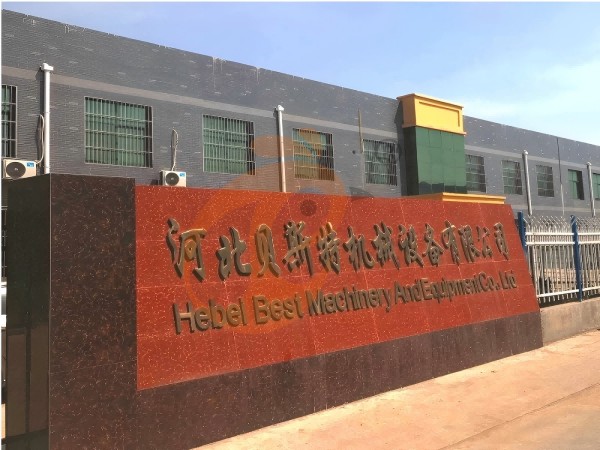
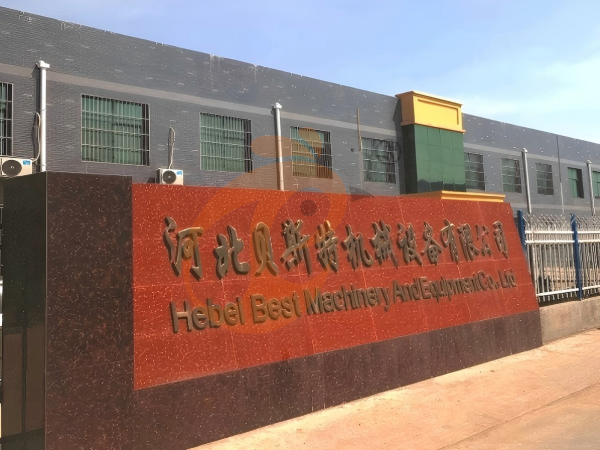
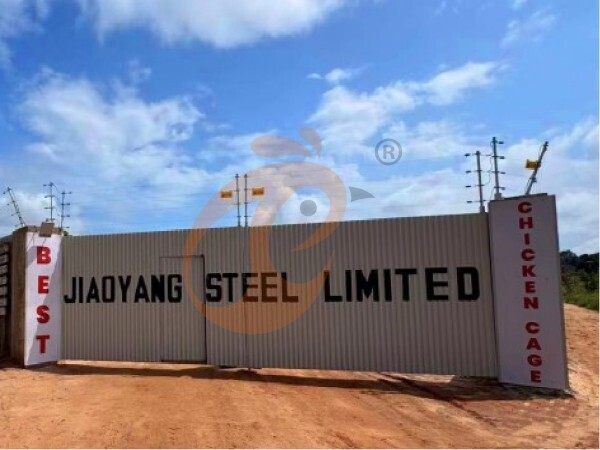
China Hebei Best Machinery And Equipment CO., LTD
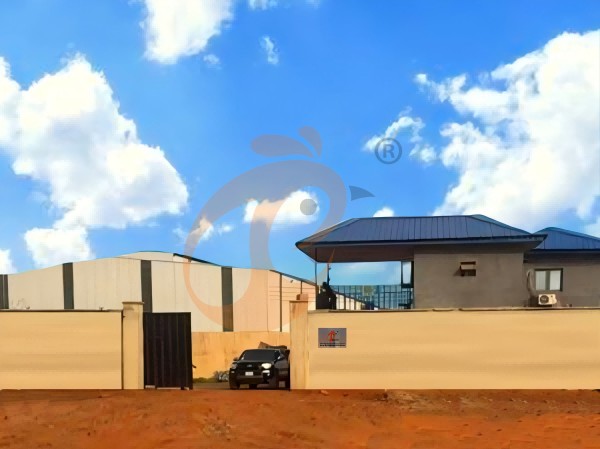
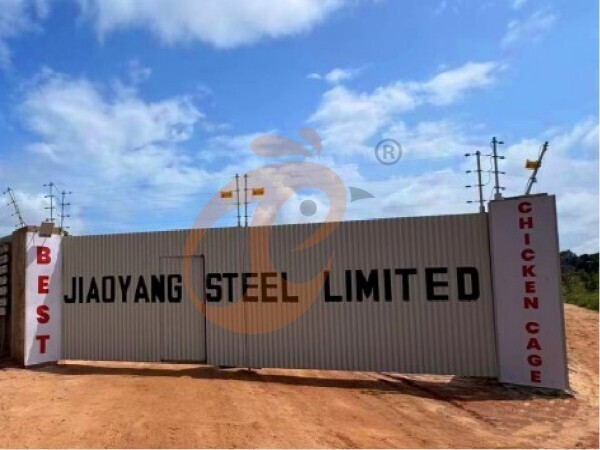
Nigeria Vanke Machinery And Equipment CO., LTD
Tanzania Best Machinery And Equipment CO., LTD
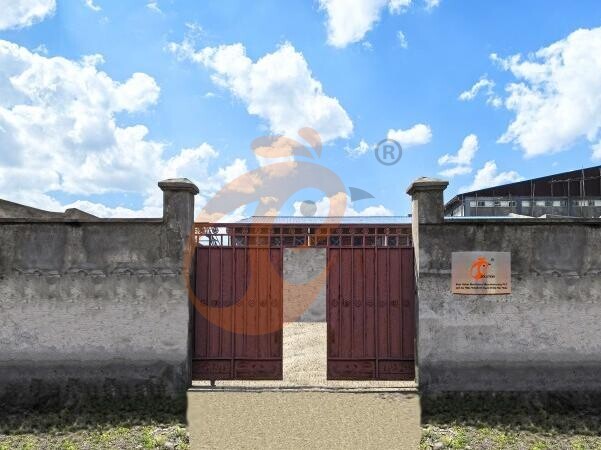
Ethiopia Best Hebei Machinery Manufacturing PLC

Reception /24 WhatsApp NO. : +8618830120193
FAQ
What Moisture Control Standards Are Required In Feed Milling For Poultry Chicken Feed?
Conditioning moisture increases to 16–18% before pelleting for optimal starch gelatinization.
Final feed moisture is controlled at 11–13% to ensure long-term storage stability.
What Energy Consumption Levels Are Standard In Feed Mixer And Feed Mill Operations For Poultry Chicken Farms?
Mixing systems require 3–8 kWh per batch depending on mixer volume and load ratio.
Pelletizing units operate at 60–90 kWh per ton for high-density poultry feed production.
What Raw Material Ratios Are Commonly Processed In Poultry Chicken Feed Mills?
Soybean meal accounts for 18–25% as main protein contributor for growth performance.
Premix addition remains at 2–5% ensuring vitamins and mineral balance stability.
Message
Products recommended
 HK Headquarter Offers EU-standard Poultry Farm Solutions, Manufacture Poultry Farm Equipment1. Continuous communication with the EU and the US
2. China, Nigeria, Ethiopia, Tanzania branch companies and factories
3. The products’ quality is customized for local poultry farms
4. Poultry cage and poultry farm equipment stock for sale
5. 24 online reception Whatsapp NO. : +8618830120193,contact us to get full informationRead More China Branch Offer Poultry Farm Business Plan, Manufacture Poultry Farm Equipment1. Address: Flat/RM 2416, 24/F, Runxing Building, Youyi Nan Street, Shijiazhuang City, Hebei Province, China
2. Poultry cage and poultry farm equipment factory and stock for sale
3. Customized for local poultry farms
4. Quality and design are based on Euro
5. 24 online reception Whatsapp NO. : +8618830120193Read More Nigeria Branch Offer Poultry Farm Business Plan, Manufacture Poultry Farm Equipment1. Address: After Sinoma Office, 200 Meters Near Danco Filling Station, Lagos/Ibadan Expressway, Lagos State, Nigeria
2. Poultry cage and poultry farm equipment factory and stock for sale
3. Customized for Nigerian poultry farms
4. Quality and design are based on Euro
5. 24 online reception Whatsapp NO. : +8618830120193Read More Ethiopia Branch Offer Poultry Farm Business Plan, Manufacture Poultry Farm Equipment1. Address: Gelan Gura, Akaki-kaliti Sub City, Addis Ababa, Ethiopia
2. Poultry cage and poultry farm equipment stock for sale
3. Customized for Ethiopian poultry farms
4. Quality and design are based on Euro
5. 24 online reception Whatsapp NO. : +8618830120193, contact us to get price listRead More Tanzania Branch Offer Poultry Farm Business Plan, Manufacture Poultry Farm Equipment1. Address: No.8, Sova Road, Msufini, Mlandizi, Kibaha, Pwani, Tanzania
2. Poultry cage and poultry farm equipment factory and stock for sale
3. Customized for Tanzanian poultry farms
4. Quality and design are based on Euro
5. 24 online reception Whatsapp NO. : +8618830120193Read More Fully Automatic H Type Layer Chicken Cage1. 30,000-100,000+ layers/house chooses it, Poultry farmers can achieve an egg production rate of 96-98%
2. A significant improvement over the 85-90% typically seen in manual systems
3. A typical poultry farm can expect a 30-40% reduction in labor costs due to the automation
4. Each feeding line efficiently supplies feed to around 100,000 hens per 30 mins
5. Reception /WhatsApp NO. : +8618830120193Read More Fully Automatic A Type Layer Chicken Cage1. 10,000-50,000 layers/house chooses it
2. Cleaner egg collection reduces breakage by 0.5%
3. Improved hygiene helps reduce mortality rate to <3%
4. 1–2 technicians can handle 15,000–30,000 birds
5. Reception /WhatsApp NO. : +8618830120193Read More Semi Automatic H Type Layer Chicken Cage1. 1,00-20,000 layers/house chooses it
2. Nipple drinkers flow 30–60 ML / min
3. Hot-dip galvanized (typical coating ≥ 275 g/m²)
4. Reduce ammonia by ~ 35–40%
5. Reception /WhatsApp NO. : +8618830120193Read More Semi Automatic A Type Layer Chicken Cage1. 1,00-20,000 layers/house chooses it, no rust for 10 years, no deformation for 15 years
2. Chickens live comfortably, you can raise them with peace of mind
3. Save water, save money—efficiency you can measure
4. Improve environment quality, and increase egg production rate
5. Reception /WhatsApp NO. : +8618830120193Read More
By clicking 'Allow All', you agree to the storage of cookies on your device to enhance site navigation, analyze site usage and assist with our marketing efforts.