






Blog
Modern poultry production operates under strict nutritional consistency requirements across large-scale farming environments.
Feed formulation accuracy directly determines growth rate uniformity, feed conversion stability, and flock health outcomes.
Mechanical mixing systems act as the central control point for nutrient distribution in industrial feed manufacturing processes.
Environmental conditions, ingredient variability, and equipment design collectively influence final feed quality output.
This article provides structured engineering-oriented optimization strategies for improving feed mixing performance in commercial chicken farms.
Get professional poultry farm construction guidance, equipment selection solutions, and the latest price lists, whatsApp to +8618830120193, +2348111199996, or click to learn more.
Feed System Variability And Industrial Stability
Feed inconsistency originates from multiple interacting production variables across raw materials and mechanical processes.
Even minor deviations in particle distribution or mixing time can propagate into measurable production inefficiencies.
Modern farms increasingly adopt chicken feed production optimization system models to stabilize long-term output quality.
Data is for reference only.Swipe horizontally to view full table.
Production stability improves when mechanical parameters are tightly controlled across all stages.
Ingredient Particle Engineering And Structural Uniformity
Particle engineering ensures that feed components maintain consistent distribution characteristics throughout production cycles.
Differences in granulation directly influence nutrient release timing and digestive efficiency in poultry systems.
Structural control is essential for achieving predictable metabolic performance in broiler production cycles.
Data is for reference only.Swipe horizontally to view full table.
Particle engineering enhances digestive efficiency and reduces feed wastage across production cycles.
Mixing Cycle Engineering And Process Synchronization
Mixing cycle design determines how effectively nutrients distribute within each batch of feed formulation.
Time sequencing errors often lead to stratification of micro and macro nutrients in poultry diets.
Advanced industrial poultry feed mixer system models integrate synchronized timing control for improved consistency.
Data is for reference only.Swipe horizontally to view full table.
Data is for reference only.Swipe horizontally to view full table.
Process synchronization improves repeatability across industrial feed batches.
Mixer Architecture And Mechanical Output Efficiency
Mixer geometry and mechanical design define nutrient distribution efficiency in industrial poultry systems.
Different structural configurations produce varying turbulence patterns that influence blending uniformity.
Adoption of automatic poultry feed blending equipment improves production scalability across commercial operations.
Data is for reference only.Swipe horizontally to view full table.
Mechanical architecture directly determines feed homogeneity and operational throughput capacity.
Moisture Regulation And Nutrient Preservation Control
Moisture balance influences both microbial safety and feed texture stability across storage and distribution phases.
Excess water activity accelerates fungal development, while insufficient levels reduce palatability and intake behavior.
Precision control systems ensure compliance with regulated feed safety standards in industrial production environments.
Data is for reference only.Swipe horizontally to view full table.
Data is for reference only.Swipe horizontally to view full table.
Moisture engineering stabilizes feed quality across long-term storage cycles.
Digital Automation And Predictive Feed Control Systems
Automation technologies introduce predictive control capabilities into feed manufacturing environments.
Sensor integration enables continuous monitoring of feed composition and production parameters in real time.
Digital transformation enhances precision poultry feed optimization system capabilities across industrial farms.
Data is for reference only.Swipe horizontally to view full table.
Digital systems improve accuracy and reduce variability across production cycles.
Frequently Asked Questions
Q1: What is the ideal particle size distribution for poultry feed?
A1: Most industrial formulations target a range between 280 and 860 microns depending on ingredient type.
This distribution improves enzymatic breakdown efficiency and supports uniform nutrient absorption.
Q2: How does mixer capacity affect feed quality?
A2: Larger capacity mixers above 2500 kg per batch typically require longer stabilization cycles of up to 210 seconds.
Improper scaling can reduce blending uniformity if cycle timing is not adjusted accordingly.
Q3: What is the recommended maintenance cycle for feed mixing equipment?
A3: Industrial systems generally require mechanical inspection every 120 operating hours.
Blade wear exceeding 2.3 mm deviation should trigger immediate recalibration or replacement.
Taiyu (HK) Group - One Of China Largest Feed Mixer Manufacturer
Feed mixer systems applied in poultry feed plants processing 12–20 tons per hour, supporting broiler and layer feed formulation with batch uniformity deviation controlled within 1.5% under industrial operation conditions.
Global factory direct sales structure provides standardized feed mixer manufacturing, enabling cost-controlled procurement and stable mechanical specification across international poultry engineering projects.
Poultry equipment scope includes feed mixer, grinder, dosing system, conveying line, and pellet integration modules designed for continuous production line configuration.
Turn key engineering service covers plant layout design, structural installation, electrical automation programming, and full commissioning for feed production facilities.
Modular engineering architecture allows scalable deployment from 1 ton per batch to industrial continuous feed mixer systems across multi-site farm operations.
Contact Us To Received Your Customized Poultry Farm Plan
Headquarters And Branchs
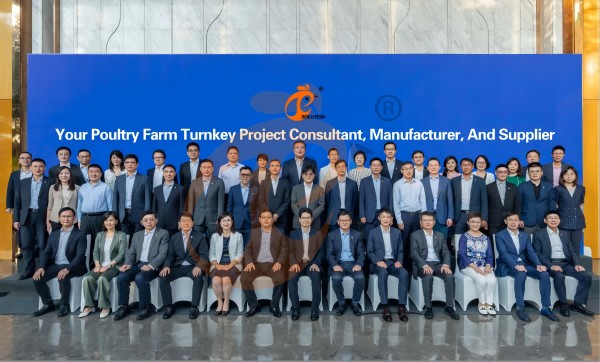
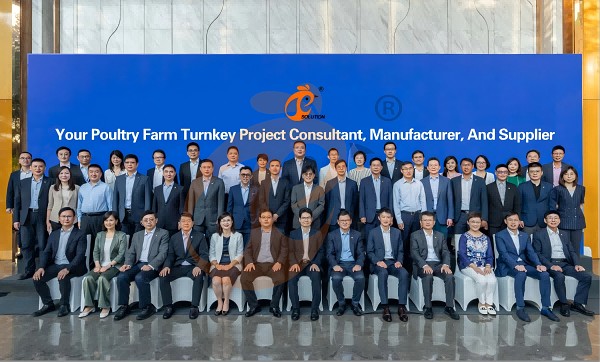
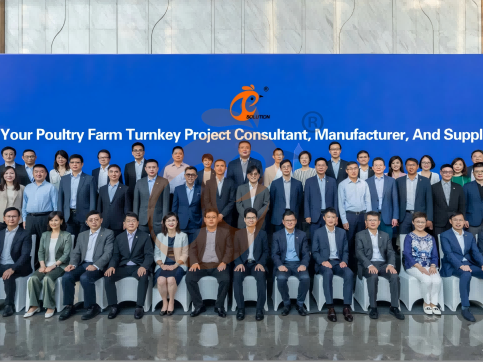
Hong Kong Headquarter Management Team
Hong Kong Headquarter Taiyu Industrial Group CO., LTD
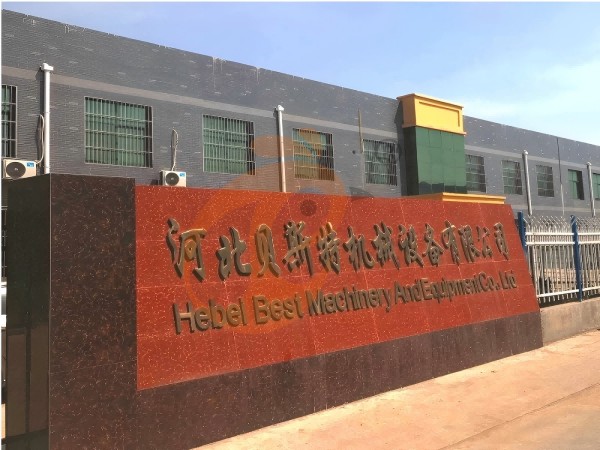
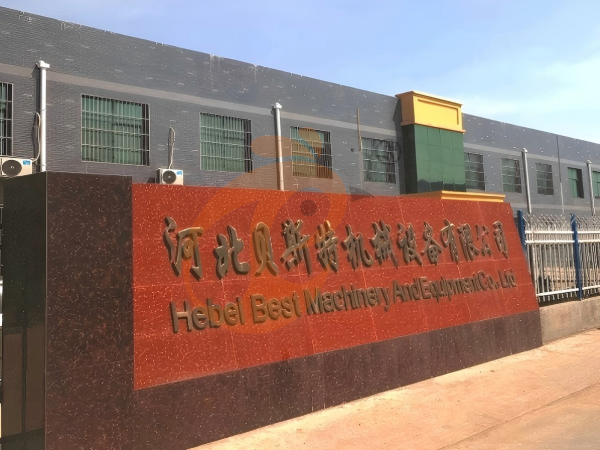
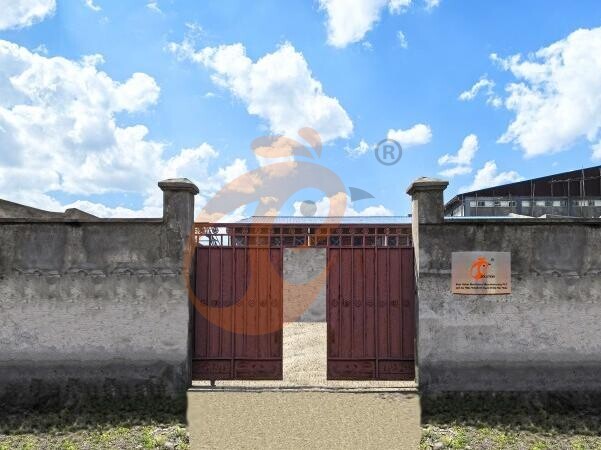
China Hebei Best Machinery And Equipment CO., LTD
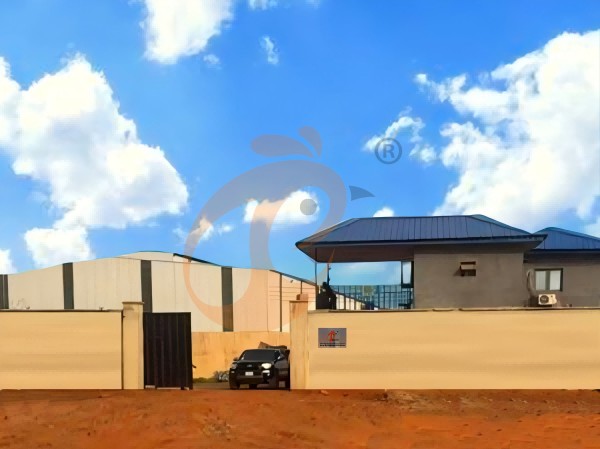
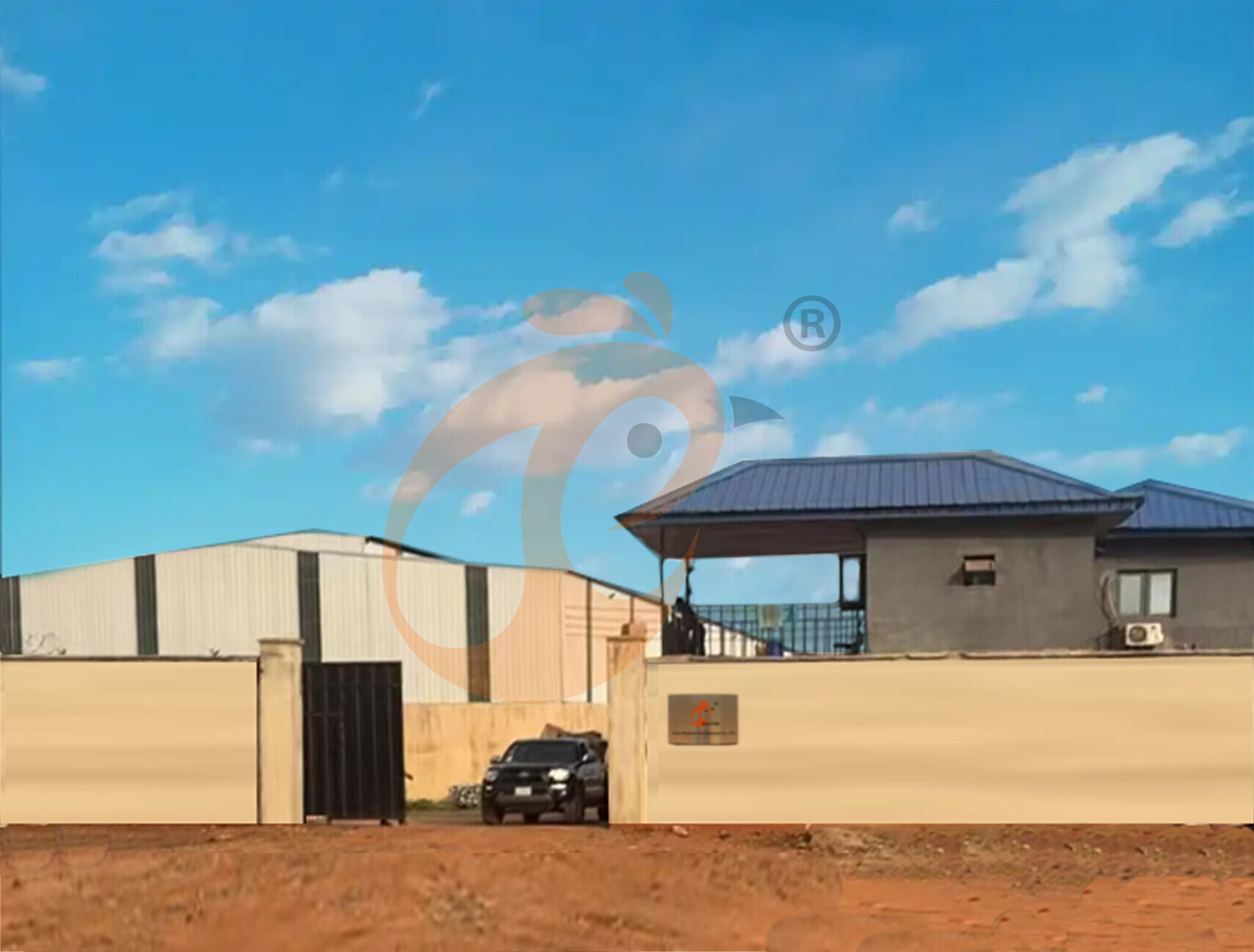
Nigeria Vanke Machinery And Equipment CO., LTD
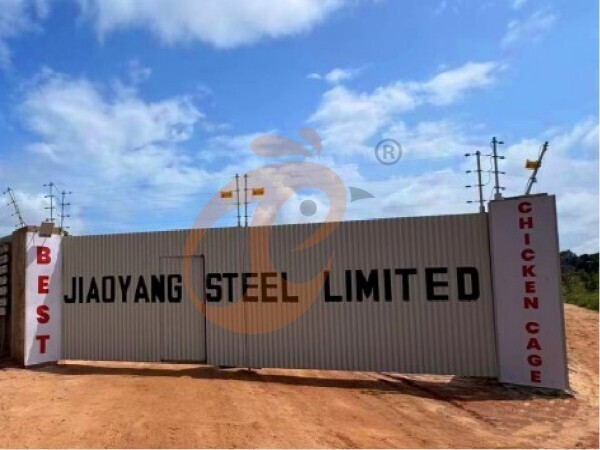
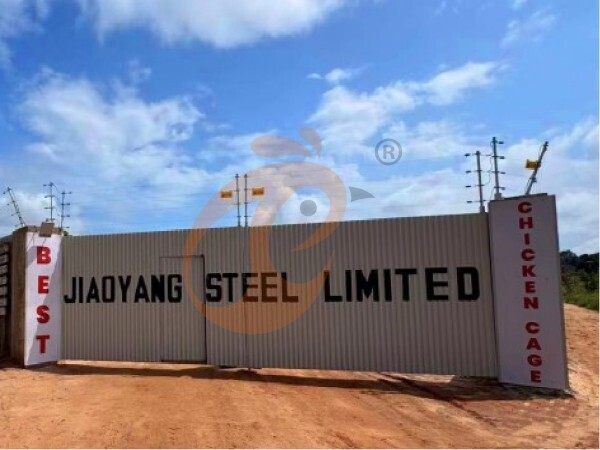
Tanzania Best Machinery And Equipment CO., LTD
Ethiopia Best Hebei Machinery Manufacturing PLC

Reception /24 WhatsApp NO. : +8618830120193
FAQ
What Are The Main Equipment Components In Feed Mill And Feed Mixer Systems For Poultry Chicken Production?
Hammer mill units operate with rotor speeds of 2800–3600 rpm for efficient grain size reduction.
Twin-shaft mixers achieve batch capacities of 500–2000 kg per cycle for uniform poultry feed blending.
What Dust Control Requirements Are Needed In Feed Mill Operations For Poultry Chicken Farms?
Cyclone separators remove 85%–92% of airborne particles during grinding and conveying processes.
Negative pressure systems maintain airflow velocity between 0.8–1.2 m/s to prevent dust leakage.
What Temperature Parameters Are Used In Feed Mill Processing For Poultry Chicken Feed?
Conditioning temperature reaches 75–85°C to improve pellet durability and pathogen reduction.
Cooling stage reduces pellet temperature to within 5°C of ambient conditions for safe storage.
Message
Products recommended
 HK Headquarter Offers EU-standard Poultry Farm Solutions, Manufacture Poultry Farm Equipment1. Continuous communication with the EU and the US
2. China, Nigeria, Ethiopia, Tanzania branch companies and factories
3. The products’ quality is customized for local poultry farms
4. Poultry cage and poultry farm equipment stock for sale
5. 24 online reception Whatsapp NO. : +8618830120193,contact us to get full informationRead More China Branch Offer Poultry Farm Business Plan, Manufacture Poultry Farm Equipment1. Address: Flat/RM 2416, 24/F, Runxing Building, Youyi Nan Street, Shijiazhuang City, Hebei Province, China
2. Poultry cage and poultry farm equipment factory and stock for sale
3. Customized for local poultry farms
4. Quality and design are based on Euro
5. 24 online reception Whatsapp NO. : +8618830120193Read More Nigeria Branch Offer Poultry Farm Business Plan, Manufacture Poultry Farm Equipment1. Address: After Sinoma Office, 200 Meters Near Danco Filling Station, Lagos/Ibadan Expressway, Lagos State, Nigeria
2. Poultry cage and poultry farm equipment factory and stock for sale
3. Customized for Nigerian poultry farms
4. Quality and design are based on Euro
5. 24 online reception Whatsapp NO. : +8618830120193Read More Ethiopia Branch Offer Poultry Farm Business Plan, Manufacture Poultry Farm Equipment1. Address: Gelan Gura, Akaki-kaliti Sub City, Addis Ababa, Ethiopia
2. Poultry cage and poultry farm equipment stock for sale
3. Customized for Ethiopian poultry farms
4. Quality and design are based on Euro
5. 24 online reception Whatsapp NO. : +8618830120193, contact us to get price listRead More Tanzania Branch Offer Poultry Farm Business Plan, Manufacture Poultry Farm Equipment1. Address: No.8, Sova Road, Msufini, Mlandizi, Kibaha, Pwani, Tanzania
2. Poultry cage and poultry farm equipment factory and stock for sale
3. Customized for Tanzanian poultry farms
4. Quality and design are based on Euro
5. 24 online reception Whatsapp NO. : +8618830120193Read More Fully Automatic H Type Layer Chicken Cage1. 30,000-100,000+ layers/house chooses it, Poultry farmers can achieve an egg production rate of 96-98%
2. A significant improvement over the 85-90% typically seen in manual systems
3. A typical poultry farm can expect a 30-40% reduction in labor costs due to the automation
4. Each feeding line efficiently supplies feed to around 100,000 hens per 30 mins
5. Reception /WhatsApp NO. : +8618830120193Read More Fully Automatic A Type Layer Chicken Cage1. 10,000-50,000 layers/house chooses it
2. Cleaner egg collection reduces breakage by 0.5%
3. Improved hygiene helps reduce mortality rate to <3%
4. 1–2 technicians can handle 15,000–30,000 birds
5. Reception /WhatsApp NO. : +8618830120193Read More Semi Automatic H Type Layer Chicken Cage1. 1,00-20,000 layers/house chooses it
2. Nipple drinkers flow 30–60 ML / min
3. Hot-dip galvanized (typical coating ≥ 275 g/m²)
4. Reduce ammonia by ~ 35–40%
5. Reception /WhatsApp NO. : +8618830120193Read More Semi Automatic A Type Layer Chicken Cage1. 1,00-20,000 layers/house chooses it, no rust for 10 years, no deformation for 15 years
2. Chickens live comfortably, you can raise them with peace of mind
3. Save water, save money—efficiency you can measure
4. Improve environment quality, and increase egg production rate
5. Reception /WhatsApp NO. : +8618830120193Read More
By clicking 'Allow All', you agree to the storage of cookies on your device to enhance site navigation, analyze site usage and assist with our marketing efforts.