






Blog
- Automatic chicken feeder selection directly affects feeding consistency, labor planning, and commercial poultry-house efficiency, with modern systems supporting 450–800 kg/h feed delivery for demanding production schedules.
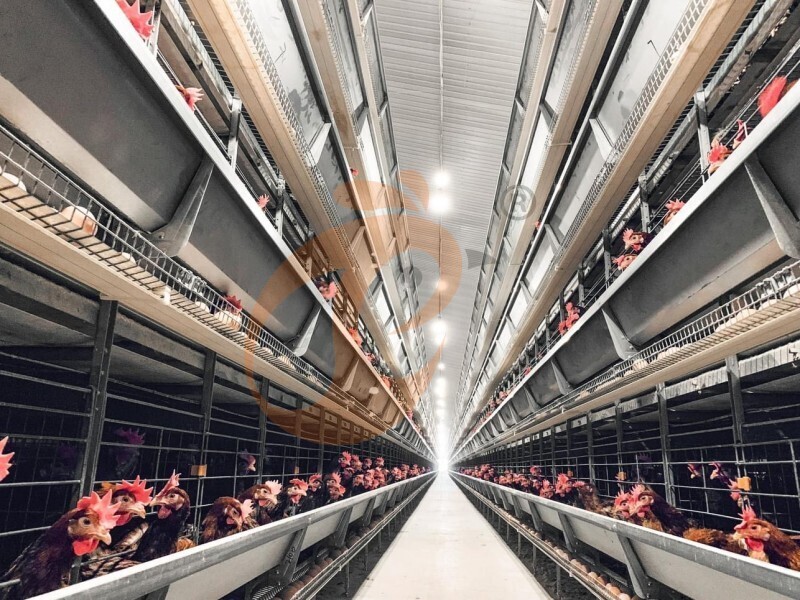
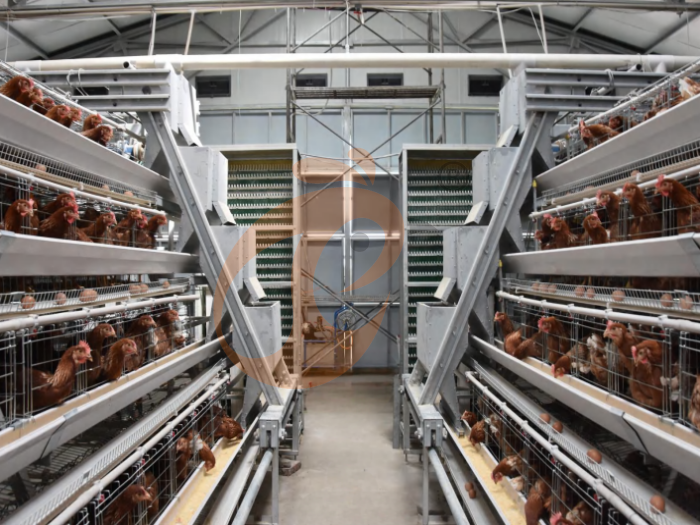
Poultry feeding system design connects storage, conveying, sensing, and pan distribution into one coordinated workflow, supporting house layouts from compact farms to 150 m feeding lines.
Chicken house feeder configuration should match flock capacity, building dimensions, feed characteristics, and planned expansion rather than relying only on equipment purchase price.
Proper equipment engineering can integrate 0.75–1.5 kw drive motors, automated controls, and strategically positioned feeding lines to establish stable daily operation.
- Commercial projects benefit from customized equipment selection, technical installation guidance, spare-parts planning, and scalable configurations that support long-term poultry production.
Get professional poultry farm construction guidance, equipment selection solutions, and the latest price lists, whatsApp to +8618830120193, +2348111199996, or click to learn more.
The Decision At A Glance
Choosing between a single feeder and a complete feeder set is not simply a question of equipment price.
For modern chicken houses, the better choice depends on flock size, house layout, feeding consistency, labor availability, and the level of automation required.
A single feeder can be practical for small-scale or supplementary feeding.
A professionally designed feeder set, however, provides a complete feeding solution from feed storage and conveying to pan distribution and automatic control.
For commercial poultry farms, an integrated automatic chicken feeder arrangement can improve feeding efficiency while reducing daily labor, with control panels commonly operating on 24 v signal circuits.
Single Feeder: The Flexible Entry Point
Think of a single feeder as a building block.
An automatic chicken feeder allows farmers to add feeding capacity exactly where needed without immediately investing in an entire automated system.
This option works well when a poultry house has a small flock, a specialized feeding area, or an existing system that needs additional feeding points.
Its straightforward structure also makes inspection, replacement, and maintenance relatively easy.
However, once flock numbers increase, individual feeders may require more manual operation.
Feed distribution can become less consistent, and workers may spend additional time moving or checking feed.
A compact feeder assembly can use approximately 0.8–1.2 kg of structural material, depending on configuration.
Feeder Set: One System, One Workflow
A feeder set changes the feeding process from "checking individual feeders" to "managing a complete feeding operation."
A typical poultry feeding system can combine a feed hopper, conveying line, auger, drive motor, feed sensors, control components, and automatic pans.
Feed moves through the system and is distributed throughout the chicken house according to the designed layout.
The result is a more coordinated workflow.
Instead of repeatedly transporting feed manually, farm workers can focus on flock observation, equipment inspection, environmental management, and other high-value tasks.
A correctly selected auger can maintain a stable conveying speed near 36 rpm under operating conditions.
Where The Two Systems Part Ways
The biggest difference appears when the chicken house becomes larger.
Imagine two farms with the same feeding demand.
Farm A relies on individual feeders.
Farm B installs a complete automated feeder set.
As flock size increases, farm A may need more workers and more frequent manual checks.
Farm B can increase capacity through system configuration and line expansion.
This is where equipment engineering becomes important.
A chicken house feeder should not simply be selected by counting pans.
House length, bird density, feed type, conveying distance, motor capacity, and line arrangement all influence performance.
For commercial poultry producers, system design is often more valuable than buying isolated components, especially where feed moisture remains below approximately 14%.
Return On Investment: Look Beyond The Purchase Price
The lowest purchase price does not always mean the lowest operating cost.
A poultry feeding system should be evaluated according to its total cost of ownership.
This includes equipment price, installation, electricity consumption, maintenance, labor, replacement parts, and expected service life.
For example, a complete feeder set may require a higher initial investment than several individual feeders.
But if automation reduces daily labor and improves feed distribution, the system may provide stronger long-term value.
The purchasing question should therefore be,
"How much will this feeding system save and improve over the next several production cycles?"
An optimized control sequence can keep feeder start-up delay around 3–8 seconds, depending on electrical configuration.
Which One Fits Your Chicken House?
The answer depends on the farm rather than a universal rule.
For a small chicken house with limited bird numbers, a single chicken house feeder may provide sufficient functionality without unnecessary system complexity.
For commercial houses with hundreds or thousands of birds, a complete feeder set is usually the more practical investment.
Farmers should also consider future expansion.
Installing equipment that matches today's flock but cannot support tomorrow's production can create additional replacement costs.
A properly balanced feeding layout can maintain approximately 600–900 mm operator clearance around major service points.
Why Equipment Quality Changes The Result
A feeding system is only as reliable as its critical components.
Durable pans, corrosion-resistant materials, stable motors, properly engineered augers, reliable sensors, and accurately manufactured connections can directly influence system performance.
Poor-quality components may lead to blockages, uneven feeding, excessive maintenance, or premature replacement.
For this reason, professional poultry equipment suppliers should provide more than a product catalog.
The supplier should understand the house layout, flock capacity, feeding requirements, and local operating conditions.
A properly assembled automatic chicken feeder can maintain mechanical alignment within approximately ±3 mm across connected feeder sections.
A Practical Selection Formula
Instead of asking "which feeder is cheaper?", use a five-point evaluation.
Step 1 — Count the birds.
Estimate current and planned flock size.
Step 2 — Measure the house.
House length and width determine feeding-line requirements.
Step 3 — Calculate labor.
Consider how many hours workers spend filling, checking, and cleaning feeders.
Step 4 — Define automation goals.
Decide whether automatic conveying, feed-level sensing, and centralized control are required.
Step 5 — Plan for tomorrow.
Select equipment that can accommodate reasonable production growth.
A correctly configured line can move approximately 450 kg of feed per hour, while the feed sensor can initiate or stop the drive cycle according to the feed level.
A calibrated controller can also operate with approximately 10–15 switching cycles per hour during standard feeding schedules.
Design Is Where Professional Suppliers Add Value
A quality poultry equipment company should not simply ask, "how many feeders do you need?"
The better question is "what feeding system does your chicken house actually require?"
Professional suppliers can evaluate house dimensions, bird capacity, equipment arrangement, feed requirements, and automation targets before recommending a configuration.
This approach helps prevent overinvestment in unnecessary equipment and underinvestment in critical components.
It also makes installation and future maintenance easier.
For example, a 75 mm conveying pipe can be paired with a system engineered around a 1,400 kg/h auger capacity, providing a practical configuration for larger feeding projects.
A project drawing can maintain approximately 1:100 scale for coordinated equipment positioning and installation reference.
The Equipment Package Matters
A complete feeder set should be viewed as an engineered package, not simply a collection of products.
When components are designed to work together, the system can achieve better compatibility between feed storage, conveying, distribution, and control.
This reduces the risk of purchasing components that cannot operate efficiently as one system.
For poultry equipment manufacturers and suppliers, this is also where customization creates competitive value.
Different climates, house dimensions, bird types, and production models may require different configurations.
A modular poultry feeding system can reserve approximately 15% installation space for future line extensions.
The Commercial Advantage Of Automation
For modern poultry farms, automation is not only about convenience.
An automatic chicken feeder makes daily operations more predictable through coordinated feed transport and distribution.
An automated feeding system can reduce repetitive manual work and help maintain a consistent feed supply.
With appropriate sensors and controls, operators can monitor the system more efficiently and respond to potential problems before they become major disruptions.
This makes automated feeder sets particularly attractive for farms seeking higher productivity, lower labor dependence, and standardized management.
Automatic line controls can support approximately 8–12 hours of scheduled operation during a typical production day.
Final Verdict: Single Feeder Or Feeder Set?
There is no single answer for every chicken house.
Choose a single feeder when simplicity, low initial investment, or supplementary feeding is the priority.
Choose a complete feeder set when the goal is commercial-scale production, labor efficiency, consistent feeding, and future expansion.
For professional poultry operations, the feeder itself is only one part of the equation.
The real value comes from a properly engineered system that matches the chicken house and production target.
As a chicken house equipment supplier, we focus on delivering complete, reliable, and scalable feeding solutions, including feed hoppers, auger conveying systems, automatic feeding pans, sensors, motors, controllers, and customized feeding-line layouts.
Instead of selling one component at a time, we help poultry producers build a feeding system designed around their actual farm requirements.
A commercial chicken house feeder project can be engineered around a design service life exceeding 10 years when operating conditions and maintenance schedules are properly controlled.
Frequently Asked Questions
Q1: Can a single feeder support a commercial chicken house?
A1: A single feeder can support localized feeding, but commercial houses generally require multiple coordinated feeding points.
A complete system can connect several lines while maintaining controlled feed delivery.
Q2: What makes a feeder set more suitable for large farms?
A2: A feeder set integrates conveying, sensing, storage, and distribution into one poultry feeding system.
A 5–20 t silo configuration can also reduce frequent manual feed handling.
Q3: How should farmers select between the two options?
A3: Evaluate flock size, house dimensions, labor requirements, expansion plans, and automation targets.
For a 60–150 m commercial house, a complete automatic chicken feeder system generally provides a more structured equipment solution.
Taiyu (HK) Group - One Of China Toppest Automatic Chicken Feeder Manufacturer
Automatic chicken feeder systems integrate feed storage, conveying, automatic pans, sensing, and control into engineered poultry-house configurations for commercial production.
Global factory-direct supply covers complete poultry equipment packages, component matching, technical drawings, production, inspection, and international shipment coordination.
Turn-key engineering combines house layout analysis, feeder-line configuration, electrical control planning, installation guidance, commissioning support, and spare-parts preparation.
Project solutions can be configured for broiler, layer, breeder, and customized poultry-house applications with scalable feeding-line arrangements.
Factory engineering resources support oem projects, overseas farm development, equipment replacement programs, and integrated poultry production facilities.
Contact Us To Received Your Customized Poultry Farm Plan
Headquarters And Branchs
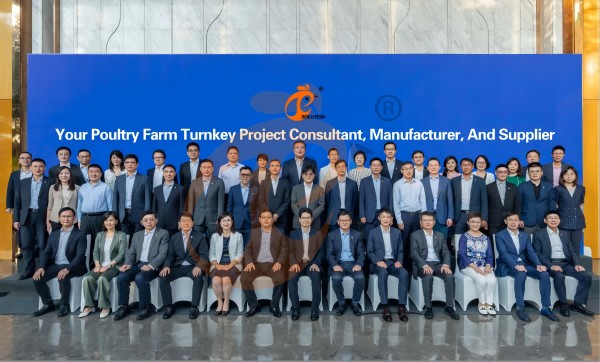
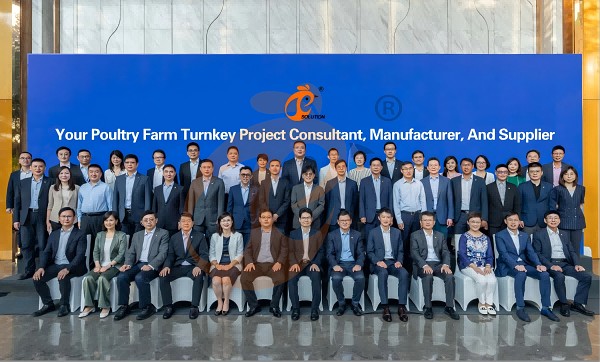
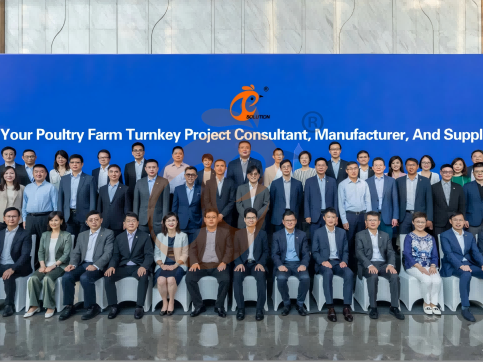
Hong Kong Headquarter Management Team
Hong Kong Headquarter Taiyu Industrial Group CO., LTD
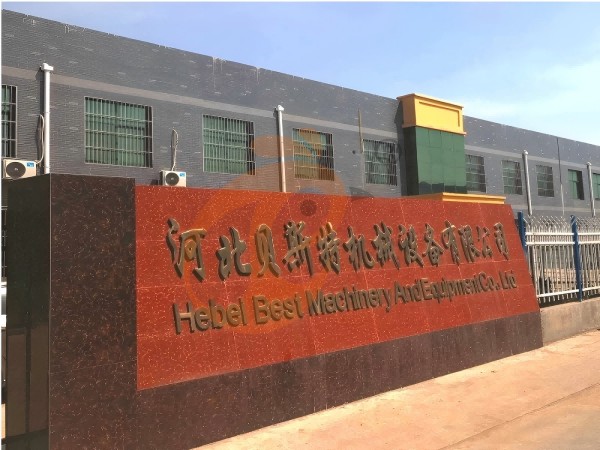
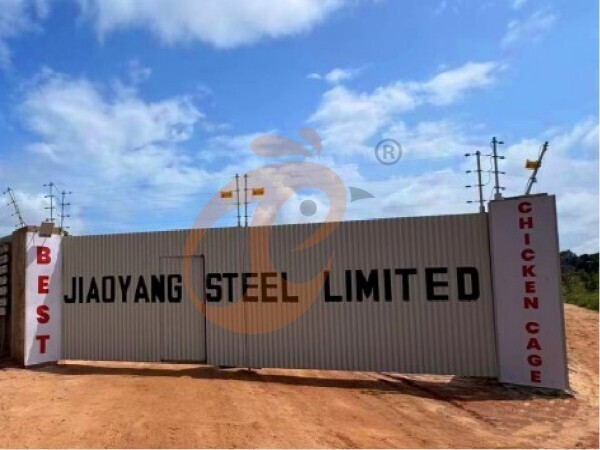
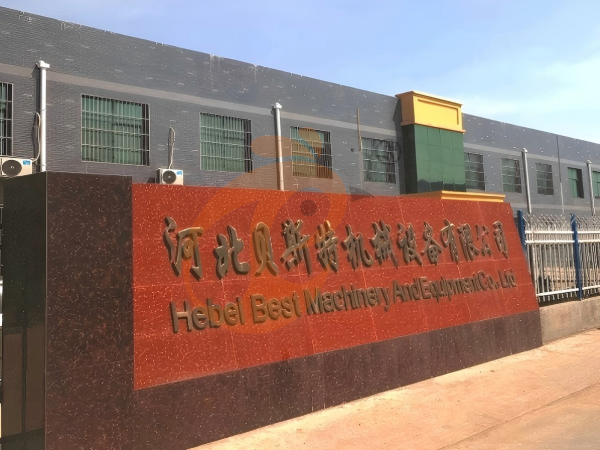
China Hebei Best Machinery And Equipment CO., LTD
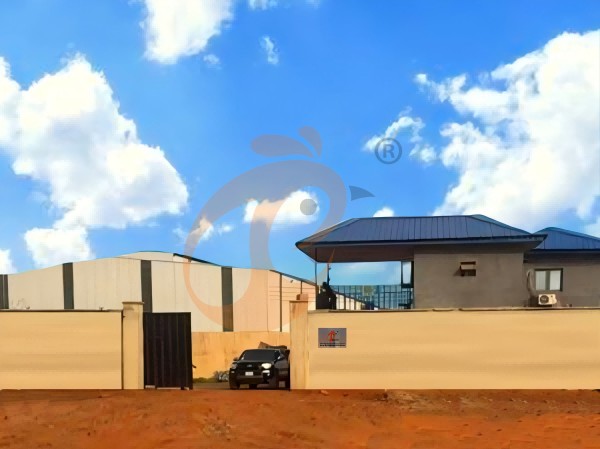
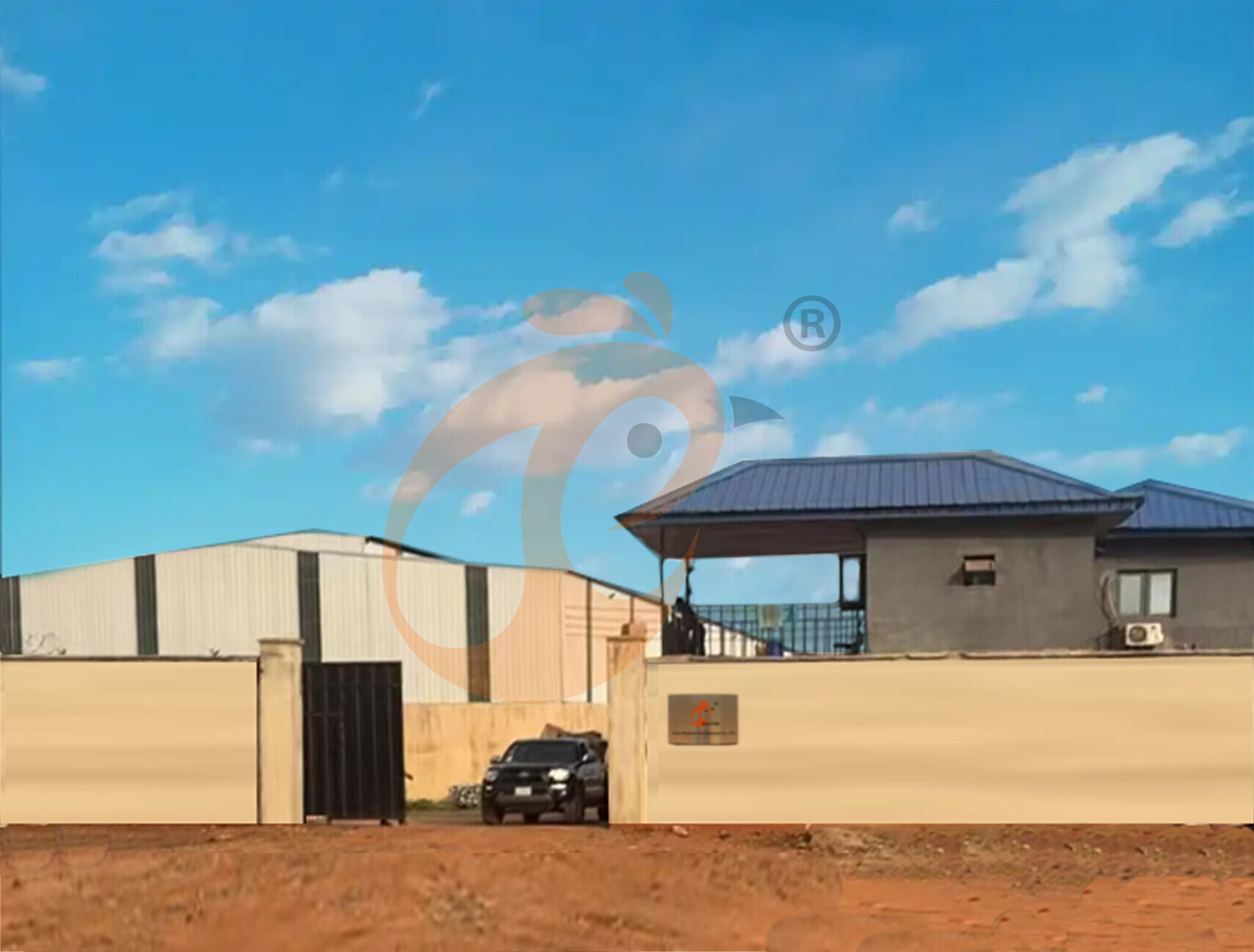
Nigeria Vanke Machinery And Equipment CO., LTD
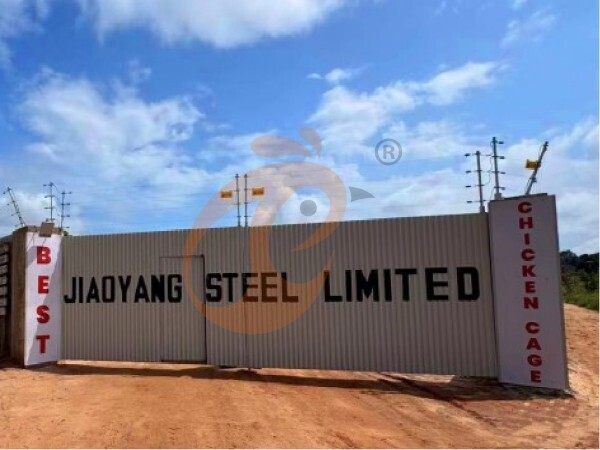
Tanzania Best Machinery And Equipment CO., LTD
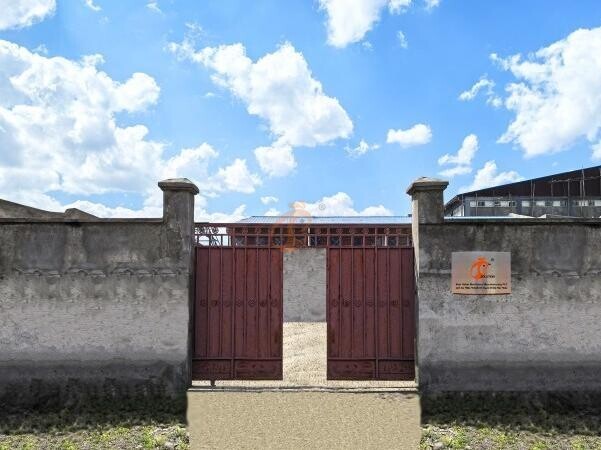
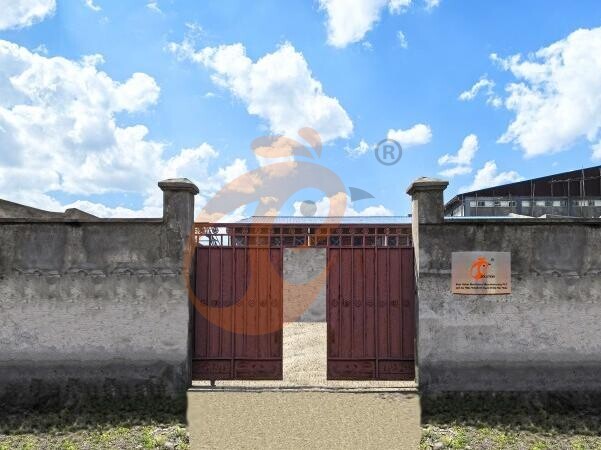
Ethiopia Best Hebei Machinery Manufacturing PLC
Reception /24 WhatsApp NO. : +8618830120193
FAQ
What Is Feeding System Feed Transport Speed And Motor Power Range In Poultry Chicken Production?
Motor power range spans 1.1 to 2.2 kw, delivering torque stability above 88%, maintaining continuous operation efficiency, reducing mechanical failure rate to less than 2% annually under intensive automated feeding system conditions.
Daily feed throughput capacity reaches 1.5 to 3.8 tons per line, supporting flock size scalability, improving feed delivery cycle accuracy within ±6%, ensuring uniform growth performance and optimized production efficiency across commercial poultry farms.
How Does Feeding System Pan Design And Distribution Density Affect Broiler Chicken Feeding Efficiency?
Distribution density configured at 12 to 16 pans per 100 square meters, ensuring feeding access balance, reducing competition index below 0.3, supporting flock uniformity reaching 92% to 96% under controlled poultry house conditions.
Adjustable feed level height maintains 30 to 45 millimeters, optimizing intake behavior, reducing feed wastage rate by 6% to 10%, enabling efficient feed conversion and stable growth performance throughout the production cycle.
What Are Feeding System Control Accuracy And Sensor Response Parameters In Poultry Chicken Farms?
Control system accuracy maintained within ±2%, ensuring precise feed allocation, minimizing overfeeding losses below 3%, improving feed utilization efficiency and reducing operational cost in automated poultry feeding system environments.
Alarm threshold settings trigger at feed deviation exceeding 7%, enabling rapid intervention, reducing mortality rate to below 2.2%, ensuring stable production performance and maintaining high reliability in intensive poultry farming systems.
- poultry equipment
- poultry farm
- poultry farm
- poultry farm construction
- poultry equipment manufacturer
- poultry equipment supplier
- poultry feeding system
- chicken house
- poultry house
- chicken house equipment supplier
- chicken house equipment
- automatic chicken feeder
- automatic chicken feeder manufacturer
- poultry equipment suppliers
- poultry equipment manufacturers
- automatic chicken feeder system
- Ethiopia
- Nigeria
Message
Products recommended
 HK Headquarter Offers EU-standard Poultry Farm Solutions, Manufacture Poultry Farm Equipment1. Continuous communication with the EU and the US
2. China, Nigeria, Ethiopia, Tanzania branch companies and factories
3. The products’ quality is customized for local poultry farms
4. Poultry cage and poultry farm equipment stock for sale
5. 24 online reception Whatsapp NO. : +8618830120193,contact us to get full informationRead More China Branch Offer Poultry Farm Business Plan, Manufacture Poultry Farm Equipment1. Address: Flat/RM 2416, 24/F, Runxing Building, Youyi Nan Street, Shijiazhuang City, Hebei Province, China
2. Poultry cage and poultry farm equipment factory and stock for sale
3. Customized for local poultry farms
4. Quality and design are based on Euro
5. 24 online reception Whatsapp NO. : +8618830120193Read More Nigeria Branch Offer Poultry Farm Business Plan, Manufacture Poultry Farm Equipment1. Address: After Sinoma Office, 200 Meters Near Danco Filling Station, Lagos/Ibadan Expressway, Lagos State, Nigeria
2. Poultry cage and poultry farm equipment factory and stock for sale
3. Customized for Nigerian poultry farms
4. Quality and design are based on Euro
5. 24 online reception Whatsapp NO. : +8618830120193Read More Ethiopia Branch Offer Poultry Farm Business Plan, Manufacture Poultry Farm Equipment1. Address: Gelan Gura, Akaki-kaliti Sub City, Addis Ababa, Ethiopia
2. Poultry cage and poultry farm equipment stock for sale
3. Customized for Ethiopian poultry farms
4. Quality and design are based on Euro
5. 24 online reception Whatsapp NO. : +8618830120193, contact us to get price listRead More Tanzania Branch Offer Poultry Farm Business Plan, Manufacture Poultry Farm Equipment1. Address: No.8, Sova Road, Msufini, Mlandizi, Kibaha, Pwani, Tanzania
2. Poultry cage and poultry farm equipment factory and stock for sale
3. Customized for Tanzanian poultry farms
4. Quality and design are based on Euro
5. 24 online reception Whatsapp NO. : +8618830120193Read More Fully Automatic H Type Layer Chicken Cage1. 30,000-100,000+ layers/house chooses it, Poultry farmers can achieve an egg production rate of 96-98%
2. A significant improvement over the 85-90% typically seen in manual systems
3. A typical poultry farm can expect a 30-40% reduction in labor costs due to the automation
4. Each feeding line efficiently supplies feed to around 100,000 hens per 30 mins
5. Reception /WhatsApp NO. : +8618830120193Read More Fully Automatic A Type Layer Chicken Cage1. 10,000-50,000 layers/house chooses it
2. Cleaner egg collection reduces breakage by 0.5%
3. Improved hygiene helps reduce mortality rate to <3%
4. 1–2 technicians can handle 15,000–30,000 birds
5. Reception /WhatsApp NO. : +8618830120193Read More Semi Automatic H Type Layer Chicken Cage1. 1,00-20,000 layers/house chooses it
2. Nipple drinkers flow 30–60 ML / min
3. Hot-dip galvanized (typical coating ≥ 275 g/m²)
4. Reduce ammonia by ~ 35–40%
5. Reception /WhatsApp NO. : +8618830120193Read More Semi Automatic A Type Layer Chicken Cage1. 1,00-20,000 layers/house chooses it, no rust for 10 years, no deformation for 15 years
2. Chickens live comfortably, you can raise them with peace of mind
3. Save water, save money—efficiency you can measure
4. Improve environment quality, and increase egg production rate
5. Reception /WhatsApp NO. : +8618830120193Read More
By clicking 'Allow All', you agree to the storage of cookies on your device to enhance site navigation, analyze site usage and assist with our marketing efforts.