






Blog
A type poultry battery cage system performance depends on ventilation stability, structural durability, manure control, feeding precision, and egg handling efficiency across intensive farming environments.
Layer chicken cage equipment design directly influences ammonia concentration, egg integrity rate, feed utilization balance, and corrosion resistance under continuous production cycles.
Automatic poultry farming cages require coordinated management of airflow, stocking density, and mechanical maintenance to maintain stable egg output consistency.
Article evaluates six major operational problems, supported with engineering data tables, biological explanations, and system-level optimization strategies for commercial poultry farms.
Content includes scientific insights, environmental parameters, structural specifications, and commercial maintenance frameworks for industrial egg production systems.
Get professional poultry farm construction guidance, equipment selection solutions, and the latest price lists, whatsApp to +8618830120193, +2348111199996, or click to learn more.
Introduction: System Role And Engineering Context
A-type poultry battery cages are widely used in commercial layer farming due to cost efficiency and structural simplicity.
A-frame geometry improves airflow and manure separation compared with floor systems, but operational stability depends heavily on environmental control and maintenance discipline.
In intensive production environments, system performance is shaped by ventilation dynamics, material corrosion resistance, feeding uniformity, and egg handling precision.
When these variables are not balanced, multiple failure modes emerge simultaneously across production cycles.
Structural Overview Of A-Type Cage Systems
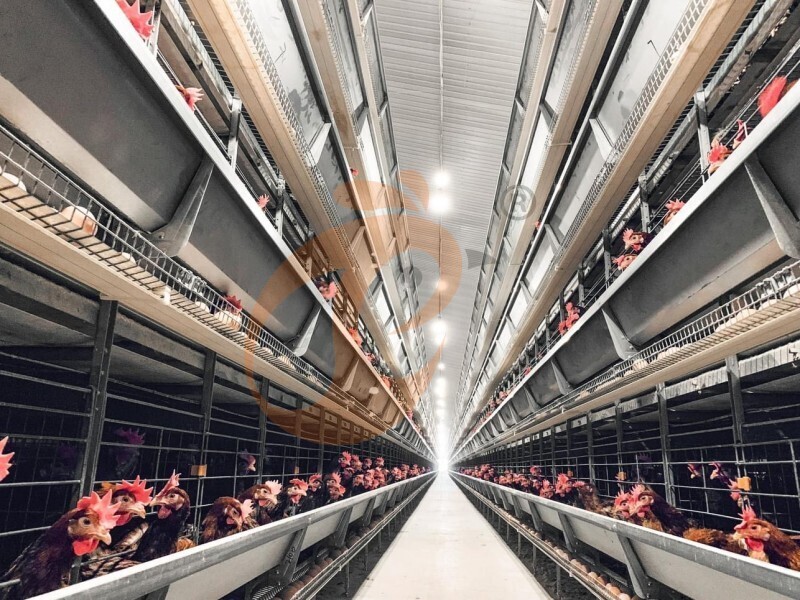
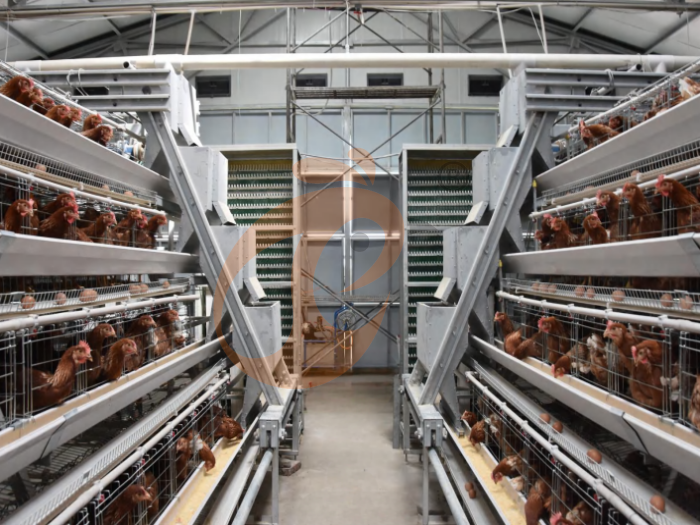
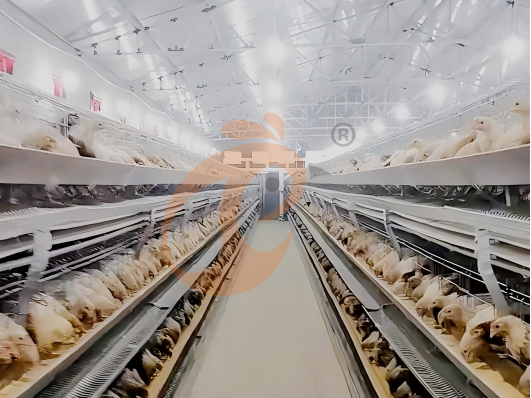
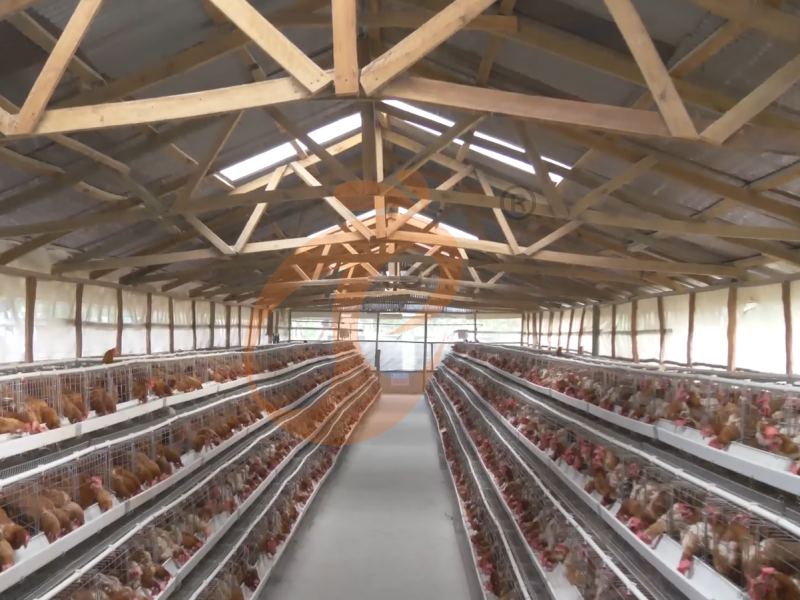
A-type cages typically use a stepped triangular frame with 3–4 tiers, designed for semi-automated or manual management.
System integrates feeding troughs, nipple drinkers, sloped floors, and manure discharge paths into a compact layout.
Data is for reference only.Swipe horizontally to view full table.
Problem Ammonia Accumulation And Air Quality Instability
Ammonia is generated continuously through manure decomposition.
Without stable airflow, gas concentration rises rapidly, affecting respiratory health and egg production consistency.
Data is for reference only.Swipe horizontally to view full table.
Problem Egg Cracking And Mechanical Impact Loss
Egg damage is mainly caused by slope inconsistency, wire deformation, and uncontrolled rolling speed on collection surfaces.
Data is for reference only.Swipe horizontally to view full table.
Problem Feed Distribution Inefficiency And Nutritional Imbalance
Feed delivery systems often suffer uneven distribution across long cage rows, especially in semi-automatic configurations.
Data is for reference only.Swipe horizontally to view full table.
Problem Manure Moisture Retention And Microbial Growth
Manure accumulation beneath cages increases humidity and microbial proliferation, especially when removal cycles are inconsistent.
Data is for reference only.Swipe horizontally to view full table.
Problem Behavioral Stress And Production Irregularity
Birds in confined systems experience stress from limited movement, lighting fluctuations, and crowding pressure.
Data is for reference only.Swipe horizontally to view full table.
Problem Corrosion And Structural Degradation
Steel components in poultry environments are exposed to continuous humidity and chemical activity from manure gases.
Data is for reference only.Swipe horizontally to view full table.
Solution Framework Engineering And Management Controls
Controlled tunnel ventilation stabilizes gas concentration gradients across cage tiers.
Egg slope calibration maintained between 7.5° and 8.8° improves shell integrity performance.
Feed line pressure balancing ensures uniform nutrient intake across production rows.
Automated manure drying reduces microbial growth and humidity accumulation cycles.
Galvanized steel reinforcement increases corrosion resistance in high exposure zones.
Lighting synchronization systems stabilize laying rhythm consistency.
Scientific Explanation System Interaction Dynamics
In A-type cage environments, physical, chemical, and biological factors interact continuously.
Ammonia accelerates corrosion; corrosion alters feed geometry; geometry changes affect bird behavior; behavior feeds back into manure distribution.
System behaves as multi-variable closed loop where minor deviations propagate across production layers.
Optimization requires synchronized adjustment across ventilation, feeding, and waste removal systems.
Economic Impact Summary
Data is for reference only.Swipe horizontally to view full table.
Conclusion
A-type poultry battery cages are mechanically efficient but environmentally sensitive systems.
Main challenges include air quality instability, egg damage, feed distribution errors, manure moisture retention, behavioral stress, and corrosion.
System performance depends on integrated control rather than isolated correction.
Coordinated management improves production stability under intensive commercial farming conditions.
Frequently Asked Questions
Q1: Why does ammonia level increase in A-type poultry battery cages?
A1: Ammonia increases due to manure decomposition and insufficient ventilation cycles.
Concentration can reach around 28 ppm when airflow is restricted, affecting respiratory efficiency.
Q2: What causes egg breakage in cage systems?
A2: Egg breakage mainly results from slope inconsistency and tray impact force variations, typically measured around 0.38 n at collection edges.
Q3: How often should manure be removed in commercial cage farms?
A3: Manure removal cycles typically operate every 10–12 hours in automated systems to maintain moisture content near 61% and reduce microbial buildup.
Taiyu (HK) Group - One Of China Biggest Poultry Battery Cage System Manufacturer
A-type poultry battery cage system engineered for intensive layer production with structural zinc coating up to 320 g/m² for corrosion resistance.
Global factory direct supply model supports large-scale poultry equipment deployment across industrial farming projects.
Full poultry equipment portfolio includes cage systems, feeding lines, ventilation units, and manure handling systems.
Turn-key engineering service covers farm design, installation, commissioning, and operational optimization for commercial poultry farms.
Modular manufacturing structure enables scalable production capacity for export-oriented livestock infrastructure projects.
Contact Us To Received Your Customized Poultry Farm Plan
Headquarters And Branchs

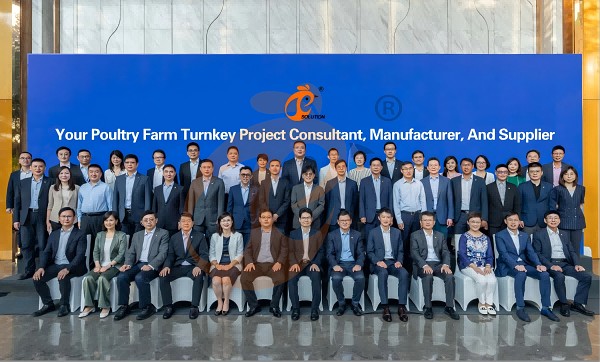
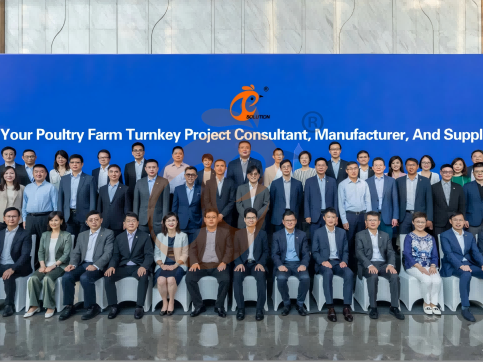
Hong Kong Headquarter Management Team
Hong Kong Headquarter Taiyu Industrial Group CO., LTD
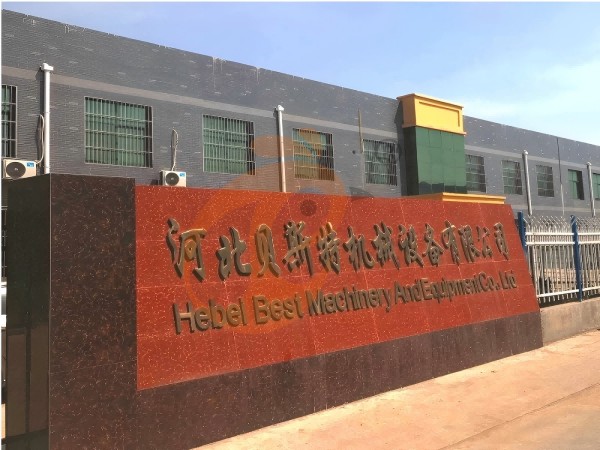
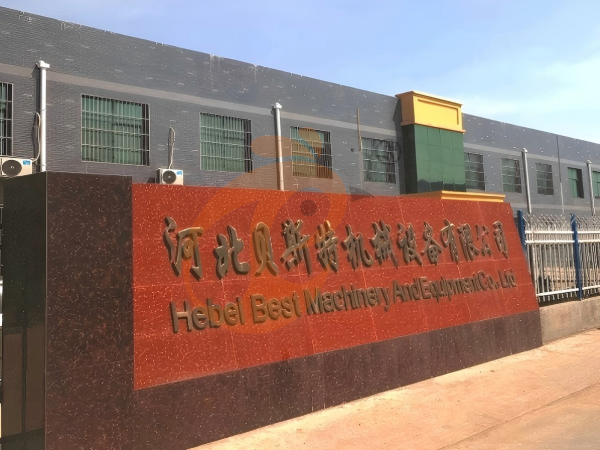
China Hebei Best Machinery And Equipment CO., LTD
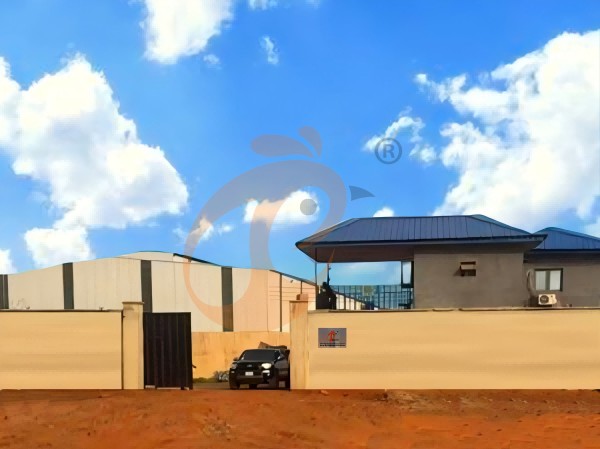
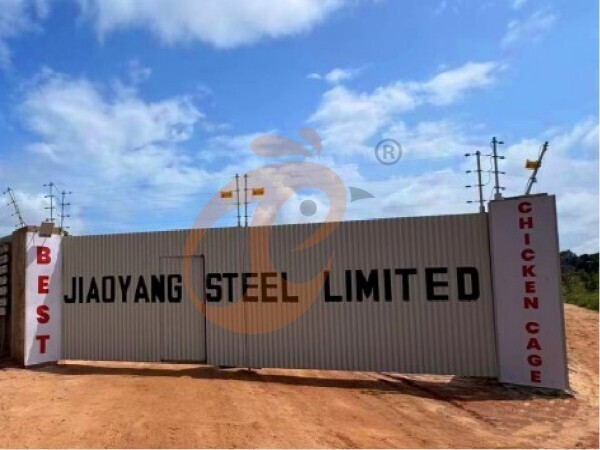
Nigeria Vanke Machinery And Equipment CO., LTD
Tanzania Best Machinery And Equipment CO., LTD
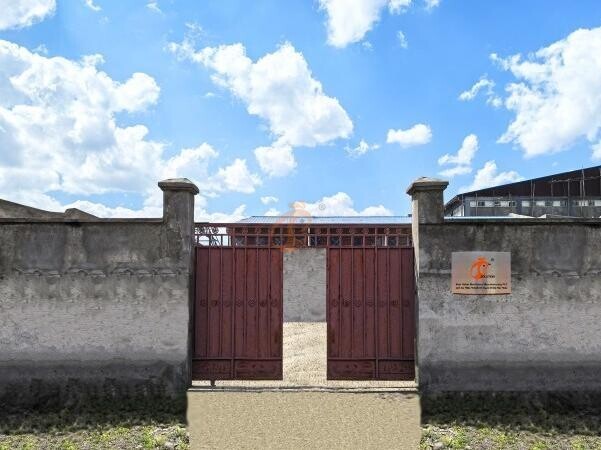
Ethiopia Best Hebei Machinery Manufacturing PLC
Reception /24 WhatsApp NO. : +8618830120193
FAQ
How To Increase Stocking Density Without Reducing Egg Production In A-Type Layer Cage?
Provide 418-500 cm² per bird
Ensure good ventilation
Egg production rate: 90–96%
What Are The Recommended Egg Conveyor Speeds For A-Type Layer Cage Farms?
Reduces egg collision and breakage
Egg breakage rate <1%
Daily egg yield: 900–960 eggs/1,000 birds
Egg production rate: 90–96%
How To Implement Lighting Control In A-Type Poultry Cage Farms?
Even illumination reduces stress
Egg production rate: 90–96%
FCR: 1.9–2.2
Egg breakage rate <1%
Message
Products recommended
 HK Headquarter Offers EU-standard Poultry Farm Solutions, Manufacture Poultry Farm Equipment1. Continuous communication with the EU and the US
2. China, Nigeria, Ethiopia, Tanzania branch companies and factories
3. The products’ quality is customized for local poultry farms
4. Poultry cage and poultry farm equipment stock for sale
5. 24 online reception Whatsapp NO. : +8618830120193,contact us to get full informationRead More China Branch Offer Poultry Farm Business Plan, Manufacture Poultry Farm Equipment1. Address: Flat/RM 2416, 24/F, Runxing Building, Youyi Nan Street, Shijiazhuang City, Hebei Province, China
2. Poultry cage and poultry farm equipment factory and stock for sale
3. Customized for local poultry farms
4. Quality and design are based on Euro
5. 24 online reception Whatsapp NO. : +8618830120193Read More Nigeria Branch Offer Poultry Farm Business Plan, Manufacture Poultry Farm Equipment1. Address: After Sinoma Office, 200 Meters Near Danco Filling Station, Lagos/Ibadan Expressway, Lagos State, Nigeria
2. Poultry cage and poultry farm equipment factory and stock for sale
3. Customized for Nigerian poultry farms
4. Quality and design are based on Euro
5. 24 online reception Whatsapp NO. : +8618830120193Read More Ethiopia Branch Offer Poultry Farm Business Plan, Manufacture Poultry Farm Equipment1. Address: Gelan Gura, Akaki-kaliti Sub City, Addis Ababa, Ethiopia
2. Poultry cage and poultry farm equipment stock for sale
3. Customized for Ethiopian poultry farms
4. Quality and design are based on Euro
5. 24 online reception Whatsapp NO. : +8618830120193, contact us to get price listRead More Tanzania Branch Offer Poultry Farm Business Plan, Manufacture Poultry Farm Equipment1. Address: No.8, Sova Road, Msufini, Mlandizi, Kibaha, Pwani, Tanzania
2. Poultry cage and poultry farm equipment factory and stock for sale
3. Customized for Tanzanian poultry farms
4. Quality and design are based on Euro
5. 24 online reception Whatsapp NO. : +8618830120193Read More Fully Automatic H Type Layer Chicken Cage1. 30,000-100,000+ layers/house chooses it, Poultry farmers can achieve an egg production rate of 96-98%
2. A significant improvement over the 85-90% typically seen in manual systems
3. A typical poultry farm can expect a 30-40% reduction in labor costs due to the automation
4. Each feeding line efficiently supplies feed to around 100,000 hens per 30 mins
5. Reception /WhatsApp NO. : +8618830120193Read More Fully Automatic A Type Layer Chicken Cage1. 10,000-50,000 layers/house chooses it
2. Cleaner egg collection reduces breakage by 0.5%
3. Improved hygiene helps reduce mortality rate to <3%
4. 1–2 technicians can handle 15,000–30,000 birds
5. Reception /WhatsApp NO. : +8618830120193Read More Semi Automatic H Type Layer Chicken Cage1. 1,00-20,000 layers/house chooses it
2. Nipple drinkers flow 30–60 ML / min
3. Hot-dip galvanized (typical coating ≥ 275 g/m²)
4. Reduce ammonia by ~ 35–40%
5. Reception /WhatsApp NO. : +8618830120193Read More Semi Automatic A Type Layer Chicken Cage1. 1,00-20,000 layers/house chooses it, no rust for 10 years, no deformation for 15 years
2. Chickens live comfortably, you can raise them with peace of mind
3. Save water, save money—efficiency you can measure
4. Improve environment quality, and increase egg production rate
5. Reception /WhatsApp NO. : +8618830120193Read More
By clicking 'Allow All', you agree to the storage of cookies on your device to enhance site navigation, analyze site usage and assist with our marketing efforts.