






Blog
How To Start Poultry Farming: Essential Equipment For Scale
If you are evaluating how to start poultry farming at commercial scale, this guide focuses on the essential equipment, standards, and procurement decisions that matter to corporate decision-makers. It combines practical steps, cost considerations, and real project experience from TAIYU INDUSTRIAL GROUP CO., LTD to help you build reliable, scalable production with modern poultry house systems.
Definition And Core Objectives
Understanding how to start poultry farming begins with clear objectives: target bird type (broiler, layer, breeder), production scale, processing integration, and product quality goals. Define throughput, mortality thresholds, and biosecurity levels. Early clarity reduces retrofit costs and aligns equipment selection with operational KPIs. For executive teams, the question is not only technical feasibility but also return on investment, regulatory compliance, and market timing.
Market Context And Trend Analysis
The global demand for poultry meat is increasing steadily due to cost advantages and consumer preference shifts. Decision-makers should consider feed cost volatility, local regulatory frameworks, and export opportunities. Technological trends include automation in feeding and egg-handling, precision ventilation, and IoT-enabled monitoring. When planning how to start poultry farming, factor in these trends to future-proof capital investments and achieve faster payback.
Essential Equipment List And Technical Performance
Core categories of equipment include housing structures, feeding systems, drinking systems, ventilation and environmental control, lighting, egg collection (for layers), waste management, and processing line interfaces. Technical performance metrics to evaluate are throughput capacity, energy consumption (kWh per bird cycle), durability (expected service years), maintenance intervals, and spare-part availability. Selecting robust equipment reduces downtime and long-term operational cost.
Key Equipment Modules (Detailed)
- Housing & structural systems: modular steel structures and insulated panels to control microclimate and allow expansion.
- Automated feeding systems: chain or auger feeders with measured feed delivery and minimal waste.
- Drinker systems: nipple or cup drinkers sized per bird type to ensure uniform water intake.
- Ventilation & environmental control: fans, inlets, evaporative cooling and sensors to maintain target temperature and humidity.
- Lighting systems: programmable light schedules to optimize growth and egg production.
- Manure handling & bedding management: conveyors or scrapers for hygiene and ammonia control.
Processing integration: live-bird handling, lairage, and interfaces to processing lines for vertically integrated operations.
For ventilation specifically, consider proven solutions such as Poultry House Ventilation Fans - Ventilation and Temperature Control A Practical Guide For Chicken Cage Systems, which help stabilize house climate and reduce mortality and feed conversion ratio variability.
Procurement Guide And Vendor Evaluation
Procure based on total cost of ownership rather than initial price. Assess vendors for: warranty terms, spare parts lead times, on-site installation support, training, and after-sales service. When deciding how to start poultry farming, evaluate past projects, technical certifications, and local references. Use staged procurement: critical systems first (ventilation, feeders, drinkers), followed by automation add-ons. Negotiate clear acceptance tests, performance guarantees, and key performance indicators tied to delivery milestones.
Standards, Certifications And Biosecurity
Comply with national feed and animal welfare standards, as well as international frameworks like OIE guidelines and ISO quality systems where applicable. Certification reduces market entry friction. Implement layered biosecurity: controlled access points, disinfectant stations, vector control, and health monitoring. For investors, documented compliance protects brand value and enables export opportunities.
Cost Analysis And Alternatives
Estimate capital expenditure (CAPEX) for housing, equipment, and utility upgrades, and operational expenditure (OPEX) for feed, labor, energy, and maintenance. Typical CAPEX per bird capacity varies widely by region and automation level. Consider alternatives: retrofitting existing barns versus new modular houses; manual systems for low-cost operations versus automated lines for scale. Perform sensitivity analysis on feed price and mortality assumptions to test viability.
Comparison Analysis: Manual Vs Automated Systems
Manual systems reduce CAPEX but increase labor costs and variability. Automated systems raise CAPEX but improve uniformity, labor efficiency, and biosecurity. When choosing how to start poultry farming at scale, compute lifecycle costs over 5–10 years. Automation often pays back through lower mortality, better feed conversion ratios, and reduced labor dependency.
Client Cases And Applied Projects
TAIYU INDUSTRIAL GROUP CO., LTD has delivered projects worldwide: Dubai layers project (30,000 birds per pen), Nigeria integrated hatching-to-processing line for 100,000 birds, and Australian automatic cage installations. These cases demonstrate scalable design, local adaptation, and integration of German production technology for durability and performance. Decision-makers can request performance data and references to validate vendor claims.
Common Misconceptions And Pitfalls
Misconception: "Cheaper equipment equals lower cost" — actually, poor reliability increases long-term cost. Evaluate downtime impact.
Misconception: "Ventilation is optional in mild climates" — inadequate ventilation raises disease risk and reduces productivity.
Pitfall: Underestimating utility infrastructure — ensure power and water capacity match peak loads.
FAQ For Decision-Makers
- Q: What is the minimum scale to justify automation?
A: Often above several thousand birds per cycle, but depends on local labor costs and market targets. - Q: How to evaluate supplier guarantees?
A: Request documented KPIs, on-site training, and clear spare parts pricing. Q: What environmental controls matter most?
A: Ventilation, temperature control, and humidity regulation directly affect feed conversion and mortality.
Implementation Roadmap
Start with a feasibility study, site surveys, and risk assessment. Develop phased implementation: foundation and utilities, structural housing, critical systems (ventilation, feeders, drinkers), then automation and processing ties. Pilot one house or one pen to validate assumptions before full roll-out. This staged approach reduces execution risk and accelerates learning.
Why choose Us And Call To Action
If you are finalizing plans on how to start poultry farming for commercial operations, partner with manufacturers who combine advanced production technology and real project experience. TAIYU INDUSTRIAL GROUP offers turnkey solutions, engineering support, and verified international projects in Dubai, Nigeria, and Australia. Contact us to review project-specific ROI models, request references, and schedule a site assessment. Let us help you minimize risk, optimize equipment selection, and scale efficiently—reach out to discuss your project requirements and procurement timeline.
When planning how to start poultry farming, making informed equipment and vendor choices is the difference between a successful scalable operation and costly retrofit cycles. Contact TAIYU for technical consultation and references to accelerate your decision.
Tag
Message
Products recommended
 HK Headquarter Offers EU-standard Poultry Farm Solutions, Manufacture Poultry Farm Equipment1. Continuous communication with the EU and the US
2. China, Nigeria, Ethiopia, Tanzania branch companies and factories
3. The products’ quality is customized for local poultry farms
4. Poultry cage and poultry farm equipment stock for sale
5. 24 online reception Whatsapp NO. : +8618830120193,contact us to get full informationRead More China Branch Offer Poultry Farm Business Plan, Manufacture Poultry Farm Equipment1. Address: Flat/RM 2416, 24/F, Runxing Building, Youyi Nan Street, Shijiazhuang City, Hebei Province, China
2. Poultry cage and poultry farm equipment factory and stock for sale
3. Customized for local poultry farms
4. Quality and design are based on Euro
5. 24 online reception Whatsapp NO. : +8618830120193Read More Nigeria Branch Offer Poultry Farm Business Plan, Manufacture Poultry Farm Equipment1. Address: After Sinoma Office, 200 Meters Near Danco Filling Station, Lagos/Ibadan Expressway, Lagos State, Nigeria
2. Poultry cage and poultry farm equipment factory and stock for sale
3. Customized for Nigerian poultry farms
4. Quality and design are based on Euro
5. 24 online reception Whatsapp NO. : +8618830120193Read More Ethiopia Branch Offer Poultry Farm Business Plan, Manufacture Poultry Farm Equipment1. Address: Gelan Gura, Akaki-kaliti Sub City, Addis Ababa, Ethiopia
2. Poultry cage and poultry farm equipment stock for sale
3. Customized for Ethiopian poultry farms
4. Quality and design are based on Euro
5. 24 online reception Whatsapp NO. : +8618830120193, contact us to get price listRead More Tanzania Branch Offer Poultry Farm Business Plan, Manufacture Poultry Farm Equipment1. Address: No.8, Sova Road, Msufini, Mlandizi, Kibaha, Pwani, Tanzania
2. Poultry cage and poultry farm equipment factory and stock for sale
3. Customized for Tanzanian poultry farms
4. Quality and design are based on Euro
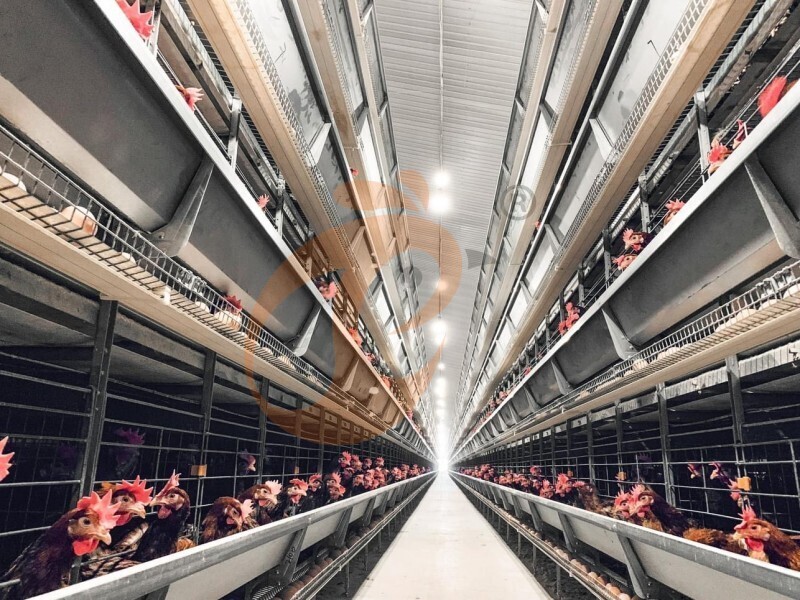
5. 24 online reception Whatsapp NO. : +8618830120193Read More Fully Automatic H Type Layer Chicken Cage1. 30,000-100,000+ layers/house chooses it, Poultry farmers can achieve an egg production rate of 96-98%
2. A significant improvement over the 85-90% typically seen in manual systems
3. A typical poultry farm can expect a 30-40% reduction in labor costs due to the automation
4. Each feeding line efficiently supplies feed to around 100,000 hens per 30 mins
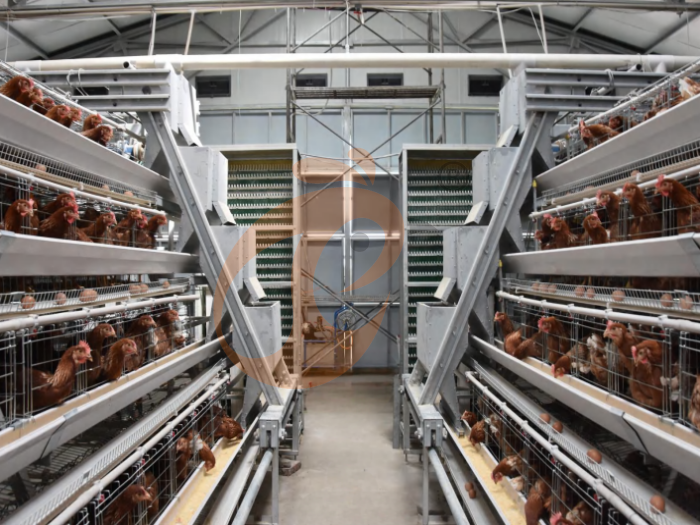
5. Reception /WhatsApp NO. : +8618830120193Read More Fully Automatic A Type Layer Chicken Cage1. 10,000-50,000 layers/house chooses it
2. Cleaner egg collection reduces breakage by 0.5%
3. Improved hygiene helps reduce mortality rate to <3%
4. 1–2 technicians can handle 15,000–30,000 birds
5. Reception /WhatsApp NO. : +8618830120193Read More Semi Automatic H Type Layer Chicken Cage1. 1,00-20,000 layers/house chooses it
2. Nipple drinkers flow 30–60 ML / min
3. Hot-dip galvanized (typical coating ≥ 275 g/m²)
4. Reduce ammonia by ~ 35–40%
5. Reception /WhatsApp NO. : +8618830120193Read More Semi Automatic A Type Layer Chicken Cage1. 1,00-20,000 layers/house chooses it, no rust for 10 years, no deformation for 15 years
2. Chickens live comfortably, you can raise them with peace of mind
3. Save water, save money—efficiency you can measure
4. Improve environment quality, and increase egg production rate
5. Reception /WhatsApp NO. : +8618830120193Read More
By clicking 'Allow All', you agree to the storage of cookies on your device to enhance site navigation, analyze site usage and assist with our marketing efforts.