






Blog
Deep litter chicken house investment connects litter management, housing efficiency, and commercial poultry production with practical equipment integration.
Automatic poultry feeding system reduces repetitive feeding work while supporting consistent distribution across commercial chicken houses.
Poultry house ventilation system coordinates airflow, moisture management, cooling, and environmental control for dependable flock housing performance.
Equipment selection affects labor organization, maintenance planning, energy consumption, expansion flexibility, and long-term farm operating economics across multiple production cycles.
Professional engineering combines reliable poultry equipment, climate-adapted layouts, automated controls, and scalable configurations to create commercially practical deep litter production systems.
Get professional poultry farm construction guidance, equipment selection solutions, and the latest price lists, whatsApp to +8618830120193, +2348111199996, or click to learn more.
Investment Cost Vs. Long-Term Value
Data is for reference only.Swipe horizontally to view full table.
The initial equipment budget may be higher when you choose professional systems.
However, investment should be evaluated against the entire production cycle rather than the purchase price alone.
An automatic poultry feeding system can become part of a broader capital plan covering installation, commissioning, maintenance, and future production expansion.
Decision Tip #1: Calculate Labor Before Buying
If your farm grows, what happens to your workload?
More birds usually mean more feeding, watering, ventilation checks, litter management, and cleaning.
A system that depends heavily on manual labor can become increasingly expensive.
An automatic poultry feeding system reduces repetitive work through centralized feed delivery.
Employees can then spend more time monitoring flock health and production instead of carrying feed or checking individual drinkers.
For commercial farms, labor savings should be included in the investment calculation from day one.
For example, a 4-line feeding system can distribute feed across a house without requiring workers to refill individual troughs throughout the day.
Equipment Selection And Its Business Impact
Data is for reference only.Swipe horizontally to view full table.
Choosing equipment as a complete system is usually more effective than purchasing individual components without considering how equipment interacts.
A poultry house ventilation system should therefore be evaluated alongside feeding, drinking, cooling, lighting, and environmental controls.
Decision Tip #2: Think In Terms Of Bird Environment
House A: Poor airflow, uneven feeding, inconsistent water pressure, and limited temperature control can create additional management demands.
House B: Balanced ventilation, automatic feeding, reliable drinking lines, and environmental monitoring create a more coordinated operating structure.
The difference is not merely technological.
The difference can influence bird comfort, litter moisture, feed and water access, and daily management efficiency.
That is why poultry equipment should be selected according to the environmental requirements of the flock, not simply according to the lowest quotation.
A good poultry house ventilation system needs the right supporting equipment around it.
A controller configured with 1-minute monitoring intervals can provide substantially more operational feedback than periodic manual inspection.
Five Equipment Priorities For A Deep Litter House
Data is for reference only.Swipe horizontally to view full table.
A professional chicken house equipment supplier should look at the complete house layout rather than sell equipment as isolated products.
An Automatic poultry feeding system should match house dimensions, flock capacity, service access, and future maintenance requirements.
Decision Tip #3: Compare Total Cost Of Ownership
Total cost of ownership = Purchase cost + Energy + Labor + Maintenance + Replacement costs
This changes the buying conversation.
For example, a cheaper fan may look attractive initially, but higher energy consumption and shorter service life can make it more expensive over several years.
Similarly, low-cost drinkers may require frequent replacement or create additional litter-management problems.
When comparing suppliers, request specifications, expected service life, energy consumption, warranty terms, spare-parts availability, and installation support.
The lowest price is not necessarily the lowest cost.
A properly planned equipment package can be evaluated over a 5–10 year operating period, giving farm owners a clearer payback calculation.
A commercial deep litter chicken House budget can also include installation costs of $5,000–$15,000, depending on project configuration and equipment scope.
European union standard reference only.
Where A Professional Equipment Package Adds Value
Data is for reference only.Swipe horizontally to view full table.
This is where an experienced poultry equipment manufacturer can create value.
The objective is not simply to supply machines, but to match equipment capacity with house size, bird numbers, climate, and production goals.
A poultry house ventilation system becomes more valuable when fan selection, cooling, inlets, sensors, and controls are engineered as one operating network.
Decision Tip #4: Design For Your Local Climate
Deep litter systems are strongly influenced by moisture and temperature.
In a hot or humid region, ventilation capacity becomes particularly important.
If the house cannot remove sufficient heat and moisture, litter can deteriorate faster and management becomes harder.
In colder regions, ventilation still matters, but excessive air exchange can waste energy and create unfavorable conditions if the system is poorly controlled.
Do not copy another farm's equipment configuration blindly.
A reliable supplier should consider local climate conditions before recommending fans, cooling systems, controllers, insulation, and house ventilation design.
For winter operation, inlet opening control can be programmed in increments of 5%, allowing airflow adjustments without manually repositioning each inlet.
Five Questions To Ask Your Equipment Supplier
Data is for reference only.Swipe horizontally to view full table.
These questions quickly separate equipment vendors from engineering-oriented poultry partners.
A qualified automatic poultry feeding system supplier should provide equipment calculations, layout coordination, commissioning guidance, and after-sales technical support.
Decision Tip #5: Build For The Next Five Years
Data is for reference only.Swipe horizontally to view full table.
A chicken house is a long-term production asset.
Equipment should therefore be selected with future flock capacity, labor costs, energy prices, and possible farm expansion in mind.
Spending slightly more on durable, compatible equipment can be more economical than replacing an undersized system after only a few production cycles.
A properly specified poultry house ventilation system can also reserve 15–20% spare electrical capacity for future additions.
Frequently Asked Questions
Q1: Is deep litter suitable for commercial chicken farms?
A1: Yes, deep litter can suit commercial farms when ventilation, litter management, feeding, drinking, and environmental control are properly coordinated.
A deep litter chicken house can support systematic production when equipment capacity matches flock requirements.
Q2: Which equipment deserves priority in a deep litter project?
A2: Ventilation, feeding, drinking, cooling, and environmental control should be planned together.
A poultry house ventilation system deserves particular attention because airflow affects moisture removal and house conditions.
Q3: Can automated equipment reduce deep litter management costs?
A3: Yes, automation can reduce repetitive manual operations and improve process consistency.
An automatic poultry feeding system can centralize feed delivery while programmable controls coordinate daily operation.
Taiyu (HK) Group - One Of China Toppest Deep Litter Chicken House Manufacturer
Deep litter chicken house systems integrate structural layout, feeding, drinking, ventilation, cooling, lighting, and environmental control into coordinated commercial poultry production equipment.
Global factory-direct supply provides poultry equipment with standardized manufacturing, technical documentation, equipment matching, and project-oriented configuration for overseas farms.
Poultry equipment packages cover feeding lines, nipple drinking systems, ventilation fans, cooling systems, controllers, lighting, and supporting house components.
Turn-key engineering coordinates layout design, equipment production, shipment, installation guidance, commissioning support, and project handover according to defined technical specifications.
International project execution supports commercial chicken farms requiring scalable equipment configuration, coordinated delivery schedules, technical communication, and long-term spare-parts planning.
Contact Us To Received Your Customized Poultry Farm Plan
Headquarters And Branchs

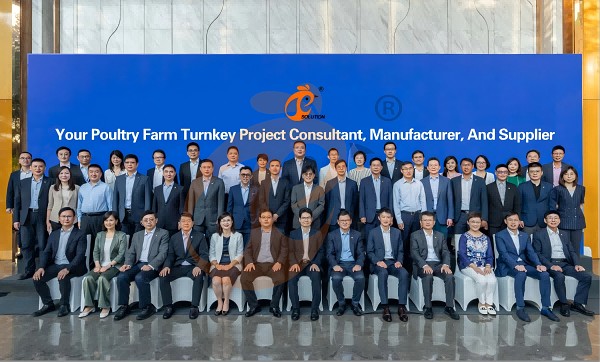
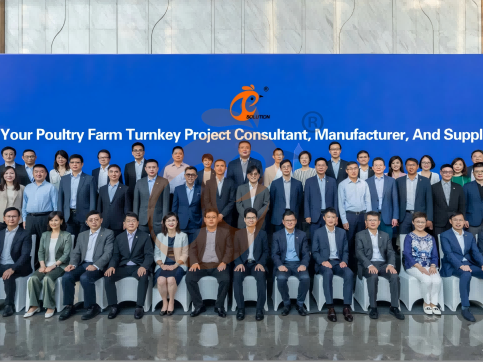
Hong Kong Headquarter Management Team
Hong Kong Headquarter Taiyu Industrial Group CO., LTD
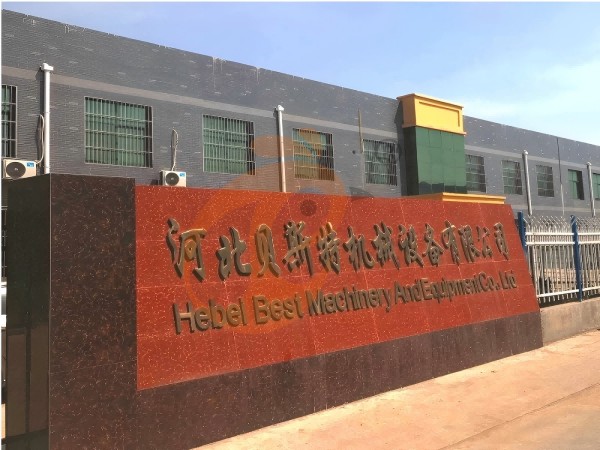
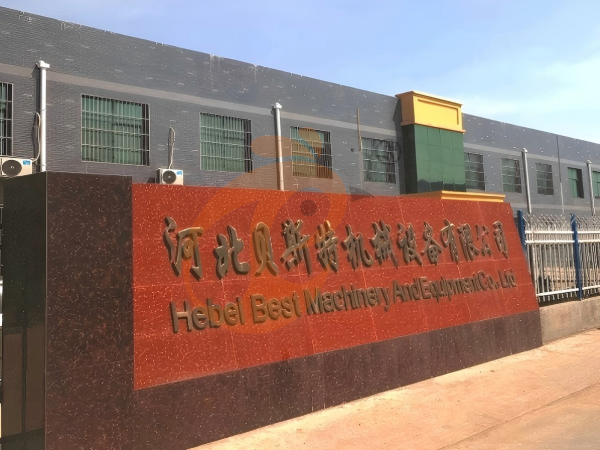
China Hebei Best Machinery And Equipment CO., LTD
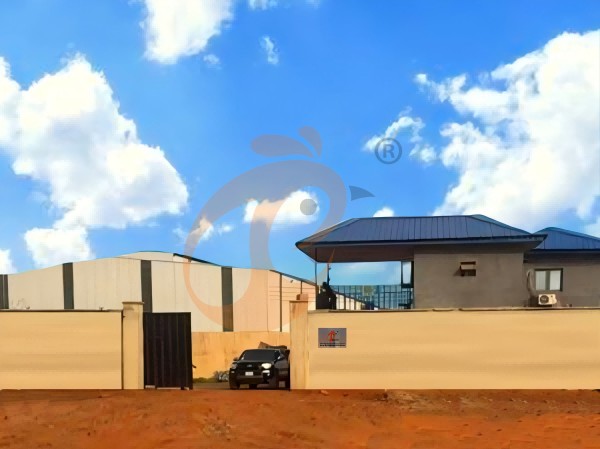
Nigeria Vanke Machinery And Equipment CO., LTD
Tanzania Best Machinery And Equipment CO., LTD
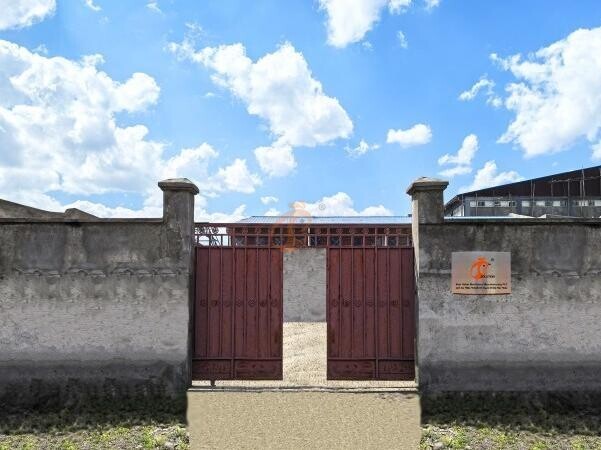
Ethiopia Best Hebei Machinery Manufacturing PLC
Reception /24 WhatsApp NO. : +8618830120193
FAQ
What Are The Growth Performance Benefits In Deep Litter Poultry System?
Feed conversion ratio improves to 1.55–1.78 due to thermal comfort and reduced stress.
Market uniformity rate exceeds 85%–92% within target slaughter weight range.
What Are The Litter Turning And Management Frequency Standards In Deep Litter Poultry System?
Surface leveling is maintained every 3–5 days to prevent compaction zones.
Full litter replacement cycle occurs every 2–3 production batches depending on load intensity.
What Are The Energy Efficiency And Cost Advantages In Deep Litter Poultry System?
Construction cost savings reach 25%–40% compared with fully caged housing systems.
Operational labor demand decreases by 30%–50% through simplified floor-based management.
- poultry equipment
- poultry farm
- poultry farm
- poultry farm construction
- poultry equipment manufacturer
- poultry feeding system
- poultry house ventilation system
- automatic poultry feeding system
- deep litter system
- chicken farm
- chicken house
- poultry house
- chicken house equipment supplier
- chicken house equipment
- poultry house ventilation
- poultry feeding system supplier
- deep litter chicken house
- deep litter chicken house system
- deep litter chicken house equipment
- chicken house manufacturer
- chicken house system
- Ethiopia
- Nigeria
Message
Products recommended
 HK Headquarter Offers EU-standard Poultry Farm Solutions, Manufacture Poultry Farm Equipment1. Continuous communication with the EU and the US
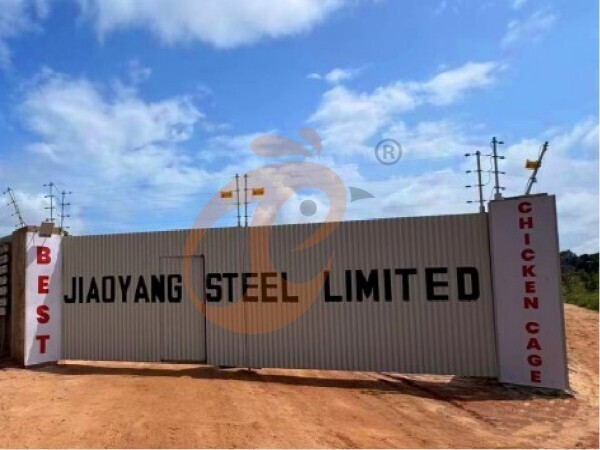
2. China, Nigeria, Ethiopia, Tanzania branch companies and factories
3. The products’ quality is customized for local poultry farms
4. Poultry cage and poultry farm equipment stock for sale
5. 24 online reception Whatsapp NO. : +8618830120193,contact us to get full informationRead More China Branch Offer Poultry Farm Business Plan, Manufacture Poultry Farm Equipment1. Address: Flat/RM 2416, 24/F, Runxing Building, Youyi Nan Street, Shijiazhuang City, Hebei Province, China
2. Poultry cage and poultry farm equipment factory and stock for sale
3. Customized for local poultry farms
4. Quality and design are based on Euro
5. 24 online reception Whatsapp NO. : +8618830120193Read More Nigeria Branch Offer Poultry Farm Business Plan, Manufacture Poultry Farm Equipment1. Address: After Sinoma Office, 200 Meters Near Danco Filling Station, Lagos/Ibadan Expressway, Lagos State, Nigeria
2. Poultry cage and poultry farm equipment factory and stock for sale
3. Customized for Nigerian poultry farms
4. Quality and design are based on Euro
5. 24 online reception Whatsapp NO. : +8618830120193Read More Ethiopia Branch Offer Poultry Farm Business Plan, Manufacture Poultry Farm Equipment1. Address: Gelan Gura, Akaki-kaliti Sub City, Addis Ababa, Ethiopia
2. Poultry cage and poultry farm equipment stock for sale
3. Customized for Ethiopian poultry farms
4. Quality and design are based on Euro
5. 24 online reception Whatsapp NO. : +8618830120193, contact us to get price listRead More Tanzania Branch Offer Poultry Farm Business Plan, Manufacture Poultry Farm Equipment1. Address: No.8, Sova Road, Msufini, Mlandizi, Kibaha, Pwani, Tanzania
2. Poultry cage and poultry farm equipment factory and stock for sale
3. Customized for Tanzanian poultry farms
4. Quality and design are based on Euro
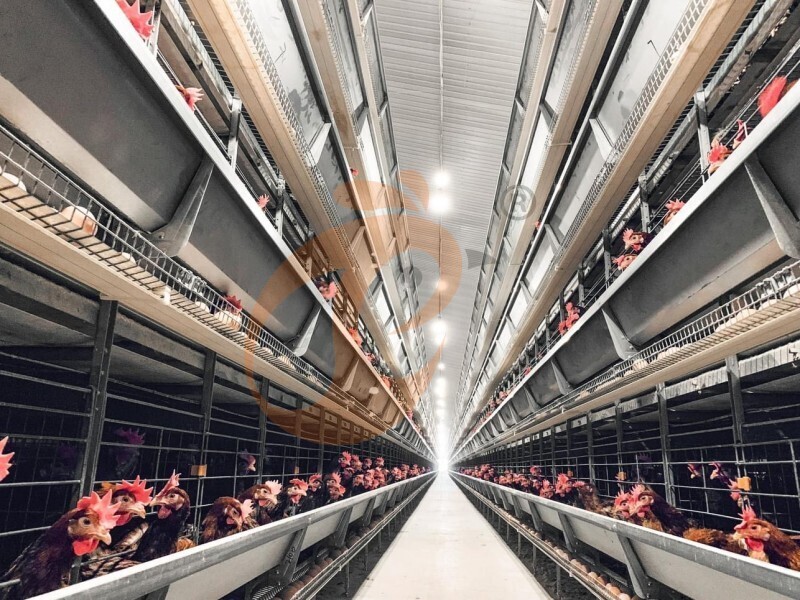
5. 24 online reception Whatsapp NO. : +8618830120193Read More Fully Automatic H Type Layer Chicken Cage1. 30,000-100,000+ layers/house chooses it, Poultry farmers can achieve an egg production rate of 96-98%
2. A significant improvement over the 85-90% typically seen in manual systems
3. A typical poultry farm can expect a 30-40% reduction in labor costs due to the automation
4. Each feeding line efficiently supplies feed to around 100,000 hens per 30 mins
5. Reception /WhatsApp NO. : +8618830120193Read More Fully Automatic A Type Layer Chicken Cage1. 10,000-50,000 layers/house chooses it
2. Cleaner egg collection reduces breakage by 0.5%
3. Improved hygiene helps reduce mortality rate to <3%
4. 1–2 technicians can handle 15,000–30,000 birds
5. Reception /WhatsApp NO. : +8618830120193Read More Semi Automatic H Type Layer Chicken Cage1. 1,00-20,000 layers/house chooses it
2. Nipple drinkers flow 30–60 ML / min
3. Hot-dip galvanized (typical coating ≥ 275 g/m²)
4. Reduce ammonia by ~ 35–40%
5. Reception /WhatsApp NO. : +8618830120193Read More Semi Automatic A Type Layer Chicken Cage1. 1,00-20,000 layers/house chooses it, no rust for 10 years, no deformation for 15 years
2. Chickens live comfortably, you can raise them with peace of mind
3. Save water, save money—efficiency you can measure
4. Improve environment quality, and increase egg production rate
5. Reception /WhatsApp NO. : +8618830120193Read More
By clicking 'Allow All', you agree to the storage of cookies on your device to enhance site navigation, analyze site usage and assist with our marketing efforts.