






Blog
Pralson feeders support controlled poultry feeding through measurable equipment planning, practical configuration, and scalable installation principles for commercial farms.
Automatic poultry feeder upgrades can reduce routine intervention while supporting consistent feed delivery across different house layouts and production cycles.
Commercial poultry feeders require coordinated selection of drive systems, feeder lines, suspension structures, electrical controls, and maintenance components.
Five upgrade strategies connect equipment selection with distribution, control, compatibility, maintenance, and future expansion requirements.
Technical specifications, commissioning checks, and supplier capability together create a stronger equipment purchasing framework for modern poultry production systems and projects.
Get professional poultry farm construction guidance, equipment selection solutions, and the latest price lists, whatsApp to +8618830120193, +2348111199996, or click to learn more.
Start With The Upgrade Goal: A Farm-Level View
Assessment Sequence
- Record current feeding performance and equipment condition before replacing components.
- Define house dimensions, flock capacity, feeding schedule, and labor requirements for the pralson feeders configuration.
- Check automatic poultry feeder compatibility with existing electrical, suspension, and conveying infrastructure.
- Establish measurable operating targets using a 12-month equipment service horizon and a 30-minute daily inspection window.
- Select replacement priorities according to engineering requirements rather than equipment appearance alone.
Data is for reference only.Swipe horizontally to view full table.
Strategy One — Improve Feed Distribution
Upgrade Principle
Consistent feed movement depends on coordination among the conveying mechanism, feeder points, suspension arrangement, and control equipment.
A commercial poultry feeder system should therefore be evaluated as one connected installation rather than as individual replacement parts.
For installations operating 18–22 hours per day, planned inspection should verify feed movement and mechanical response across the complete line.
A practical layout can maintain approximately 250–350 mm between adjacent feeder positions, supporting organized bird access and operator movement.
Data is for reference only.Swipe horizontally to view full table.
Strategy Two — Turn Feed Control Into An Efficiency Tool
Control Logic
Feed control functions as part of daily equipment management, not as an independent accessory.
A pralson feeder system can coordinate feed delivery with scheduled flock management procedures and equipment inspection routines.
A typical control cycle can use 5–15 minute inspection intervals, while electrical components should correspond with the site's 220–240 v supply.
Adjustment procedures should remain accessible so operators can identify changes in feed movement, equipment noise, or component response without dismantling the system.
Data is for reference only.Swipe horizontally to view full table.
Strategy Three — Upgrade Around The Poultry House, Not In Isolation
Project Scenario
Existing condition: a producer has an established poultry house and wants to modernize feeding without removing every existing component.
Engineering response: identify usable infrastructure first, then replace components restricting system performance.
For a house measuring 15 × 120 m, the commercial poultry feeders configuration should be engineered differently from a compact 12 × 60 m building.
Pralson equipment selection should consider feed lines, electrical routing, suspension points, house width, bird capacity, and planned expansion as one project package.
Data is for reference only.Swipe horizontally to view full table.
Strategy Four — Build Maintenance Into The Upgrade
Maintenance Protocol
Inspection 01: Examine feeder assemblies and accessible moving components.
Inspection 02: Check drive assemblies, connections, and feed-contact surfaces.
Inspection 03: Record abnormal vibration, accumulation, loose components, and visible damage.
Inspection 04: Schedule service according to operating hours rather than waiting for breakdowns.
For automatic poultry feeder installations, a scheduled inspection every 168 operating hours provides a defined maintenance reference.
A practical mechanical benchmark can include ≤2 mm shaft radial play during component inspection.
Data is for reference only.Swipe horizontally to view full table.
Strategy Five — Match The Feeder Upgrade To Future Growth
Growth Formula
Current requirement + planned expansion + management objectives = equipment configuration basis
A Pralson feeder system should accommodate expected changes in flock capacity, house utilization, and automation requirements rather than serving only current production conditions.
A planned expansion of 15% in bird capacity should be incorporated before finalizing feeder-line arrangements.
For electrical planning, 10–15% spare installation capacity can provide additional cabinet space for future control functions.
Data is for reference only.Swipe horizontally to view full table.
Compare Before And After: What Should An Upgrade Deliver?
Measurement Framework
Before installation, record baseline operating conditions for 14 consecutive production days.
After installation, repeat the same measurement process using identical inspection methods.
For commercial poultry feeders, useful indicators include motor behavior, vibration, feed delivery, blockage frequency, and electrical conditions.
The comparison should determine whether the upgraded system creates measurable operational improvement rather than relying on general product claims.
Data is for reference only.Swipe horizontally to view full table.
Use The "5-Question" Purchasing Filter
Purchasing Questions
01 — Compatibility: does equipment match the existing house structure and installation arrangement?
02 — Operation: does the pralson feeder system support the intended management procedure?
03 — Integration: can the automatic poultry feeder configuration connect with current electrical and control infrastructure?
04 — Maintenance: are technical documents and replacement components available for scheduled servicing?
05 — Expansion: can future equipment additions be incorporated without redesigning the complete installation?
A supplier proposal should also include drawings, component lists, electrical requirements, installation procedures, and spare-part recommendations under 25°c ambient reference conditions.
Data is for reference only.Swipe horizontally to view full table.
Upgrade Mistakes To Avoid
Myth: replacing a visible feeder component automatically upgrades the complete system.
Reality: feeding performance depends on the interaction among drive components, conveying parts, feeder assemblies, controls, and installation alignment.
A 1.5% line-level slope deviation can require correction even when individual feeder pans appear functional.
Myth: equipment selection ends when the quotation is approved.
Reality: commissioning, operator training, inspection records, and spare-parts planning influence the usable value of commercial poultry feeders.
A structured commissioning process can include a 30-minute unloaded test before controlled production operation.
A Practical Upgrade Roadmap
Project Flow
Inspection → engineering → configuration → installation → commissioning → monitoring
Document the existing system before selecting pralson feeders, including motor model, rated current, structural arrangement, and component condition.
After installation, record operating settings and maintenance observations using the same documentation format.
A 12-month equipment record can provide traceable information for later troubleshooting, component replacement, and system expansion.
Data is for reference only.Swipe horizontally to view full table.
Why Choose A Professional Poultry Equipment Partner?
Technical Commercial Structure
A pralson feeder system should be specified according to house dimensions, flock requirements, electrical conditions, installation structure, and maintenance procedures.
A professional poultry equipment supplier can connect feeder selection with line configuration, commissioning requirements, component compatibility, and replacement planning.
For international projects, technical drawings and equipment specifications should form part of the quotation and engineering review process.
A coordinated supplier can also integrate feeding equipment with broader house systems when a complete project requires turn-key poultry equipment engineering and installation support.
Upgrade Smarter With Pralson Feeders
Five-Part Decision
1. Distribution: improve feed movement through coordinated line design and equipment configuration.
2. Control: establish repeatable feeding procedures using appropriate electrical and mechanical controls.
3. Compatibility: match automatic poultry feeder equipment with the existing poultry-house structure and infrastructure.
4. Maintenance: build inspection, component replacement, and service documentation into the equipment plan.
5. Expansion: prepare the commercial poultry feeders system for future flock capacity and project development.
Pralson feeders can therefore serve as a practical component within an integrated poultry-house equipment solution.
Frequently Asked Questions
Q1: What should be checked before upgrading pralson feeders?
A1: House dimensions, existing line configuration, electrical supply, suspension structure, flock capacity, and maintenance records should be reviewed before equipment selection.
A preliminary assessment can include a 14-day operating record to establish baseline conditions.
Q2: How can an automatic poultry feeder upgrade improve farm management?
A2: A properly configured system can standardize feed delivery procedures and reduce unnecessary manual intervention.
Control settings, inspection intervals, and equipment compatibility should be established according to the specific poultry-house installation.
Q3: What makes commercial poultry feeders suitable for large projects?
A3: Large projects require coordinated feeder lines, drive equipment, electrical controls, suspension structures, spare parts, and commissioning procedures.
A complete technical package should define installation requirements and allow approximately 10–15% provision for future control expansion.
Taiyu (HK) Group - One Of China Biggest Pralson Feeders Manufacturer
Pralson feeders provide engineered feeding-line configurations covering feeder assemblies, conveying components, drive units, controls, suspension structures, and project-specific installation requirements.
Global factory direct sales connect poultry producers, distributors, and project contractors with equipment specifications, production coordination, technical documentation, and export support.
Poultry equipment packages can integrate feeding systems with broader house infrastructure according to project drawings, capacity calculations, installation interfaces, and commissioning procedures.
Turn-key engineering supports project stages from equipment configuration and manufacturing through shipment coordination, installation planning, system commissioning, and technical handover.
International project supply can be structured around standardized components, documented specifications, spare-part planning, and coordinated technical communication for commercial poultry facilities.
Contact Us To Received Your Customized Poultry Farm Plan
Headquarters And Branchs
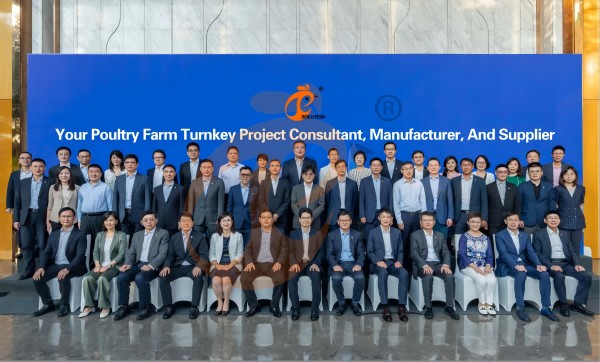
Hong Kong Headquarter Management Team
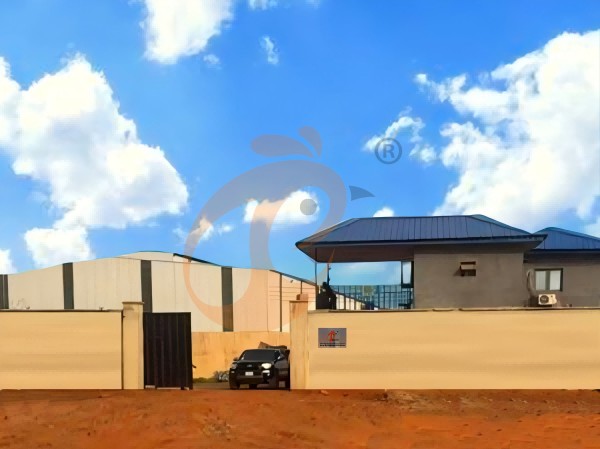
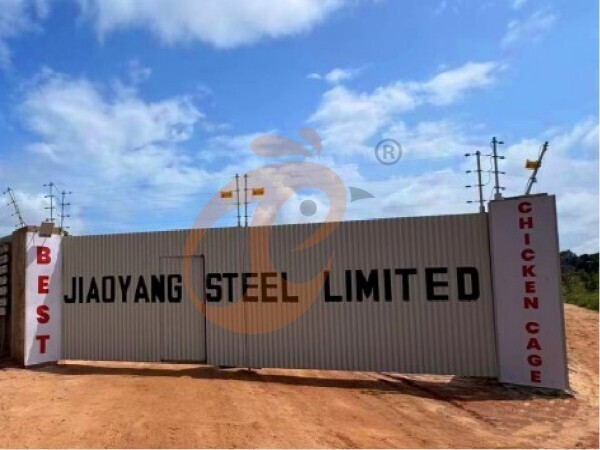
Hong Kong Headquarter Taiyu Industrial Group CO., LTD
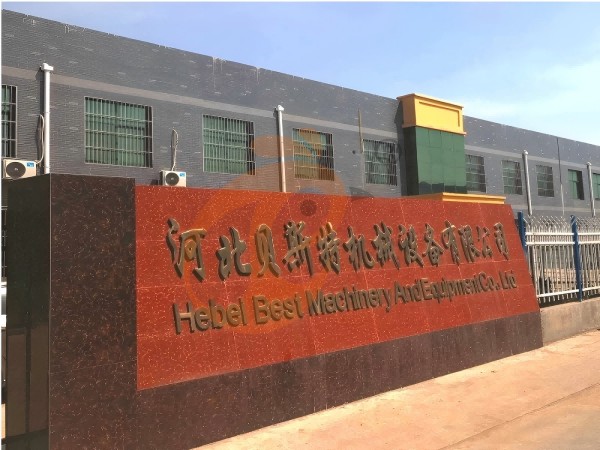
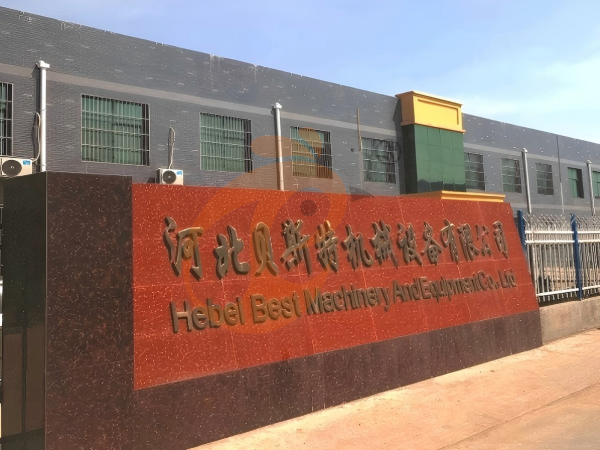
China Hebei Best Machinery And Equipment CO., LTD
Nigeria Vanke Machinery And Equipment CO., LTD
Tanzania Best Machinery And Equipment CO., LTD
Ethiopia Best Hebei Machinery Manufacturing PLC

Reception /24 WhatsApp NO. : +8618830120193
FAQ
What Performance Advantages Does Plasson Poultry Equipment Provide In Poultry Chicken Farming Efficiency?
Labor requirement decreases by 50%–65% through automated water delivery systems.
Disease transmission risk is reduced by 35%–55% due to closed drinking environment design.
What Are The Installation Standards For Plasson Poultry Equipment In Poultry Chicken Farms?
Pipeline slope is maintained at 0.3%–0.5% for effective drainage and hygiene control.
Spacing between drinkers is configured at 25–35 cm to ensure equal water access distribution.
What Maintenance Requirements Apply To Plasson Poultry Equipment In Poultry Chicken Production Systems?
Seal inspection intervals are set at 20–30 days to prevent leakage and pressure loss.
Cleaning solution concentration is maintained at 0.03%–0.06% for effective system sanitation.
Message
Products recommended
 HK Headquarter Offers EU-standard Poultry Farm Solutions, Manufacture Poultry Farm Equipment1. Continuous communication with the EU and the US
2. China, Nigeria, Ethiopia, Tanzania branch companies and factories
3. The products’ quality is customized for local poultry farms
4. Poultry cage and poultry farm equipment stock for sale
5. 24 online reception Whatsapp NO. : +8618830120193,contact us to get full informationRead More China Branch Offer Poultry Farm Business Plan, Manufacture Poultry Farm Equipment1. Address: Flat/RM 2416, 24/F, Runxing Building, Youyi Nan Street, Shijiazhuang City, Hebei Province, China
2. Poultry cage and poultry farm equipment factory and stock for sale
3. Customized for local poultry farms
4. Quality and design are based on Euro
5. 24 online reception Whatsapp NO. : +8618830120193Read More Nigeria Branch Offer Poultry Farm Business Plan, Manufacture Poultry Farm Equipment1. Address: After Sinoma Office, 200 Meters Near Danco Filling Station, Lagos/Ibadan Expressway, Lagos State, Nigeria
2. Poultry cage and poultry farm equipment factory and stock for sale
3. Customized for Nigerian poultry farms
4. Quality and design are based on Euro
5. 24 online reception Whatsapp NO. : +8618830120193Read More Ethiopia Branch Offer Poultry Farm Business Plan, Manufacture Poultry Farm Equipment1. Address: Gelan Gura, Akaki-kaliti Sub City, Addis Ababa, Ethiopia
2. Poultry cage and poultry farm equipment stock for sale
3. Customized for Ethiopian poultry farms
4. Quality and design are based on Euro
5. 24 online reception Whatsapp NO. : +8618830120193, contact us to get price listRead More Tanzania Branch Offer Poultry Farm Business Plan, Manufacture Poultry Farm Equipment1. Address: No.8, Sova Road, Msufini, Mlandizi, Kibaha, Pwani, Tanzania
2. Poultry cage and poultry farm equipment factory and stock for sale
3. Customized for Tanzanian poultry farms
4. Quality and design are based on Euro
5. 24 online reception Whatsapp NO. : +8618830120193Read More Fully Automatic H Type Layer Chicken Cage1. 30,000-100,000+ layers/house chooses it, Poultry farmers can achieve an egg production rate of 96-98%
2. A significant improvement over the 85-90% typically seen in manual systems
3. A typical poultry farm can expect a 30-40% reduction in labor costs due to the automation
4. Each feeding line efficiently supplies feed to around 100,000 hens per 30 mins
5. Reception /WhatsApp NO. : +8618830120193Read More Fully Automatic A Type Layer Chicken Cage1. 10,000-50,000 layers/house chooses it
2. Cleaner egg collection reduces breakage by 0.5%
3. Improved hygiene helps reduce mortality rate to <3%
4. 1–2 technicians can handle 15,000–30,000 birds
5. Reception /WhatsApp NO. : +8618830120193Read More Semi Automatic H Type Layer Chicken Cage1. 1,00-20,000 layers/house chooses it
2. Nipple drinkers flow 30–60 ML / min
3. Hot-dip galvanized (typical coating ≥ 275 g/m²)
4. Reduce ammonia by ~ 35–40%
5. Reception /WhatsApp NO. : +8618830120193Read More Semi Automatic A Type Layer Chicken Cage1. 1,00-20,000 layers/house chooses it, no rust for 10 years, no deformation for 15 years
2. Chickens live comfortably, you can raise them with peace of mind
3. Save water, save money—efficiency you can measure
4. Improve environment quality, and increase egg production rate
5. Reception /WhatsApp NO. : +8618830120193Read More

By clicking 'Allow All', you agree to the storage of cookies on your device to enhance site navigation, analyze site usage and assist with our marketing efforts.