


Blog
- Feed mixer automation can reshape poultry feeding economics, with 2.5–4.0 hours saved across selected daily handling stages.
Automatic poultry feeding system integration reduces repetitive work while supporting controlled material movement across commercial chicken houses.
Chicken feed mixer operation improves preparation consistency, while connected equipment can coordinate multiple feeding stages within 6–10 minutes.
Labor, feed waste, electricity, maintenance, capacity, and expansion requirements create different financial outcomes over a five-year operating period.
- Proper equipment selection converts feeding data into measurable commercial value through engineered capacity, controlled workflow, and scalable poultry-house infrastructure.
Get professional poultry farm construction guidance, equipment selection solutions, and the latest price lists, whatsApp to +8618830120193, +2348111199996, or click to learn more.
The Real Cost Question: Manual Labor Or Automated Feeding?
A poultry farm does not calculate feed mixer cost from equipment price alone.
The actual expense includes feed preparation, material movement, daily labor hours, electricity consumption, and maintenance.
For example, a manual feeding team may spend 2.5–4.0 hours per feeding cycle, while an automatic poultry feeding system can reduce direct operator involvement to approximately 20–40 minutes for routine supervision.
For a commercial chicken house, the financial calculation becomes even more important when chicken feed mixer feeding is performed twice or three times every day.
A farm operating 3 feeding cycles per day can accumulate more than 1,000 feeding operations annually, making workflow efficiency a measurable production cost rather than a convenience.
Data is for reference only.Swipe horizontally to view full table.
Follow The Feed: Where Does The Labor Go?
Manual process
Storage → weighing → mixing → bagging → carrying → filling → distribution → cleaning
Every arrow represents human movement.
A worker carrying 25 kg feed bags for 50 meters may need to repeat the same transport route dozens of times during a production day.
Replacing repetitive movements with mechanical conveying changes the labor structure of the entire chicken house through a feed mixer machine and automatic poultry feeding system.
An automated system can connect the feed mixer directly with hoppers, augers, and feeding lines.
A typical auger system can operate over a conveying distance of 30–80 meters, allowing feed to move from the preparation area to the poultry house without repeated manual transportation.
Manual Feeding Cost Structure
Data is for reference only.Swipe horizontally to view full table.
The important figure is not simply the worker's hourly wage.
The feed mixer calculation should include total person-hours generated by feeding, while chicken feed mixer planning should account for 180 minutes of cumulative daily handling exposure.
At 3.0 labor-hours per feeding operation, three daily operations create 9 person-hours of feeding work every day.
That workload can become a major operating expense when wages increase or when several poultry houses are managed by the same farm team, particularly across 4–8 production houses.
Feed Waste: The Hidden Calculation
Feed waste is often underestimated because it is distributed across many small events overflowing pans, dropped material, inaccurate scooping, residual feed, and inconsistent filling.
Consider a farm handling 2,000 kg of feed per day.
A difference of only 1.5 percentage points in avoidable handling loss represents approximately 30 kg of feed every day, or roughly 10.95 metric tons per year.
An automatic poultry feeding system can provide controlled material delivery and repeatable feed distribution.
The financial benefit becomes particularly relevant when feed prices reach $350–$500 per metric ton, because small percentage differences can produce significant annual costs.
European union standard reference only.
Data is for reference only.Swipe horizontally to view full table.
What Does A Feed Mixer Change?
A feed mixer machine changes the preparation stage from repeated manual batching into a controlled mechanical process.
For example, a 1,000 l horizontal mixer can process several hundred kilograms of formulated material in one batch, depending on ingredient density and mixer design.
With a mixing cycle of approximately 6–10 minutes, the operator can prepare multiple batches within a normal working period instead of manually combining ingredients throughout the day.
The quality of the chicken feed mixer also matters.
Stainless or carbon-steel contact surfaces, replaceable wear components, discharge-door design, and gearbox configuration influence long-term operation.
A properly selected mixer should be matched to the formulation, ingredient density, flock size, and downstream feeding equipment, with 6–12 mm structural plate options considered according to load requirements.
The objective is not simply faster mixing.
The objective is repeatable feed preparation.
Technical Comparison: Manual Vs Automated Feeding
Data is for reference only.Swipe horizontally to view full table.
The technical difference becomes obvious when the feed mixer system is evaluated as a sequence rather than as an individual machine.
A controller can coordinate feeding at predetermined intervals, while motors and sensors manage material movement with 1–6 programmed cycles.
A 24 v control circuit can separate low-voltage controls from higher-power drive equipment, improving system management and making troubleshooting more structured.
Calculate The Five-Year Operating Cost
Use this formula before choosing equipment
Five-year feeding cost = labor + feed loss + electricity + maintenance + equipment investment
Suppose a poultry operation spends $49,275 annually on feeding labor.
Even without considering feed waste or maintenance, five years represents $246,375 in direct labor expenditure.
An automatic poultry feeding system introduces electricity and maintenance costs, but these expenses must be compared against recurring labor that the system replaces.
A properly engineered feed mixer may therefore justify a larger initial investment when equipment operates throughout multiple production cycles, especially across 250–350 operating days annually.
European union standard reference only.
Data is for reference only.Swipe horizontally to view full table.
Example calculation only; actual return on investment depends on local labor rates, feed prices, flock size, electricity tariffs, and equipment configuration.
Why Farm Scale Changes The Answer
Small farm
A manual system can remain financially practical when the feeding route is short and the flock requires only a limited quantity of feed each day.
A feed mixer machine can still provide centralized preparation where storage space measures approximately 20–40 m².
Growing farm
Once the operation reaches several houses, manual transportation becomes increasingly inefficient because workers must cover longer routes and coordinate multiple feeding points.
An automatic poultry feeding system becomes more practical when house count reaches 3–4 units.
Commercial farm
At this stage, automation becomes a production infrastructure decision rather than an optional convenience.
A poultry complex with 6 houses × 20,000 birds represents a 120,000-bird operation.
Managing that volume manually requires a fundamentally different labor structure from a single-house farm.
Data is for reference only.Swipe horizontally to view full table.
The Return On Investment Checklist: Measure Before You Buy
Do not start with the question, "How much does the machine cost?"
Start with the production data.
Record the amount of feed handled, number of feeding cycles, labor hours, walking distance, current feed waste, and annual operating days.
These figures provide the baseline required to calculate whether a feed mixer machine produces a meaningful return, with 350 operating days offering a useful annual planning basis.
For example, if a farm operates 350 days per year and currently spends 7.5 labor-hours per day on feeding activities, the annual feeding workload is 2,625 labor-hours.
That number provides a much stronger basis for investment analysis than the machine's purchase price alone, particularly when project planning covers 5–10 years.
Data is for reference only.Swipe horizontally to view full table.
Manual Feeding Is Not Always The Wrong Choice
There is one important exception capital availability.
A newly established farm may prefer to preserve cash for housing construction, ventilation, climate control, drinking systems, and biosecurity infrastructure.
In that situation, manual feeding can provide a temporary operating solution while a chicken feed mixer remains a planned second-stage investment.
However, the decision should include a defined production threshold.
For example, an operator may decide that automation becomes necessary when the farm reaches 30,000 birds or when feeding labor exceeds 6 person-hours per day.
This creates a measurable transition point rather than an arbitrary equipment decision, with 12–24 months providing a practical review period.
Build The Feeding System, Not Just The Mixer
A feed mixer is one component of the complete process.
A modern poultry feeding system can combine the mixer, storage hopper, conveying auger, automatic feeding line, feed pans, sensors, and control cabinet.
The engineering objective is to eliminate unnecessary manual transfers between these stages.
A properly configured feed mixer machine system can use a 40–100 mm feed auger, depending on throughput and conveying requirements.
The final configuration should also consider house length, number of feeding circuits, elevation changes, feed density, motor starting characteristics, and access for cleaning, with 2–5 mm conveyor component tolerances considered during fabrication.
Data is for reference only.Swipe horizontally to view full table.
The strongest equipment solution is therefore not the machine with the largest motor or hopper.
A feed mixer system becomes valuable when every component is correctly matched to the next stage, with 2–4 independent feeding circuits available where house zoning requires separation.
Final Verdict: Which Costs Less?
Data is for reference only.Swipe horizontally to view full table.
The conclusion is straightforward manual feeding normally wins on initial purchase price, while feed mixer automation can win on total operating economics.
For a commercial poultry operation, the critical calculation is not whether an automatic poultry feeding system costs more on day one.
The calculation concerns whether equipment can reduce recurring labor, control feed handling, standardize preparation, and support future expansion over 5 production years.
Frequently Asked Questions
Q1: What makes feed mixer automation economically attractive?
A1: A feed mixer reduces repetitive preparation and handling requirements while connecting production stages more efficiently.
A properly sized system can process 500–3,000 l per batch, depending on formulation and equipment configuration.
Q2: When should a farm consider an automatic poultry feeding system?
A2: An automatic poultry feeding system becomes increasingly practical when labor demand, house count, and daily feed volume rise.
A farm approaching 30,000 birds can establish a measurable automation threshold using labor and operating-cost data.
Q3: How should a chicken feed mixer be selected?
A3: A chicken feed mixer should be selected according to flock size, formulation, batch requirement, downstream conveying, and expansion plans.
A commercial project may require 1,000–3,000 l mixing capacity, but final selection requires complete farm engineering data.
Taiyu (HK) Group - One Of China Largest Feed Mixer Manufacturer
Feed mixer solutions integrate batch preparation with controlled poultry feeding workflows, using 1,000–3,000 l mixer configurations and engineered downstream interfaces.
Global factory-direct supply covers complete poultry equipment packages, with production coordination for international projects and component specifications matched to local electrical requirements.
Turn-key engineering covers equipment selection, layout planning, installation guidance, commissioning coordination, and integrated feeding-system configuration for commercial poultry projects.
Project engineering supports poultry houses ranging from individual buildings to multi-house complexes, with equipment schedules, technical drawings, capacity calculations, and production documentation.
Factory manufacturing combines feed mixer, automatic feeding equipment, conveying components, and control systems into coordinated project packages for overseas poultry producers.
Contact Us To Received Your Customized Poultry Farm Plan
Headquarters And Branchs

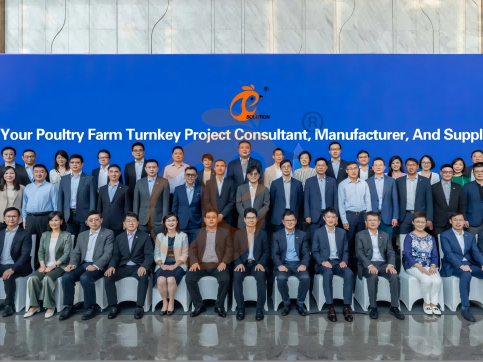
Hong Kong Headquarter Management Team
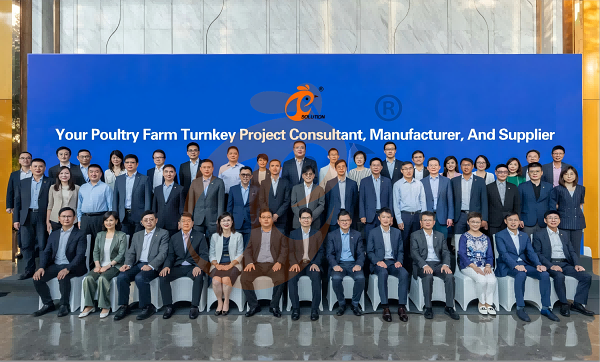
Hong Kong Headquarter Taiyu Industrial Group CO., LTD
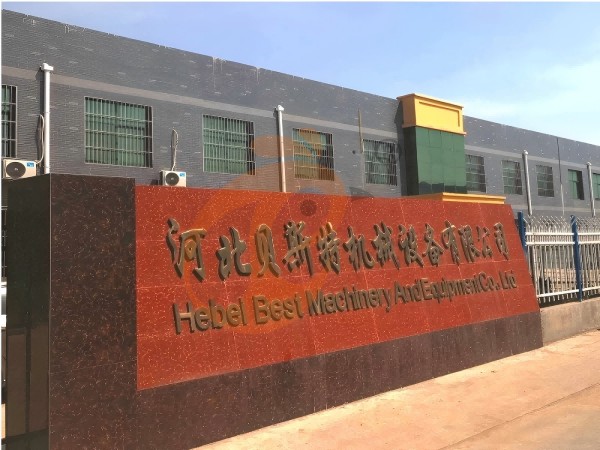
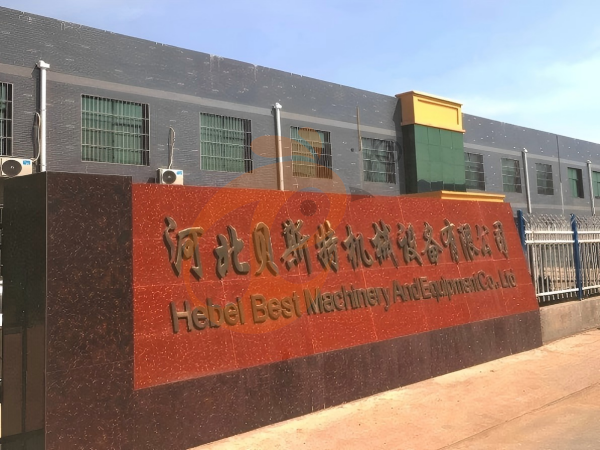
China Hebei Best Machinery And Equipment CO., LTD
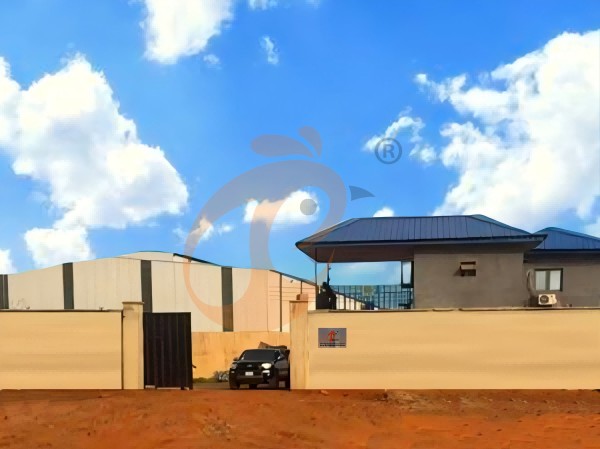
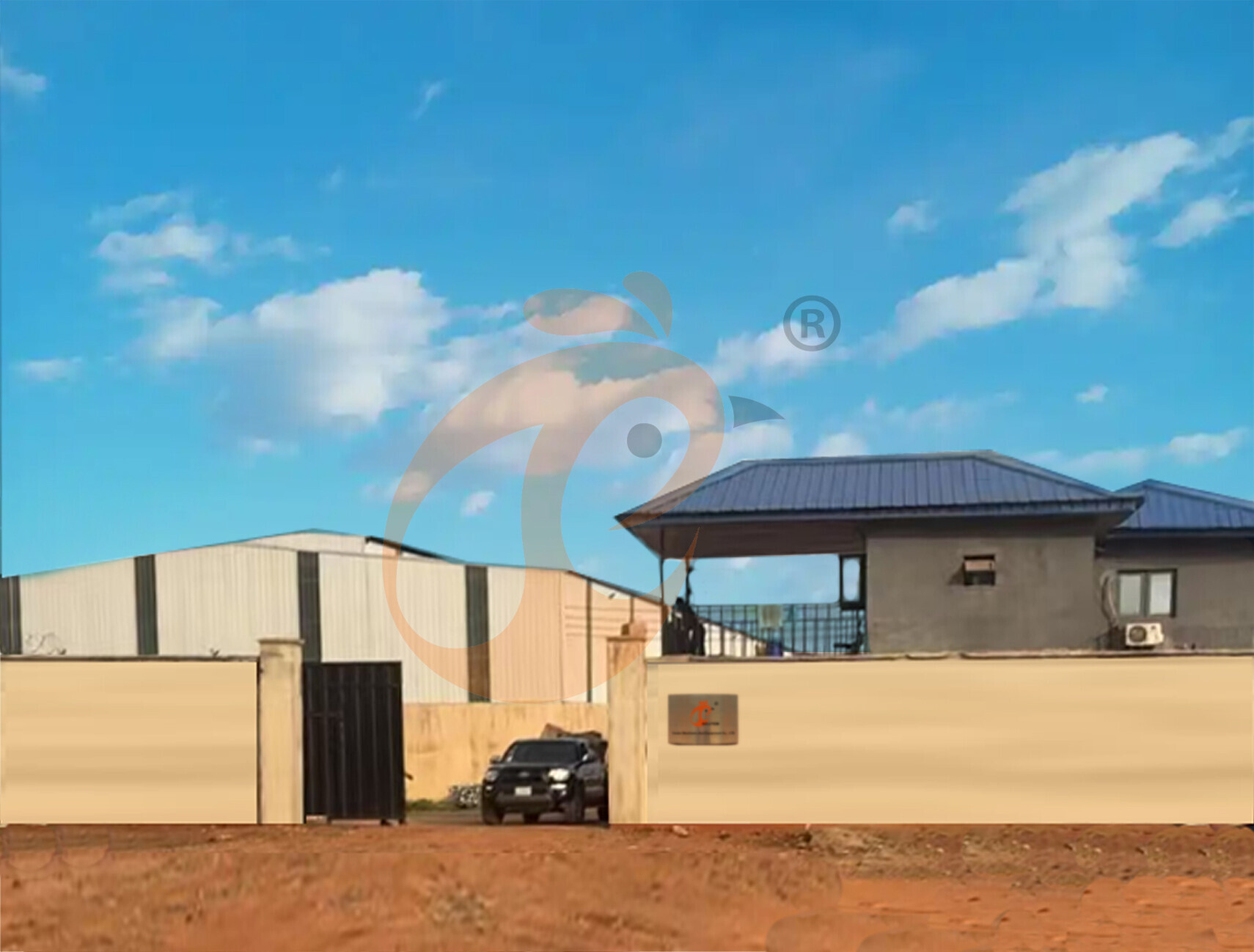
Nigeria Vanke Machinery And Equipment CO., LTD
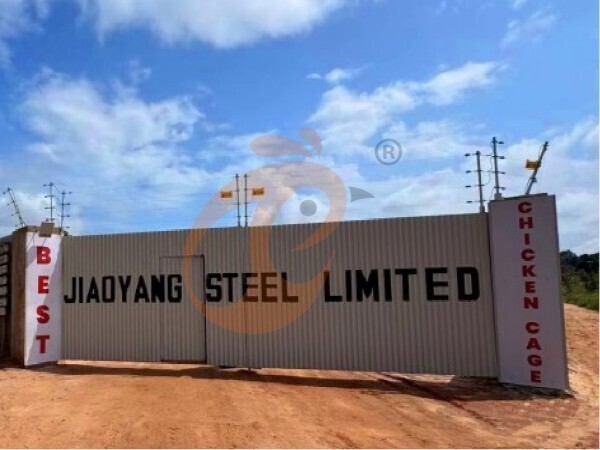
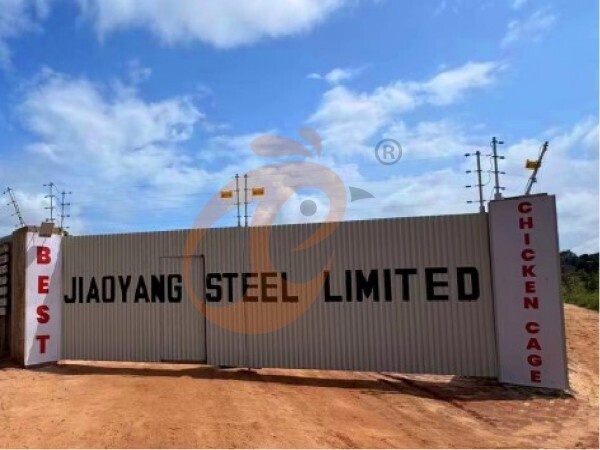
Tanzania Best Machinery And Equipment CO., LTD
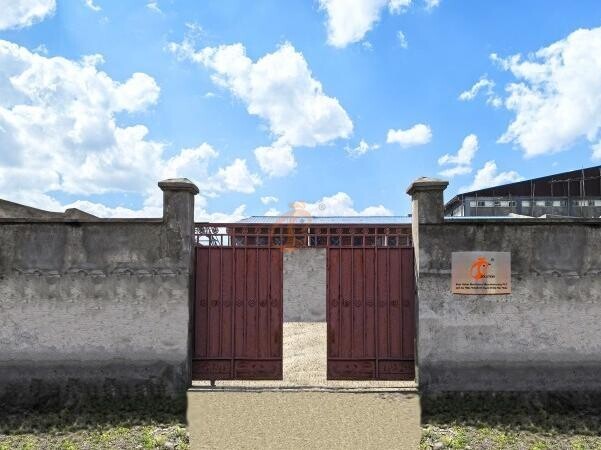
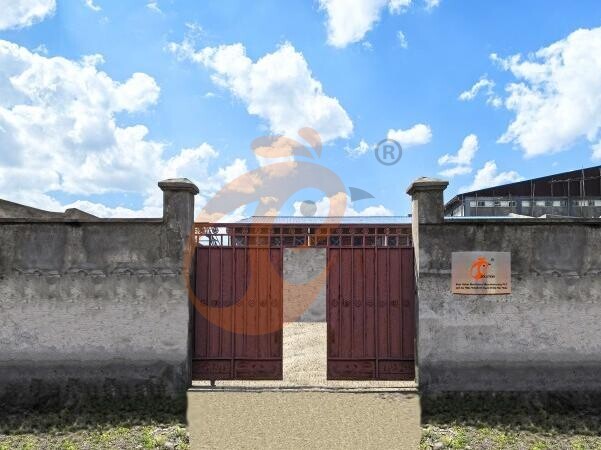
Ethiopia Best Hebei Machinery Manufacturing PLC
Reception /24 WhatsApp NO. : +8618830120193
FAQ
What Are The Main Equipment Components In Feed Mill And Feed Mixer Systems For Poultry Chicken Production?
Hammer mill units operate with rotor speeds of 2800–3600 rpm for efficient grain size reduction.
Twin-shaft mixers achieve batch capacities of 500–2000 kg per cycle for uniform poultry feed blending.
What Dust Control Requirements Are Needed In Feed Mill Operations For Poultry Chicken Farms?
Cyclone separators remove 85%–92% of airborne particles during grinding and conveying processes.
Negative pressure systems maintain airflow velocity between 0.8–1.2 m/s to prevent dust leakage.
What Temperature Parameters Are Used In Feed Mill Processing For Poultry Chicken Feed?
Conditioning temperature reaches 75–85°C to improve pellet durability and pathogen reduction.
Cooling stage reduces pellet temperature to within 5°C of ambient conditions for safe storage.
Message
Products recommended
 HK Headquarter Offers EU-standard Poultry Farm Solutions, Manufacture Poultry Farm Equipment1. Continuous communication with the EU and the US
2. China, Nigeria, Ethiopia, Tanzania branch companies and factories
3. The products’ quality is customized for local poultry farms
4. Poultry cage and poultry farm equipment stock for sale
5. 24 online reception Whatsapp NO. : +8618830120193,contact us to get full informationRead More China Branch Offer Poultry Farm Business Plan, Manufacture Poultry Farm Equipment1. Address: Flat/RM 2416, 24/F, Runxing Building, Youyi Nan Street, Shijiazhuang City, Hebei Province, China
2. Poultry cage and poultry farm equipment factory and stock for sale
3. Customized for local poultry farms
4. Quality and design are based on Euro
5. 24 online reception Whatsapp NO. : +8618830120193Read More Nigeria Branch Offer Poultry Farm Business Plan, Manufacture Poultry Farm Equipment1. Address: After Sinoma Office, 200 Meters Near Danco Filling Station, Lagos/Ibadan Expressway, Lagos State, Nigeria
2. Poultry cage and poultry farm equipment factory and stock for sale
3. Customized for Nigerian poultry farms
4. Quality and design are based on Euro
5. 24 online reception Whatsapp NO. : +8618830120193Read More Ethiopia Branch Offer Poultry Farm Business Plan, Manufacture Poultry Farm Equipment1. Address: Gelan Gura, Akaki-kaliti Sub City, Addis Ababa, Ethiopia
2. Poultry cage and poultry farm equipment stock for sale
3. Customized for Ethiopian poultry farms
4. Quality and design are based on Euro
5. 24 online reception Whatsapp NO. : +8618830120193, contact us to get price listRead More Tanzania Branch Offer Poultry Farm Business Plan, Manufacture Poultry Farm Equipment1. Address: No.8, Sova Road, Msufini, Mlandizi, Kibaha, Pwani, Tanzania
2. Poultry cage and poultry farm equipment factory and stock for sale
3. Customized for Tanzanian poultry farms
4. Quality and design are based on Euro
5. 24 online reception Whatsapp NO. : +8618830120193Read More Fully Automatic H Type Layer Chicken Cage1. 30,000-100,000+ layers/house chooses it, Poultry farmers can achieve an egg production rate of 96-98%
2. A significant improvement over the 85-90% typically seen in manual systems
3. A typical poultry farm can expect a 30-40% reduction in labor costs due to the automation
4. Each feeding line efficiently supplies feed to around 100,000 hens per 30 mins
5. Reception /WhatsApp NO. : +8618830120193Read More Fully Automatic A Type Layer Chicken Cage1. 10,000-50,000 layers/house chooses it
2. Cleaner egg collection reduces breakage by 0.5%
3. Improved hygiene helps reduce mortality rate to <3%
4. 1–2 technicians can handle 15,000–30,000 birds
5. Reception /WhatsApp NO. : +8618830120193Read More Semi Automatic H Type Layer Chicken Cage1. 1,00-20,000 layers/house chooses it
2. Nipple drinkers flow 30–60 ML / min
3. Hot-dip galvanized (typical coating ≥ 275 g/m²)
4. Reduce ammonia by ~ 35–40%
5. Reception /WhatsApp NO. : +8618830120193Read More Semi Automatic A Type Layer Chicken Cage1. 1,00-20,000 layers/house chooses it, no rust for 10 years, no deformation for 15 years
2. Chickens live comfortably, you can raise them with peace of mind
3. Save water, save money—efficiency you can measure
4. Improve environment quality, and increase egg production rate
5. Reception /WhatsApp NO. : +8618830120193Read More
By clicking 'Allow All', you agree to the storage of cookies on your device to enhance site navigation, analyze site usage and assist with our marketing efforts.